the sun malaysia ipaper logo 150x150
Wednesday, December 3, 2025
25.9 C
Malaysia
the sun malaysia ipaper logo 150x150
Blog

Malaysian economy expands 5.2% in Q3’25, Bank Negara projects steady growth in 2026

Malaysian economy expands 5.2% in Q3'25, Bank Negara projects steady growth in 2026
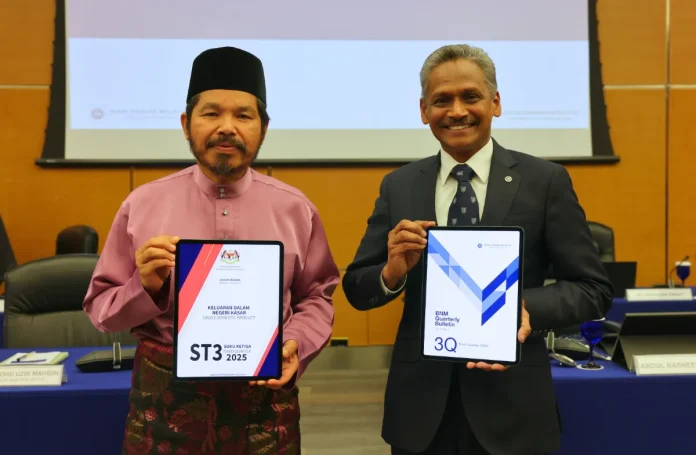
Chief Statistician of Malaysia Datuk Seri Dr Mohd Uzir Mahidin and Abdul Rasheed displaying reports on Malaysia’s economy and Bank Negara’s performance in the third quarter of 2025.

KUALA LUMPUR: Malaysia’s economy is poised to record steady growth in 2026, supported by resilient domestic demand, firm labour market conditions and a recovering tourism sector despite global tariff pressures.


Bank Negara Malaysia (BNM) governor Datuk Seri Abdul Rasheed Ghaffour said the external environment next year will remain challenging, with global growth and trade expected to “vibrate further” due to the full impact of tariff actions.


However, he noted that global policy support would help prevent a deeper slowdown.
“Negative effects of tariffs and uncertainty will be partly cushioned by fiscal support and monetary policy easing, which will help sustain domestic demand,” he said during the release of Malaysia’s third-quarter gross domestic product (GDP) performance today.


The domestic economy expanded by 5.2% in the third quarter of 2025, up from 4.4% in the second quarter of 2025, driven by sustained domestic demand and higher net exports.


BNM noted that favourable labour market conditions, income-related policy measures and cash assistance programmes supported household spending.


Investment activity was underpinned by continued capital expansion by both private and public sectors.


On the external front, net exports grew faster as export growth outpaced import growth.


For the nine months, Malaysia’s economy grew by 4.7%, well within BNM’s forecast range of 4.0–4.8%.
“At this rate for this year, we may record a growth rate that is closer to the upper range of this forecast,” Abdul Rasheed said.


Turning to next year, the central bank governor reiterated the Ministry of Finance’s projection for growth of between 4% and 4.5% in 2026. He said the main support will continue to come from domestic demand.


“Household spending will be supported by continual employment and wage growth, the income-related policy measures and also the additional cash transfers by the government.”


Abdul Rasheed stressed that private consumption is expected to remain Malaysia’s key economic anchor.


“Personal spending will continue to be the backbone of Malaysia’s economic growth,” he said, adding that household resilience will be aided by healthy household balance sheets and the government’s cash assistance.


Abdul Rasheed also pointed to ongoing momentum in investment activity, noting that both private and public sector spending remained robust. “Recent trends continue to reflect strong investment growth across both structures and machinery and equipment.”


He said approvals tracked by the Malaysian Investment Development Authority (Mida) indicate solid future activity.


“Forward-looking indicators point towards steady investment momentum, underpinned by a healthy pipeline of planned investments.”


The continued implementation of multi-year public projects and high realisation of approved private investments will make the domestic investment landscape more resilient, he added.


Abdul Rasheed also commented on Malaysia’s labour market outlook, saying that continued employment and wage increases, particularly in domestic-oriented sectors, will support consumption next year. He noted that favourable labour conditions this year have already helped stabilise spending.


On the external sector, the governor said trade performance is likely to remain moderate.


“Tariff and global demand pressures will be offset by the continued demand for E&E goods, inbound tourism and recovery in the mining-related exports.”


While he acknowledged that global uncertainties will weigh on the export outlook, Abdul Rasheed maintained that Malaysia’s diversified export structure would help cushion the impact.


Tourism emerged as a key growth driver in the discussion, with the central bank governor highlighting its rising contribution.


He said Malaysia’s travel-related indicators showed clear signs of improvement and would become an essential engine of growth in 2026. “Next year, with increased travel activity, we expect tourism to become an engine of growth for us.”


Travel receipts for the first three quarters of 2025 were already equivalent to last year’s total, Abdul Rasheed noted.


“If you look at the data point, the first three quarters of this year in terms of travel receipts are the same as last year,” he said.


He added that domestic tourism is also likely to strengthen.


“There is a possibility that by next year or in 2026, we will see growth in domestic tourism,” he said, noting that rising mobility and improved travel partnerships would support this trend.


Despite global uncertainties, Abdul Rasheed maintained a cautiously optimistic outlook for Malaysia in the coming year.


He said the combination of resilient household spending, steady investment flows and recovering tourism activity would provide the country with a solid growth foundation. “We are confident that Malaysia remains well-positioned to navigate ongoing challenges while capitalising on new opportunities for sustainable growth.”

Advertisment

Mid-tier companies proving to be ‘backbone’ of the economy: Tengku Zafrul

Mid-tier companies proving to be 'backbone' of the economy: Tengku Zafrul
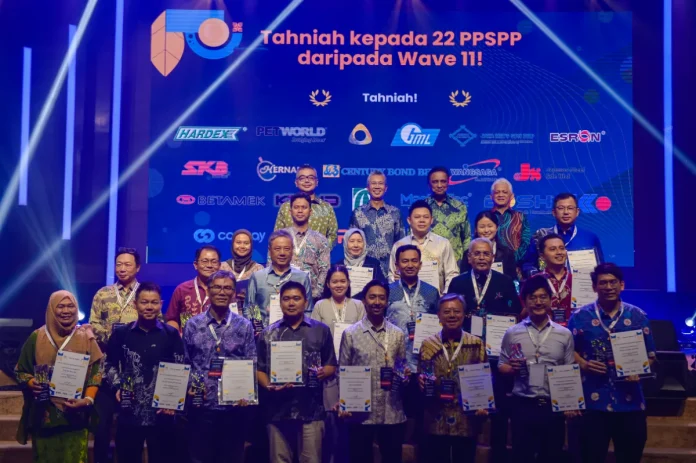
Tengku Zafrul (back row, second from left) with Wave 11 certificate recipients at the 2025 Mid-Tier Companies CEO Summit. Also present are Matrade chairman Datuk Seri Reezal Merican Naina Merican (second from right and Mohd Mustafa (right). - Bernamapic

KUALA LUMPUR: Malaysia’s mid-tier companies (MTC) are proving to be the backbone of the nation’s economy, contributing significantly to exports, job creation and global competitiveness, said Investment, Trade and Industry Minister Tengku Datuk Seri Zafrul Abdul Aziz.


He said mid-tier firms have played a crucial role in strengthening Malaysia’s economic resilience and positioning local enterprises on the global stage.


Tengku Zafrul was speaking at the Mid-Tier Companies CEO Summit 2025, organised by the Malaysia External Trade Development Corporation (Matrade) in collaboration with Deloitte Consulting Malaysia today.


Tengku Zafrul said the achievements of these companies under Matrade’s Mid-Tier Companies Development Programme (MTCDP) demonstrate that Malaysia’s economic growth continues to be driven not only by large corporations but also by dynamic mid-sized exporters.


“Although mid-tier companies make up less than 1% of total registered businesses, they contributed 40% to Malaysia’s GDP in 2023. This shows they are not just contributors, but the very shield of our economy amid global uncertainty,” he added.


According to the Ministry of Investment, Trade and Industry (Miti), alumni of the MTCDP recorded RM39.5 billion in annual sales in 2024, marking a 20% increase from 2023, with nearly 60% coming from exports.


Tengku Zafrul said the strong performance underscores Malaysia’s improving competitiveness and capacity to maintain its position as the world’s 24th largest trading nation.


The minister noted that the programme’s participants created 6,408 new jobs last year, up 20% from 2023, with almost 70% of these being highly skilled positions evidence of a growing shift towards high-value and technology-driven industries.


At the same time, more than 11,000 local SMEs have been integrated into MTC supply chains, a 10% year-on-year increase. This, Tengku Zafrul said, reflects the multiplier effect of the programme in helping small and medium enterprises tap into export markets through collaboration and capacity building.


Malaysian firms under the programme have broken into 115 new international markets, up 49% year-on-year, spanning the Middle East, Africa and Europe, including Qatar, Nigeria, Gabon, Romania and Italy.


“These achievements illustrate the readiness of Malaysian exporters to explore diverse regions and strengthen their foothold in new, high-potential markets,” said Tengku Zafrul.


He noted that 96% of participating mid-tier companies have adopted digitalisation in areas such as marketing, finance, analytics and distribution. Additionally, 99% have implemented sustainability measures including solar power, energy efficiency and water conservation to align with Malaysia’s Ekonomi Madani agenda for inclusive and responsible growth.


“These results prove that mid-tier firms are leading by example in embracing sustainability and technology to future-proof their operations,” Tengku Zafrul said, adding that the achievements align with the national goal of building a resilient, innovative and sustainable trade ecosystem.


To strengthen the industrial landscape, Tengku Zafrul announced that Miti is developing a Supply Chain Intelligent Management System, designed to map relationships between suppliers, manufacturers, distributors and end-users.


He said the system will help identify gaps, dependencies and opportunities within strategic sectors, improving Malaysia’s supply chain resilience and long-term competitiveness.


“This initiative reflects Miti’s commitment to enhancing export competitiveness and preparing Malaysian companies to compete in higher-value global supply chains,” he said.


Meanwhile, Matrade CEO Datuk Seri Mohd Mustafa Abdul Aziz commended the achievements of mid-tier firms, saying the MTCDP has shown that Malaysia’s transformation is driven by both sound policy and people power.


“As we approach the end of the 12th Malaysia Plan and prepare for the next phase of national development, these results show that our economic transformation is not only policy-driven but also people-powered,” he said in his speech.


He added that with the programme now entering its 12th wave, Matrade remains committed to supporting Malaysian companies in expanding globally and strengthening their competitiveness through innovation and strategic partnerships.


The summit, themed “Forging Asean’s Next Chapter: Malaysian Mid-Tier Companies Driving Resilient and Inclusive Growth” also celebrated the graduation of Wave 11 participants, who completed a nine-month export transformation journey under the MTCDP.


Since its inception in 2014, the programme has nurtured 394 mid-tier companies, helping position them as Malaysia’s next generation of export champions.


“Let us continue to move forward with renewed determination to be a stronger, more connected and globally competitive Malaysia,” Mustafa said, closing the event with a call for unity, innovation and sustainable growth.

Advertisment

STF Revenue opens Malaysia’s first privately operated MM2H one-stop centre at TRX

STF Revenue opens Malaysia's first privately operated MM2H one-stop centre at TRX

KUALA LUMPUR: STF Revenue (MM2H) Sdn Bhd has opened its new office at The Exchange 106 @ Tun Razak Exchange (TRX), marking the establishment of Malaysia’s first privately operated Malaysia My Second Home (MM2H) one-stop centre.


The move underscores the company’s confidence in Malaysia’s long-term economic prospects and the growing appeal of the country as a destination for international retirees, investors and professionals seeking to settle or invest here.


The launch was officiated by the Ministry of Tourism, Arts and Culture (Motac) secretary-general Datuk Shaharuddin Abu Sohot, who said that Malaysia’s long-stay programmes continue to generate positive economic spillovers.


“Under Motac, MM2H continues to play a vital role in attracting quality long-term residents and foreign investment that strengthen our economy,” he said.


He added that the new tiered MM2H framework Silver, Gold and Platinum provides global citizens with clearer options and greater flexibility, encouraging investment across sectors including property, education and healthcare.


As of July 2025, Motac recorded over 3,300 applications for the MM2H programme, projected to bring in more than RM300 million in foreign funds and over RM430 million in property investments.


STF Group, founded in 2016, has grown from a manpower solutions provider into a diversified conglomerate with operations spanning worker management, dormitory operations, cleaning services and technology-based management systems.


Its subsidiary, STF Revenue (MM2H) Sdn Bhd, focuses on providing comprehensive consultancy and support for the MM2H and Premium Visa Programme (PVIP), handling eligibility assessments, visa processing, and post-approval lifestyle assistance.


STF Group director of international operations Jonathan Low Choon Wai said the TRX office opening symbolises more than just a relocation.


“Opening our TRX retail office is more than just a physical move. It reflects our confidence in Malaysia as a lifestyle and investment destination,” he said. “Our goal is to make Malaysia accessible, welcoming, and fully connected for those who want to live, invest, and build a life here.”


Through its network of partnerships in real estate, banking, hospitality, and travel, STF aims to offer clients a seamless end-to-end experience, from property acquisition and visa facilitation to settlement support.


The event also witnessed the signing of a strategic partnership between STF Revenue and Rivertree Group, a property developer known for sustainable and community-driven developments.


The collaboration aims to integrate real estate opportunities with long-term residency facilitation, allowing MM2H and PVIP participants to transition smoothly from visa approval to home ownership and lifestyle setup in Malaysia.


Rivertree Group managing director Datuk Simon David Leong said the partnership reflects a shared vision to position Malaysia as a country where international residents can thrive.


“Our goal is simple: when an MM2H or PVIP resident chooses Malaysia, they don’t just receive a visa they gain a lifestyle, a community and a place called home,” he said.


To enhance the expatriate experience, STF Revenue has also collaborated with Batik Air, offering eligible MM2H applicants complimentary round-trip tickets valued up to RM5,000 under the Batik x STF programme.


The company also works closely with major banks to facilitate fixed deposit setups and other financial requirements under MM2H, easing the documentation process for new applicants.


As Malaysia prepares for Visit Malaysia 2026 (VM2026), STF’s presence at TRX, the nation’s international financial hub, is expected to support the government’s push to attract more long-term residents and investors.


By positioning itself as a comprehensive MM2H one-stop centre, STF Revenue aims to contribute to Malaysia’s broader ambition of becoming a premier destination for global citizens seeking quality living, investment opportunities and stable economic growth.

Advertisment

Malaysians show enthusiasm for innovation, entries for Innovathon Season 3 surge

Malaysians show enthusiasm for innovation, entries for Innovathon Season 3 surge
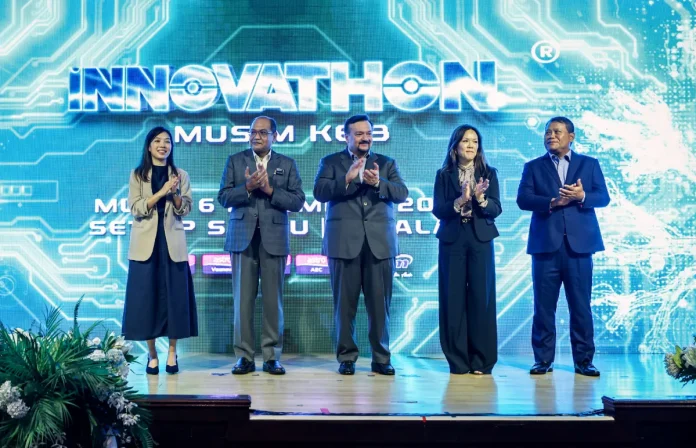
Amir Hamzah (centre) at the launch of Innovathon Season 3 today. Others are, from left, Astro director of communication and sustainability Foo Su Lynn, Hasnol Zam Zam, Astro chief content officer Agnes Rozario and Economy Ministry secretary-general Datuk Nor Azmie Diron. – Bernamapic

KUALA LUMPUR: Malaysia’s innovation ecosystem is gaining strong momentum as applications to participate in the third season of Innovathon doubled to 2,032 this year, reflecting growing confidence among Malaysians to develop homegrown solutions with commercial and social impact.


Finance Minister II and Acting Economy Minister Datuk Seri Amir Hamzah Azizan said the sharp increase in participation demonstrates that more Malaysians are willing to come forward and showcase high-quality innovations that can contribute to national well-being and economic advancement.


“The people of Malaysia have many great ideas. What we need is not only research and private sector involvement but also opportunities for people to share their ideas and bring them to life,” he said at the Innovathon Season 3 press conference today.


He added that Innovathon plays an important role in nurturing an entrepreneurial and innovative society that can drive Malaysia’s transformation into a more competitive, knowledge-based economy.


“Innovathon is not just a TV programme, it is a catalyst for Malaysia’s ambition to build a culture of innovation,” Amir Hamzah said. “It supports our efforts under the 13th Malaysia Plan to increase economic complexity through a stronger ecosystem for research, development, commercialisation and innovation.”


To encourage participation and innovation-driven entrepreneurship, the Economy Ministry has increased the total value of the Business Development Support Fund from RM1 million to RM1.65 million this year. Fifty-six local innovators will compete for the top prizes, with the grand winner set to receive RM100,000 in cash and RM500,000 in business support funding.


The competition, jointly organised by the Economy Ministry and the Science, Technology and Innovation Ministry (Mosti), aims to provide a platform for Malaysian innovators to refine, test and commercialise their ideas.


This year’s competition introduced targeted auditions at five key innovation hubs, including Cradle Fund, the National Institutes of Health, Universiti Teknologi Mara Melaka, Universiti Putra Malaysia and the Malaysian Fire and Rescue Academy in Kuala Kubu Bharu alongside open auditions across six regions nationwide.


The televised eight-episode series will air from Dec 6 to Jan 25 2026 on Astro Ria and RTM’s TV1, offering national visibility to local innovators and their creations.


Amir Hamzah said innovation is central to Malaysia’s broader economic strategy, especially as the country seeks to strengthen its competitiveness and diversify its economic base. “What is important under the 13th Malaysia Plan is to raise our economic complexity. It starts with ideas and Innovathon is proof that Malaysians are rich with ideas.”


He added that the government is committed to guiding participants beyond the competition phase, through continued ecosystem and funding support to help translate ideas into viable products and services.


Mosti secretary-general Datuk Seri Hasnol Zam Zam Ahmad emphasised the importance of follow-up and mentorship after the competition.


“Not everyone will win, but among those who don’t, many still have great potential. Our ministries will continue supporting them with funding, networking and guidance so that their ideas can benefit society,” he said.


During the press session, Amir Hamzah also addressed Malaysia’s economic outlook ahead of the third-quarter gross domestic product announcement, expressing optimism about the country’s resilience despite global challenges.


“Even though the global economy remains uncertain, Malaysia continues to show resilience,” he said, noting that early data indicates 5.2% growth across multiple sectors.


He highlighted strong performance in construction (over 11%), mining (over 10%), and private consumption (over 5%), reflecting a broad-based recovery and confidence in Malaysia’s growth fundamentals.


“Our efforts to enhance the economy are bearing fruit,” he said. “Last year, Malaysia recorded RM384.5 billion in approved investments. This year, we have already reached RM190 billion as of June, 18.7% higher than the same period last year. This shows that foreign investors continue to believe in Malaysia’s economic model.”


Amir Hamzah said the government’s focus on building an innovation-led economy through initiatives such as Innovathon will continue to play a key role in sustaining long-term growth and attracting high-value investments.


He added that innovation trends observed over the three seasons of Innovathon reflect an encouraging shift toward technology-based solutions with practical applications.
“Between 30% and 40% of innovations presented this year focused on improving daily life from automotive and industrial technologies to healthcare tools,” he said.

“This shows Malaysians are not only thinking creatively but also innovating with purpose.”


Amir Hamzah expressed hope that Innovathon will continue to grow as a platform connecting innovators, investors and the public, while fostering a stronger culture of creativity and scientific curiosity.


“Malaysia has no shortage of talent in research and innovation. What we need is to keep nurturing these ideas so they can flourish and make a real difference for society,” he said.

Advertisment

Sunway Sanctuary sets benchmark in healthcare-integrated senior living

Sunway Sanctuary sets benchmark in healthcare-integrated senior living
Lim says Malaysians are becoming more receptive to quality senior living.

SUBANG JAYA: Sunway Sanctuary, a senior-living residence under Sunway Healthcare Group, is redefining Malaysia’s premium retirement landscape by blending hospitality, wellness and world-class healthcare within one integrated ecosystem.


Positioned beside Sunway Medical Centre, the residence offers seniors a rare combination of resort-style living and immediate medical access.


“Residents live independently in a lifestyle-driven environment while having peace of mind knowing help is just next door,” said Vivien Lim, director of sales and marketing at Sunway Sanctuary.


“This seamless connection between comfort, independence and care differentiates us in the market,” she told SunBiz.


Launched in 2023, Sunway Sanctuary is located within the 800-acre Sunway City Kuala Lumpur township. The property combines hotel-style amenities with the comforts of a residence and access to wellness services, and will soon encompass a total of 473 private suites.


Since opening with just two pioneering residents, the development has seen a steady climb in occupancy, reaching 55% in 2025, up from 30% a year earlier, across its 235 suites.


“For a sector still in its infancy, that’s a very strong performance,” Lim noted. “It shows Malaysians are becoming more receptive to quality senior living.”


Malaysia’s ageing population, expected to reach 15% above 65 years old by 2050, has turned the “silver economy” into a lucrative growth frontier.


The Care Stay Package allows families to book short-term stays for parents who need temporary assistance, whether recovering from illness or while caregivers are away.

Another offering, the Post-Hospital Discharge Care Package, supports recuperation after surgery for patients whose homes are not yet elderly friendly.


Technology underpins the residence’s commitment to independence and safety. Suites are fitted with smart sensors that track movement, sleep and fall patterns. If irregular activity is detected – such as a resident remaining in the bathroom too long – the system discreetly alerts staff for a wellness check.


“These tools let us provide proactive care without intruding on privacy,” Lim explained. “Technology enhances, not replaces, the human connection.”


Sustainability is a guiding principle. Used cooking oil from kitchens is converted into biofuel, while single-use plastics have been largely eliminated through reusable containers and dispensers.


The residence collaborates with Pustaka Raja Tun Uda in Shah Alam to curate an in-house library refreshed every six to nine months, promoting lifelong learning with minimal waste.


Sunway Sanctuary is also carving a niche within Malaysia’s medical tourism ecosystem. Through partnerships with Sunway Healthcare’s International Patient Centre and government-linked health-tourism agencies, the residence caters to international retirees seeking quality post-treatment or long-stay wellness experiences.


“Our integration with Sunway Medical Centre allows international guests to transition seamlessly from medical care to recuperation in a resort-style setting,” Lim said. “It positions Malaysia as an attractive retirement and recovery destination.”


While the current model focuses on independent living, Sunway Sanctuary’s framework allows residents to transition smoothly to assisted living and advanced care within the same healthcare network as their needs change.


“Ageing in place is central to our philosophy,” Lim explained. “Residents can move through different levels of care without sacrificing comfort, dignity or quality of life.”


She added that the business’s greatest challenge lies in patience, allowing the market to mature and investors to understand that senior living is a long-term growth play.


“At 55% occupancy, we’re only scratching the surface of potential,” she said. “With more awareness and understanding, this sector will thrive.”


Sunway Sanctuary plans to keep innovating yearly through new wellness programmes, community activities and collaborations with academic institutions under the Jeffrey Sachs Centre to promote active ageing.


“Our aspiration is simple,” Lim said. “Whether someone needs recovery, long-term living or a vibrant place to retire, when Malaysians think of where to age gracefully, they’ll think of Sunway Sanctuary.”

Advertisment