




PETALING JAYA: The National Digital Trust and Data Security Strategy is expected to be tabled in the third quarter of this year alongside the launch of an implementation mechanism within a restructured CyberSecurity Malaysia as the government moves to strengthen oversight, enforcement and public trust amid accelerating artificial intelligence (AI) adoption and digital transformation efforts, Digital Minister Gobind Singh Deo said.
Gobind said the strategy is currently being finalised alongside efforts to establish a clearer institutional and enforcement framework within CyberSecurity Malaysia to ensure the policy can be effectively executed once launched.
“I hope that in the third quarter of this year, we will be able to table the strategy and also launch the agency that will implement it,” he told reporters after officiating the RHB Digital Trust Programme today.
Gobind said the strategy would be implemented through a restructured CyberSecurity Malaysia, with a dedicated section established within the agency to oversee implementation, coordination and enforcement efforts.
“We are now looking at how we can at the same time ensure that the agency is ready to be built when we launch the strategy,” he said.
Gobind said the implementation structure would not involve setting up a new institution, but instead restructuring an existing agency to strengthen oversight and enforcement capabilities. “It is an existing agency, but we will have to restructure it so that it can also look at how it can enforce the strategy.”
The government intends to roll out both the strategy and its implementation mechanism concurrently to ensure that policy direction, enforcement capability and operational readiness are aligned from the outset.
Gobind said digital trust and cybersecurity would become increasingly critical as Malaysia expands AI adoption, digital services and connected technologies across businesses, financial systems and public services. “I often say that the vision of the ministry to achieve an AI nation in 2030 is an important vision for our country. We need to ensure that the Malaysian people are ready for the digital era that we will see.”
Public confidence would ultimately determine whether businesses and consumers embrace emerging technologies and digital systems. Gobind said. “In the digital era, we want to ask people to use the digital platforms and tools available. We need to ensure that the confidence aspect can be maintained and strengthened.”
Gobind said Malaysia’s digital economy contributed about 23% to gross domestic product in 2023, equivalent to roughly RM450 billion, and the government aims to raise digital economy contribution to 30% by 2030 under the AI Nation agenda launched by Prime Minister Datuk Seri Anwar Ibrahim.
“If people don’t trust the product, they’re not going to use it. Public confidence would ultimately determine the pace of AI adoption, digital transformation and broader use of online services across businesses, financial systems and government platforms.”
Gobind said rapid adoption of AI and digital systems without sufficient safeguards could expose users, businesses and institutions to significant risks. “Because we are building things so fast, that you may come to a point where you might just one day look back and say, I forgot about security. And it may be too late.”
Incidents involving AI systems and connected technology illustrate broader concerns surrounding system reliability, governance and accountability, he added.
“It highlighted wider questions surrounding autonomous technologies and human oversight. The question is, are we in control? And who is making sure that the data that has been fed into this are correct, accurate, secure?” Gobind said.
The RHB Digital Trust Programme was launched alongside RHB CyberSecure, a cybersecurity self-assessment tool designed to help small and medium enterprises better understand cyber and fraud risks, assess cybersecurity readiness and strengthen digital resilience.
The programme, themed “Progressing Together – Secure, Smart and Future-Ready”, aims to support businesses in navigating rising cyber threats, fraud risks and digital vulnerabilities through practical tools, industry collaboration and knowledge-sharing initiatives.
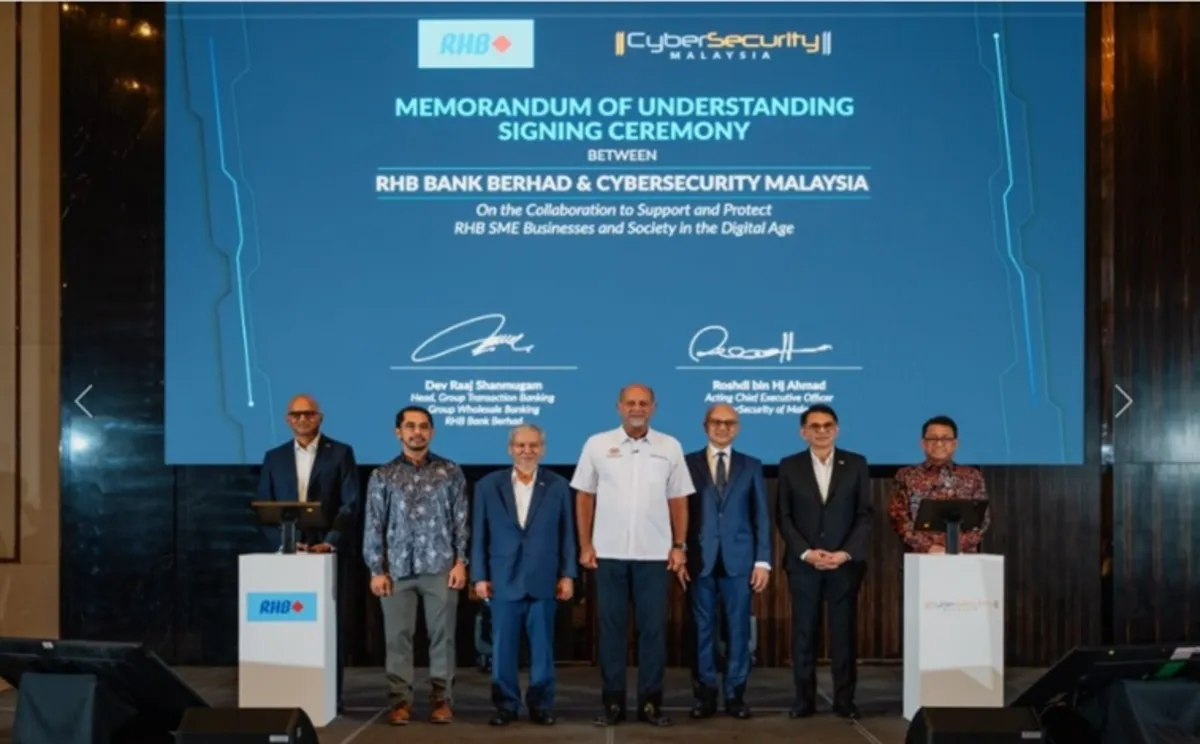
As part of the programme, RHB Bank Bhd and CyberSecurity Malaysia exchanged a memorandum of understanding to strengthen cyber awareness, capability-building and resilience among Malaysian businesses through joint initiatives.
RHB Banking Group managing director and group CEO Mohd Rashid Mohamad said cybersecurity had become a critical business issue for SMEs as digitalisation accelerates.
“Cybersecurity is no longer just a technical afterthought, it is a business survival issue for SMEs. Through RHB CyberSecure, we want to give businesses a practical and accessible way to understand their cyber risks, strengthen resilience and operate with greater confidence in an increasingly digital environment. This reflects our broader commitment to supporting businesses beyond financing, by helping them navigate evolving risks in a rapidly digitalising economy,” he said.



