




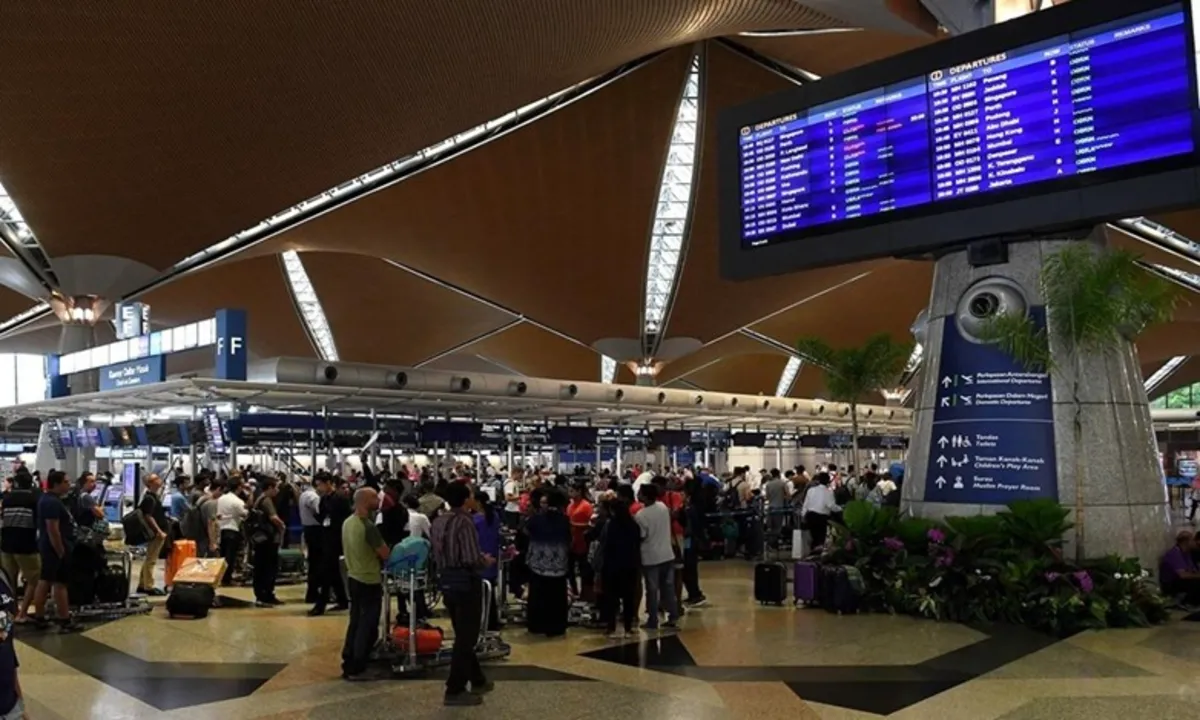
SEPANG: Malaysia Airports Holdings Bhd (MAHB), banking on stronger passenger growth, is stepping up investments across its airport network through terminal expansions, capacity upgrades and operational improvements at both domestic and international gateways.
Beyond Malaysia, the group is expanding capacity at Istanbul Sabiha Gokcen International Airport (ISG) in Turkiye, where the reopening of Terminal 1, also known as the Midfield Terminal, is easing congestion and supporting rising passenger traffic from Europe and other regions.
MAHB managing director Datuk Mohd Izani Ghani (pic) said 2025 marked a strong year for the group, with passenger movements rising 13% to 153.3 million from 135.8 million in 2024.

The Malaysian network handled 104.5 million passengers, up 11% year-on-year.
The network expanded to 128 destinations and 78 airlines, while MAHB was ranked the most-connected airport operator in the Asia-Pacific and fourth globally.
“We have been receiving strong support from the Prime Minister’s Office, the Ministry of Transport and the Ministry of Finance. This is important. Since then, we have continued to focus on what needs to be done at the airports. As you can see, growth has been strong, connectivity has improved, and our overall positioning has been elevated,” Mohd Izani told SunBiz in an exclusive interview.
In May, Kuala Lumpur International Airport (KLIA) recorded 4.9 million passenger movements, including 3.6 million international passengers, a 2% increase over May 2025.
The continued growth in international traffic reinforces Malaysia’s position as a key regional gateway under the Visit Malaysia 2026 (VM2026) campaign.
Across the MAHB network, total passenger movements reached 7.9 million for the month, supported by sustained international connectivity.
Regional connectivity was strengthened with the launch of Hainan Airlines’ new daily service between Chongqing and Kuala Lumpur, which commenced on May 16.
The new route expands connectivity between Malaysia and China, one of the country’s key tourism source markets under the VM2026 campaign.
Elaborating on domestic airports, Mohd Izani said a key focus of the group’s expansion programme has been Kota Bharu Airport, where a major terminal upgrade was completed and officially launched by the prime minister in April.
The expansion raised annual passenger capacity from 1.5 million to 4 million, while current traffic stands at about 1.7 million passengers a year.
“This reflects our commitment to ensuring airports across the country have sufficient capacity to support future growth. During the launch, the prime minister described Kota Bharu Airport as the best domestic airport in Malaysia in terms of facilities and layout,” Mohd Izani said.
He added that commercial activity at the airport is picking up, with additional retail outlets being fitted out following the terminal’s expansion. More shops and services are expected to open in the coming months.
On connectivity, Mohd Izani said Kota Bharu is seeing steady international growth, with flights to Singapore already operating for several months, and AirAsia launched services to Jakarta this month, with encouraging load factors.
The group is also in talks with airlines on new routes, including a proposed Kota Bharu-Bangkok service.
“We have been sharing passenger data with airlines because we see strong demand, not just from Kelantan but also from southern Thailand, which could use Kota Bharu as a gateway to Bangkok,” Mohd Izani said.
He noted that this opportunity is supported by ongoing expansion works at several airports in southern Thailand, creating room for Kota Bharu to serve as an alternative departure point over the next few years.
Following the airport’s reopening, MAHB held engagement sessions with the Kelantan state government, including Deputy Menteri Besar Datuk Dr Mohamed Fadzli Hassan, to strengthen collaboration.
One priority area is improving cross-border movement between Kelantan and Thailand.
“Seamless immigration and border processes are important if we want to attract more passengers from southern Thailand. The state has indicated that efforts are under way to improve this.”
Mohd Izani noted the growing recognition that tourism can significantly contribute to state revenue.
He said the Kelantan menteri besar recently travelled to Jakarta to meet President Prabowo to strengthen ties between Kelantan and Indonesia, including discussions on potential flights to Jakarta.
“The more these connections are highlighted, the better it is for us. We will continue to engage with stakeholders and work closely with them to position Kota Bharu more prominently as a travel destination,“ Mohd Izani said.
In the same engagement, Mohd Izani noted that many Kelantanese have historical and family ties to Cambodia.
He said that in the past, during periods of instability in Cambodia, many people came through Kota Bharu, and those links still exist today.
“Given this, we have suggested exploring the possibility of direct flights from Kota Bharu to Phnom Penh or Siem Reap. It is something we are actively considering as we engage airlines on potential new routes,” he added.
Mohd Izani also highlighted another focus, which is destination marketing, as many visitors arriving in Kota Bharu continue directly to island destinations such as Pulau Perhentian and other islands off the Terengganu coast, thereby limiting economic spillover to Kelantan.
“We see strong potential for visitors to spend more time in Kelantan. The state has rich cultural attractions, food and batik heritage. We have proposed closer collaboration to promote these offerings, and the response has been positive,” he said.
Turning to Ipoh Airport, Mohd Izani said it remains a promising growth node despite its proximity to Kuala Lumpur, with Scoot operating flights to Singapore alongside AirAsia.
The route has been well received, particularly among leisure travellers drawn to Ipoh’s food, culture and heritage.
“However, there is room to grow international connectivity further,” Mohd Iani said, adding that discussions with Perak tourism stakeholders have highlighted the need for stronger state-level involvement in route development.
One proposed route is Ipoh-Bangkok, which could serve both leisure and business demand.
From an operator’s perspective, Mohd Izani said, international routes are more commercially rewarding than domestic services.
The recently expanded Ipoh Airport also provides improved passenger flow and upgraded facilities.
“The infrastructure is in place, and we hope to see one or two additional international routes in the future,” Mohd Izani said, adding that this would boost both regional economic activity and airport profitability.
MAHB’s broader objective is to strengthen the financial sustainability of its network, which spans 39 airports nationwide. Profitable airports help support those that are loss-making, ensuring nationwide connectivity is maintained.
Airports such as KLIA, Penang, Kota Kinabalu, Kuching and Langkawi continue to generate positive returns. However, some airports have seen cost pressures following expansion works, as larger terminals entail higher operating and maintenance expenses, including utilities and air conditioning.
Mohd Izani said MAHB is deploying technology at airports such as Kota Bharu and Ipoh to improve efficiency, from faster check-in processes to smoother passenger flow.
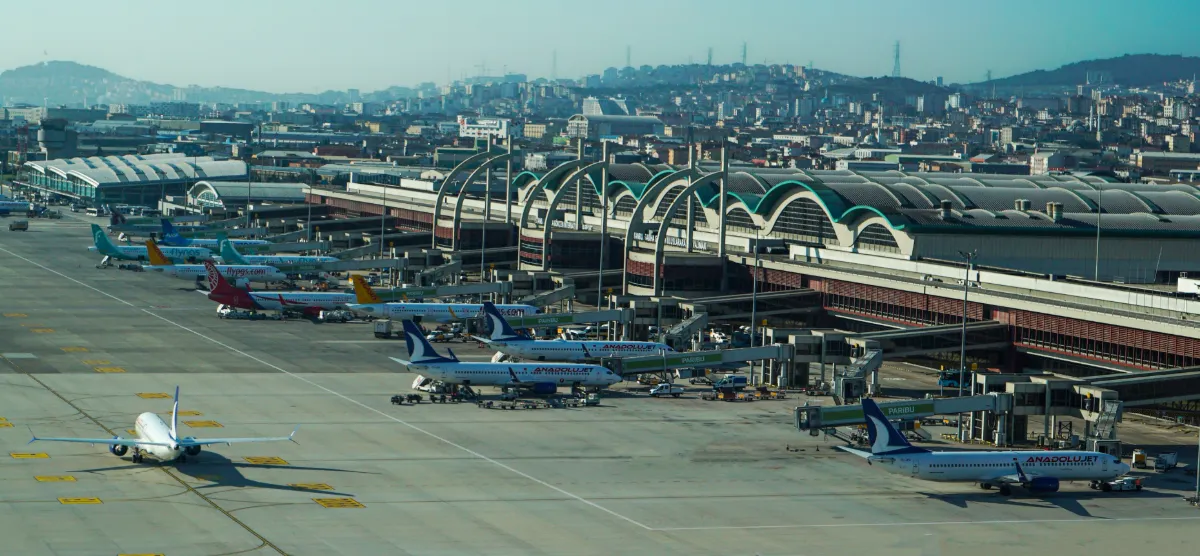
Turning to Turkiye, Mohd Izani said ISG remains a key asset in the group’s portfolio, handling 48 million passengers last year and ranking among Europe’s 10 busiest airports.
A major development was the reopening of Terminal 1 at the end of December, which had been closed after operations were consolidated at Terminal 2 following MAHB’s takeover.
The terminal has added capacity for up to five million passengers annually and has helped ease congestion, although demand is expected to absorb the additional capacity within a few years.
As a result, discussions are ongoing with Turkish authorities on the development of the Midfield Terminal, a project being led at the shareholder level by Khazanah Nasional Bhd, Employees Provident Fund and the Joint Investment Plan under the Gateway Development Alliance.



