




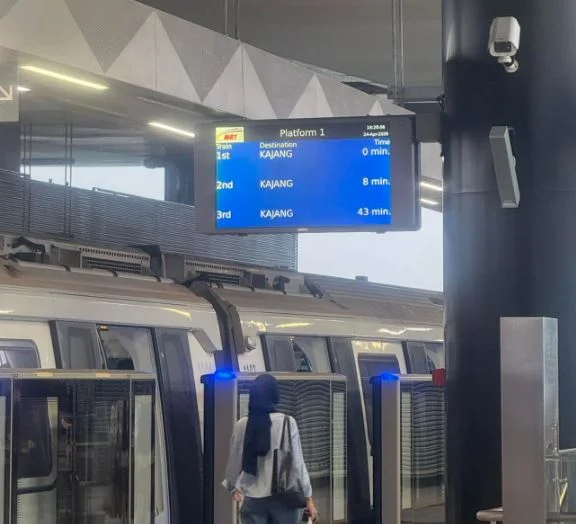
MRT delays and overcrowding spark commuter backlash with safety concerns rising after congestion incident at Bukit Bintang station
KUALA LUMPUR: Frustrated commuters are calling for urgent improvements to the Klang Valley’s MRT services, with one passenger describing the trains as moving “like a sloth” during the morning rush hour.
In a viral Threads post, a Malaysian woman expressed her exhaustion with daily delays, noting that she consistently arrives late for work despite leaving her home significantly earlier than necessary.
“Every morning, every single morning, there are issues with the MRT.
Either the train stops for more than a minute at a station or it moves like a ‘sloth.’ Why?,” she wrote.
The commuter highlighted a discrepancy in train frequency, claiming that during peak hours, intervals are often five minutes rather than the expected three to four.
This delay leads to severe congestion on platforms.
“By the time the next train arrives, the station is already crowded. Only two or three people manage to get on. I usually leave my house 15 to 20 minutes earlier than required, yet I’m still late for work,” she added.
The frustration extends to the evening commute as well, with the user reporting that a journey starting at 5.35pm saw her still stranded at the Taman Midah station much later than expected.
“Although the public is encouraged to use public transport, what is the point if the service is like this?” she questioned.

Another Threads user shared footage of a “dangerous” situation at the Bukit Bintang MRT station.
According to the post, Platform 2 became so congested that commuters descending the escalator were met with a wall of people at the bottom.
With nowhere to go, those reaching the end of the escalator were forced to push into the crowd for space, reportedly causing one woman to fall.
The incident has prompted netizens to question RapidKL’s safety protocols and crisis management systems.
“It’s so dangerous,” one netizen said, questioning why station staff did not immediately stop the escalator to prevent further overcrowding on the platform.
Others wondered why, amidst a crowd of thousands, no one took the initiative to hit the emergency stop button, while some asked if there is a proper monitoring system in place to prevent such bottlenecks.
The growing chorus of complaints highlights a widening gap between the government’s push for public transport usage and the daily reality of the commuter experience.



