




Table of Contents
Curry Barker’s Obsession tackles familiar genre, making movie one of year’s most unsettling horror films to date
AT first glance, Obsession feels like a supernatural thriller about longing, desire and the fantasy of finally being loved back. But as the story unfolds, it becomes clear that the real horror is not supernatural at all. It is entitlement disguised as affection.
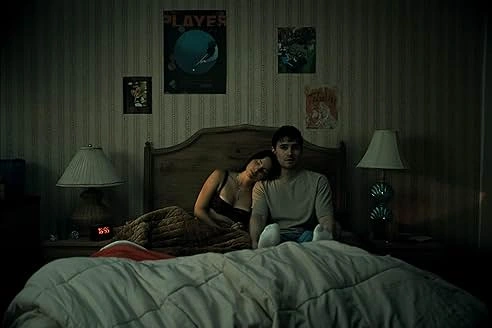
Directed by Curry Barker, the film follows Bear (Michael Johnston), a shy music store employee who harbours feelings for his childhood friend and co-worker Nikki (Inde Navarrette). Unable to confess his emotions, Bear turns to a mysterious wish-granting object and wishes for Nikki to love him more than anyone else in the world.
What follows is not a romance but a disturbing descent into obsession, control and possessive love. Rather than relying on jump scares, Barker builds dread through discomfort, forcing viewers to watch familiar emotions transform into something deeply unsettling.
The ‘nice guy’ as villain
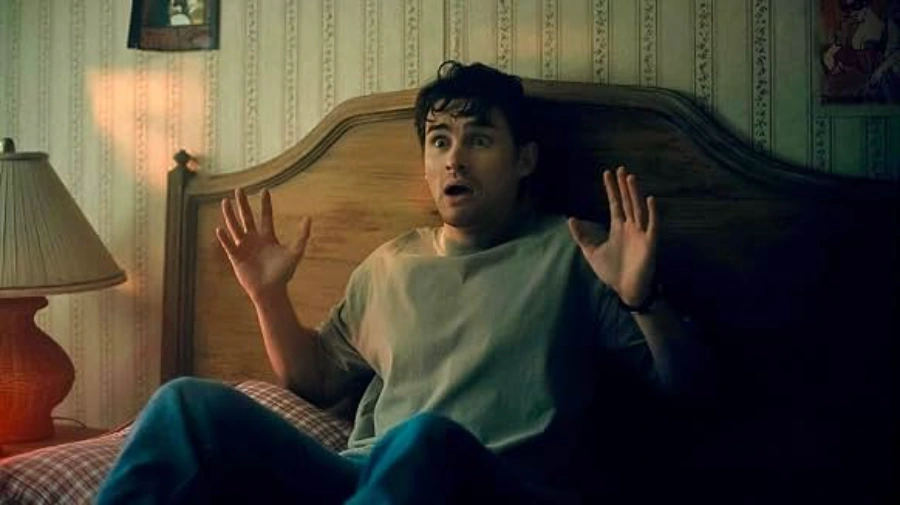
What makes Obsession so effective is its dismantling of the “nice guy” archetype.
Bear is not an obvious monster. He is thoughtful, attentive and seemingly harmless. He sends playlists, remembers details and appears to care deeply about Nikki. On paper, he is the kind of man people might encourage you to date. But beneath that surface lies something far darker.
Bear does not want a relationship. He wants ownership. His affection is conditional on Nikki becoming exactly who he wants her to be. The film expertly exposes how control can masquerade as devotion and how possessiveness can hide behind gestures that initially seem romantic. That discomfort feels painfully familiar. Many women have encountered versions of Bear in real life. The man who insists he only wants what is best for you while quietly deciding what that should look like. The man who frames jealousy as love and persistence as proof of commitment. Obsession refuses to romanticise that behaviour. Instead, it forces viewers to sit with its consequences.
Horror rooted in reality
Beneath its supernatural premise, Obsession becomes a chilling story about consent, autonomy and the dangers of believing love can be earned, deserved or controlled. Bear’s greatest threat is not physical strength. It is his refusal to see Nikki as a fully independent person. Throughout the film, Nikki gradually loses control over her own choices. Her discomfort is dismissed, her boundaries ignored and her fears rationalised away.
The audience begins to feel trapped alongside her as Bear’s fixation tightens its grip. That is what makes him so frightening. He is not a creature lurking in the shadows. He is someone who genuinely believes his actions are justified because they come from a place he interprets as love. The horror lies in watching Nikki slowly lose ownership over herself.
Horror lives in the details

Barker’s direction is remarkably restrained. Rather than relying on explosive scares, he finds terror in small moments that feel almost ordinary. A lingering stare. An overly personal gift. A text message that arrives at exactly the wrong time. A hand that remains on a shoulder a little too long. The camera frequently lingers on interactions that should feel harmless but instead create growing unease.
The film’s most shocking moments involve graphic violations of Nikki’s body. While the imagery is grotesque and surreal, the themes beneath it are grounded in questions of consent and autonomy. Nikki’s body becomes a battleground where decisions are made without her permission and her needs become secondary to Bear’s desire for control. The physical horror serves as a metaphor for emotional violation. Nikki is no longer treated as a person with agency but as something to be reshaped according to someone else’s wishes.
That idea resonates long after the gore fades from view. The film understands that losing ownership over your own body can be one of the most terrifying experiences imaginable. By externalising that fear through body horror, Obsession transforms a deeply human anxiety into something visually devastating.
Distinctly female perspective
One of the film’s greatest strengths is its commitment to a female-centred perspective. The camera never objectifies Nikki or fetishises her fear. Instead, it focuses on her internal experience: the hesitation in her voice, the tension in her body and the quiet calculations she makes while trying to determine whether her discomfort is justified. There is a powerful authenticity to those moments. Many women will recognise the experience of trying to remain polite while every instinct is telling them something is wrong. Rather than exploiting those feelings, Barker allows them room to breathe. The result is a horror film that feels emotionally truthful in ways many genre entries rarely achieve.
Ending that refuses easy answers
Obsession does not offer a neat resolution. There is no triumphant final confrontation or clean sense of justice. Instead, the film embraces ambiguity and discomfort.
By the final act, reality and psychological imprisonment become increasingly difficult to separate. Nikki finds herself trapped within the very thing she fears most: becoming an extension of Bear’s desires rather than her own person. The ending denies viewers easy catharsis. It is messy, unsettling and emotionally devastating. Yet that refusal to provide comfort is precisely what makes it effective. The film recognises that real-life violations of autonomy rarely end with satisfying closure. Sometimes the damage lingers. Sometimes the consequences remain unresolved. Obsession understands that reality and refuses to soften it.
Why it works
What ultimately makes Obsession so compelling is its honesty. Johnston delivers a carefully balanced performance that keeps Bear understandable without ever excusing his actions. Meanwhile, Navarrette is exceptional as Nikki, capturing her growing fear, confusion and desperation with remarkable nuance.
Barker also demonstrates impressive confidence behind the camera. Despite its modest scale, the film feels polished and purposeful, balancing romance, dark comedy and psychological horror without losing sight of its central themes. More importantly, Obsession feels timely. In an era increasingly shaped by conversations around boundaries, entitlement and modern relationships, its message lands with unsettling clarity.
Verdict: Chilling, brilliantly uncomfortable look at control
Obsession is not a horror film about monsters. It is a horror film about people who mistake possession for love and control for affection.
Through sharp performances, meticulous direction and a deeply uncomfortable exploration of consent and entitlement, Barker delivers one of the most psychologically unsettling horror films in recent memory.
It is disturbing, emotionally exhausting and often difficult to watch. But it is also intelligent, timely and impossible to forget.
Verdict: A disturbing, brilliant and deeply necessary film that stays with us long after the screen goes dark.
If you are looking for horror that does not just scare you but understands you, Obsession is the one.
READ MORE:
The ghosts aren’t in the ballot box, they’re in broken promises
Colony review: Novel ideas hampered by weak characters
Vanishing trails, unseen voices and the legend of the Orang Bunian



