




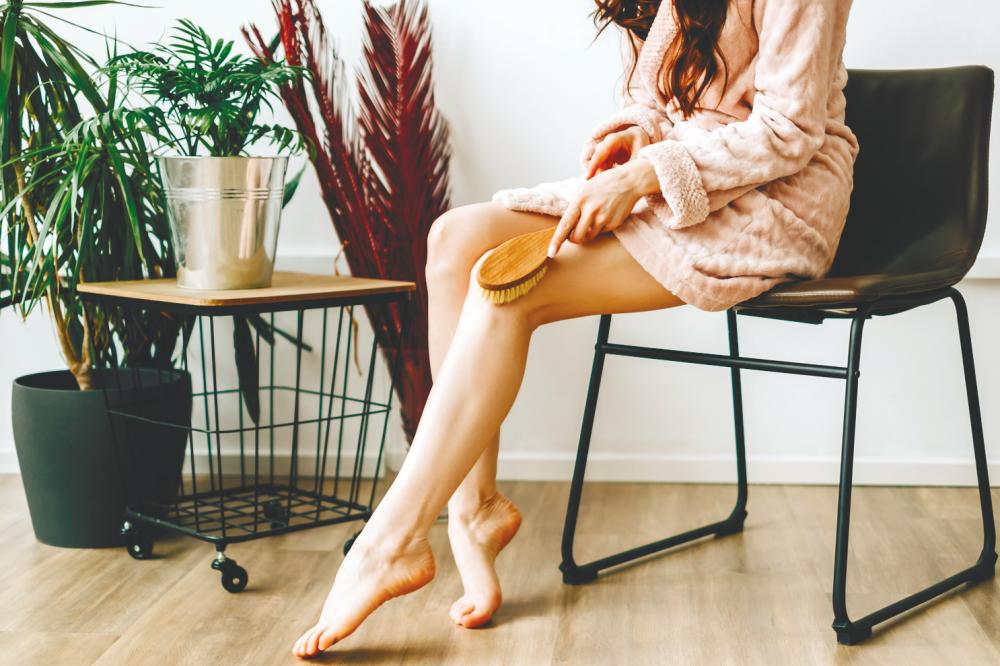
GROWING up, you might have seen distinctively beige natural luffa sponges in your house, but perhaps you didn’t know what they were for. If you asked your mother, she might tell you that they were for dry brushing. So, what is dry brushing?
Dry brushing is a type of Ayurvedic practice that has been around for centuries. Practitioners of dry brushing rub a brush with coarse, natural-fibre bristles over their bodies in a particular pattern. The idea is that the coarse fibres will help to remove dead skin and improve the skin’s ability to eliminate toxins through the pores.
It’s believed to have many health benefits including stimulating the lymphatic system, exfoliating the skin, helping the body rid itself of toxins, increasing circulation and energy, and breaking down cellulite, but how much of it is true?
Detoxifying the skin
The mechanical action of dry brushing is excellent for exfoliating rough, dry skin. Dry brushing unclogs pores in the exfoliation process and increases your blood circulation. However, there are no claims of it promoting lymph flow/drainage. Even so, dry brushing can feel good since it’s like a massage. It can leave you feeling invigorated like a massage often does.
Giving your skin a more radiant glow
Removing dead skin cells can help make your skin smoother and softer. It can also give your skin a brighter appearance temporarily.
Besides that, dry brushing is gentler on your skin than scrubbing in the shower, as hot water inflames your skin and even strips away oils, fats and proteins that keep your skin healthy, which can cause redness and itching. Brushing your skin while it is dry allows you to exfoliate and increase blood circulation without robbing it of moisture the way it would if you were to exfoliate under hot water.
Getting rid of Keratosis Pilaris
Take note that there is no proof or supporting claims that dry brushing your skin reduces cellulite or the appearance of cellulite, as cellulite is due to fat and collagen bands under the skin. However, many have praised dry brushing for removing Keratosis Pilaris. Keratosis Pilaris, or commonly called ‘chicken skin’, is a build up of proteins called Keratin in the pores. And because of this, it blocks growing hair follicles which results in painless tiny bumps that mostly appear around the upper arms, cheeks or buttocks. They’re usually brown or red bumps – depending on your skin colour – that usually don’t hurt or itch.
Usually, Keratosis Pilaris fades when you reach age 30, but it can flare up during hormonal changes like pregnancy or puberty. That’s where dry brushing comes in. By effectively removing dead skin and eliminating the top layer of the skin, it encourages cell turnover and helps diminish the appearance of bumps and rough patches.
The risks of dry brushing
People with open or inflamed skin, including people with eczema and psoriasis, should avoid dry brushing over the inflamed area. That’s because those skin conditions are essentially open wounds and you could introduce bacteria to the wound, which could lead to infection.



