




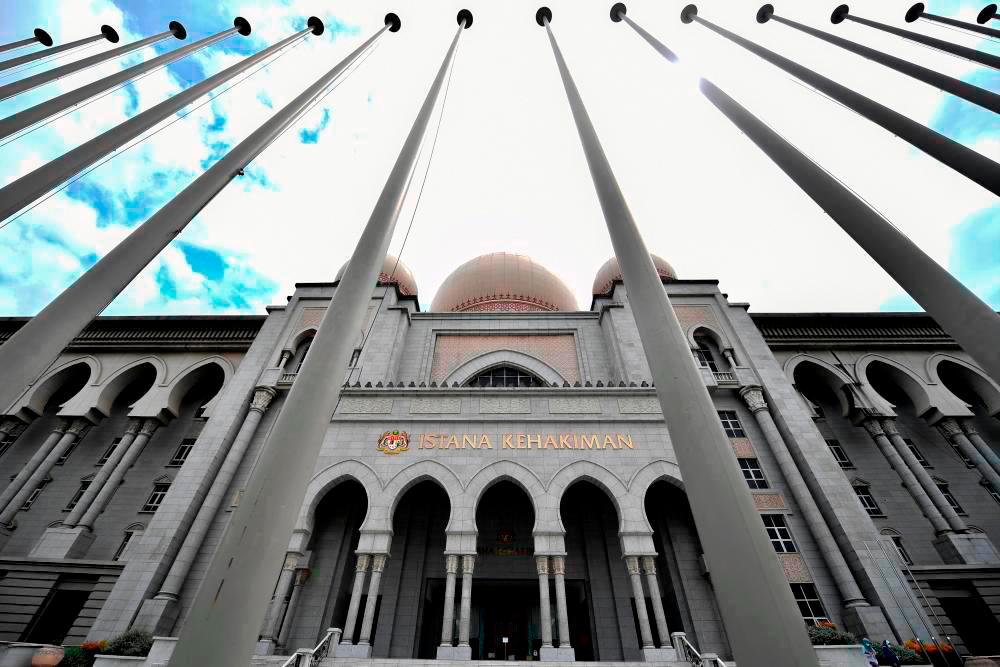
PUTRAJAYA: The Court of Appeal here today dismissed the appeals brought by four organisations which sought a declaration that the existence and establishment of vernacular schools and the use of Chinese and Tamil languages in those schools are unconstitutional.
The four organisations are Islamic Education Development Council (Mappim) and the Confederation of Malaysian Writers Association (Gapena), Ikatan Muslimin Malaysia (Isma) and Ikatan Guru-Guru Muslim Malaysia (I-Guru).
The decision was delivered by a three-man panel comprising Justices Datuk Supang Lian, Datuk M. Gunalan and Datuk Azizul Azmi Adnan today.
Justice Azizul, who delivered the court’s unanimous decision, said national-type schools or vernacular schools are not public authorities and as such the use of Tamil or Chinese languages as the medium of instruction for teaching in these schools are not prohibited.
He said the Kuala Lumpur High Court had correctly decided that the use of Tamil or Chinese in national-type schools or vernacular schools as a medium of instruction is protected by the proviso of Article 152(1)(b) of the Federal Constitution.
“We are of the view that a school is neither a statutory authority nor a public authority, and the use of a language other than Malay in national-type schools as a medium of instruction would not be for official purposes,” said Justice Azizul.
He said a contextual construction of the relevant provisions of the Federal Constitution did not support the appellants’ contention that the provisions of the Education Act 1996 which provided for the establishment and maintenance of schools that uses Tamil or Chinese as a medium of instruction were inconsistent with Article 152 (1) (a) of the Federal Constitution.
“Article 152 (1) (b) of the Federal Constitution has the effect of ‘grandfathering’ the use of other languages at the time of the proclamation of Merdeka,” he said, adding that nothing in that provision limiting the right of the government to preserve the use of other languages in those schools and to take steps to sustain its continued use.
He said the government’s right to preserve and sustain the use of other languages in national-type schools or vernacular schools overrides the proviso in Article 152 (1) (a) which states that the Malay language shall be the language used for official purposes.
“It cannot seriously be argued that the framers of the Constitution had intended for schools employing a language other than Malay or English as a medium of instruction to be unlawful and contrary to the terms of the Constitution, for if this were the case, such schools would have been shut down, abolished or converted upon the adoption of the Federal Constitution,” he said.
Meanwhile, the panel allowed a cross-appeal brought by representatives Chinese educationist groups Dong Zong and Jiao Zong to set aside the Kota Bharu High Court’s determination that vernacular schools were “public authorities”.
On Dec 29, 2021, High Court judge Datuk Mohd Nazlan Mohd Ghazali (now Court of Appeal judge) dismissed the lawsuits brought by GPMS, Mappim, Gapena and Isma. GPMS did not file the appeal to the Court of Appeal.
On May 29, last year, the Kota Bahru High Court judicial commissioner Abazafree Mohd Abbas (now High Court judge) also ruled that the existence of vernacular schools is constitutional and he dismissed the suit filed by I-Guru.
In their suits, the four organisations wanted the court to declare three sections in the Education Act 1996 which allows Chinese and Tamil schools to teach in these languages were inconsistent with Article 152 of the Federal Constitution.
They also sought a declaration that the establishment and existence of vernacular schools infringed Articles 5 (right to a dignified life), 8 (equality), 10 (freedom of speech, assembly and association), 11 (freedom in religion) and 12 (rights in respect of education) of the Federal Constitution.
In the suit filed in Dec 2019, GPMS, Mappim and Gapena and Isma sued several parties including the government and 13 other defendants. Among them were Dong Zong and Jiao Zong, Persatuan Thamizhar Malaysia, Persatuan Tamilar Thurunal (Perak) and four political parties – MIC, MCA, Gerakan and Parti Bumiputera Perkasa Malaysia.
As for I-Guru, the organisation sued the Education Minister, the government of Malaysia, seeking for a declaration that section 28 and section 17 of the Education Act 1996 are inconsistent with Article 152 of the Federal Constitution and it is void and of no effect.
The Chinese Language Council, the Tamil Language Association and the Confederation of Former Tamil School Pupils, MCA and the United Chinese School Committees Association of Malaysia (Dong Zong) were allowed to become interveners in the suit filed by I-Guru.
Lawyers Mohamed Haniff Khatri Abdullah represented Mappim and Gapena, while lawyer Mohd Khairul Azam Abdul Aziz appeared for Isma and lawyer Ramesh NP Chandran represented I-Guru while a team from the Attorney-General’s Chambers led by senior federal counsel Liew Horng Bin appeared for the Education Minister and the Government of Malaysia. –Bernama



