





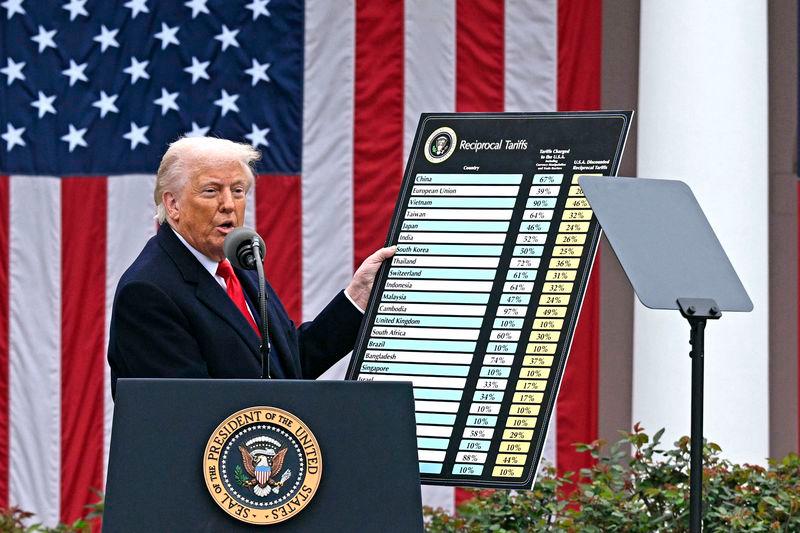
KUALA LUMPUR: On April 2, 2025, President Donald Trump announced a series of tariffs targeting several ASEAN nations, significantly raising import duties on key regional trade partners.
These tariffs, branded as part of his “Liberation Day” economic strategy, aim to pressure ASEAN economies but risk triggering inflationary pressures in the United States (US) and beyond.
Tariffs on ASEAN countries:
Vietnam: 46 per cent tariff on imports
Cambodia: 49 per cent tariff on imports
Thailand: 36 per cent tariff on imports
Indonesia: 32 per cent tariff on imports
Malaysia: 24 per cent tariff on imports
These tariffs significantly affect ASEAN economies, particularly those reliant on exports to the US. However, while they present economic challenges, they will not lead to ASEAN’s collapse. The real concern lies in their ability to disrupt ASEAN unity and create inflationary pressures.
Why ASEAN Will Not Collapse But Faces Challenges
ASEAN has weathered multiple external shocks, from the 1997 Asian Financial Crisis to US-China trade wars. Despite the disparate effects of these tariffs, ASEAN’s institutional frameworks — such as the ASEAN Economic Community (AEC) — help maintain regional resilience.
However, the unity of ASEAN may be tested as member states with higher tariffs, such as Vietnam and Cambodia, might seek separate negotiations with the US, leading to potential divisions within the bloc.
Inflationary Pressures: A Global Concern
The most immediate impact of Trump’s tariffs will be inflation, both in the US and worldwide. As import costs rise, businesses will pass these costs onto consumers, driving up prices.
Historical examples, such as the Corn Laws in 19th-century Britain, show that protectionist policies often lead to economic inefficiencies and increased costs.
Deborah Elms, Executive Director of the Asian Trade Centre, argues that supply chain disruptions from tariffs create long-term inflationary pressures, particularly in industries reliant on global trade.
Jeff Friedman at Harvard University, an expert in trade policy, further warns that retaliatory tariffs from ASEAN could deepen inflationary spirals.
The Strategic Response: ASEAN’s Trade Diversification
To counteract these economic pressures, Malaysia and ASEAN must strengthen their trade partnerships through Regional Comprehensive Economic Partnership (RCEP), the Comprehensive and Progressive Agreement for Trans-Pacific Partnership (CPTPP), and South-South cooperation, and expand trade with the European Union (EU) and the Gulf Cooperation Council (GCC).
RCEP & CPTPP as Economic Shields
Deborah Elms emphasises that agreements like RCEP and CPTPP provide ASEAN with alternative markets, reducing reliance on the US and shielding economies from trade disruptions. These agreements enable ASEAN nations to deepen intra-regional trade and attract investment.
South-South Cooperation & Global Partnerships
Professor Rajah Rasiah highlights the importance of strengthening economic ties with emerging markets in Africa, Latin America, and the Middle East. Increased trade with these regions allows ASEAN to bypass Western-centric economic dependencies.
Expanding Trade with the EU & GCC
Recently, Malaysia resumed negotiations for an EU-Malaysia Free Trade Agreement after 12 years, demonstrating a commitment to economic diversification.
Strengthening ties with the GCC provides access to high-value markets and energy-sector cooperation.
Conclusion: Navigating a New Economic Reality
While Trump’s tariffs will not dismantle ASEAN, they pose significant challenges that require a unified and strategic economic response.
By prioritising RCEP, CPTPP, South-South trade, and partnerships with the EU and GCC, ASEAN can withstand these pressures and emerge stronger.
The real fear lies not in ASEAN’s collapse, but in inflationary spirals that will impact global economies –including the US itself.
Dr Phar Kim Beng is a professor of ASEAN Studies at the International Islamic University of Malaysia (IIUM)



