



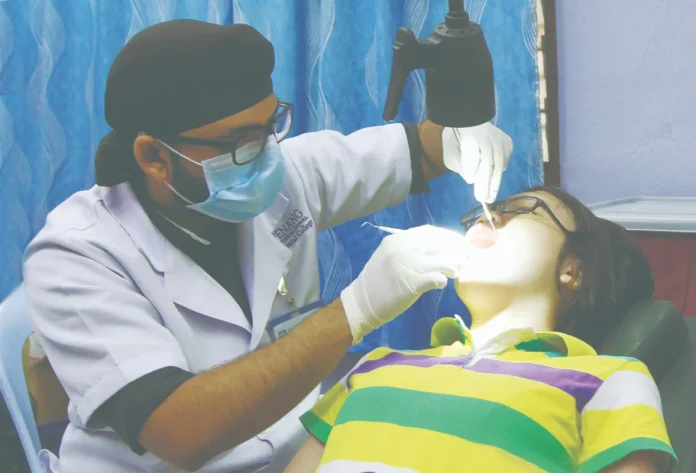
Six in 10 Malaysian five-year-olds have cavities as experts urge early dental visits, better awareness and improved access to prevent severe oral problems.
PETALING JAYA: The dental health of children in Malaysia remains severely under-prioritised despite growing awareness on oral hygiene, and continues to receive far less attention than other paediatric health issues.
Dental officer Dr Mazwin Mazlan said the Health Ministry National Health and Morbidity Survey: Maternal and Child Health 2022 highlights that tooth decay is occurring very early among children in Malaysia, with six out of 10 five-year-olds having cavities.
“Children’s oral health in Malaysia is often overlooked for several reasons. Many families do not practise consistent preventive care, and irregular brushing habits are common because parents may underestimate the importance of baby teeth.
ALSO READ: Young boy loses all 12 teeth from neglected oral hygiene
“Dental problems are often viewed as less urgent than other health issues, so they get less attention although poor oral health can lead to serious long-term effects.”
She said the World Health Organisation 2019 Global Oral Health Status Report showed Malaysia had the third-lowest rate of untreated decay in permanent teeth among those aged five and above, at 22.8%, out of 194 countries.
“We urge stronger parental education, better preventive care, earlier and routine screenings as well as systemic integration of oral health into early childhood care.”
Mazwin said both lack of awareness and issues with access contribute to delayed dental screening for children, and the problem is more common than many parents realise.
She said many parents were still unaware that a child’s first dental visit should take place by the age of one, leading them to assume that baby teeth are “temporary” and do not require early attention.
“This misconception often results in dental problems being detected only when cavities are already advanced.
“Access is also an issue. While government dental clinics offer free or low-cost care for children, long waits, distance to clinics, parents’ work schedules and limited child-focused services discourage early visits.
“These awareness and access barriers mean many children miss the critical window for early screening, prevention and treatment.”
Mazwin said one of the biggest oral-hygiene mistakes Malaysian parents make is letting children go to bed without brushing after drinking milk, sweet drinks or formula beverages. She said exposing teeth to sugar promotes bacterial growth and could cause severe early childhood cavities.
“In short, early prevention is crucial. Tooth decay and poor oral hygiene can allow bacteria such as Streptococcus mutans to enter the bloodstream, which may lead to heart infections in people with existing heart problems.
“While routine brushing could also cause small amounts of bacteria to enter the blood, severe decay with exposed tooth pulp greatly increases this risk.”
Mazwin said untreated cavities could let bacteria reach the tooth pulp, causing abscesses that may spread to gums, jaw and even the bloodstream, leading to severe pain, tooth loss and serious health problems such as infections in the heart or brain.
She highlighted a Malaysian study (2013–2019) showing that 381 children aged two to six required treatment under general anaesthesia for severe tooth decay.
“Early tooth decay in children can be hard to spot. Parents should look for white or brown spots, tiny pits, sensitivity to sweet, hot or cold foods, changes in chewing or slight gum redness and swelling.
“Pain may not appear until the decay reaches the pulp or an abscess forms, so regular dental check-ups from age one are essential.”



