




Malaysia’s parliament passes the National Trust Fund Bill 2026 to strengthen governance, contributions, and withdrawal discipline for the fund.
KUALA LUMPUR: The Dewan Rakyat today passed the National Trust Fund (KWAN) Bill 2026 which strengthens the legal basis of the fund through more consistent inflows, more disciplined disbursements and clearer governance and accountability.
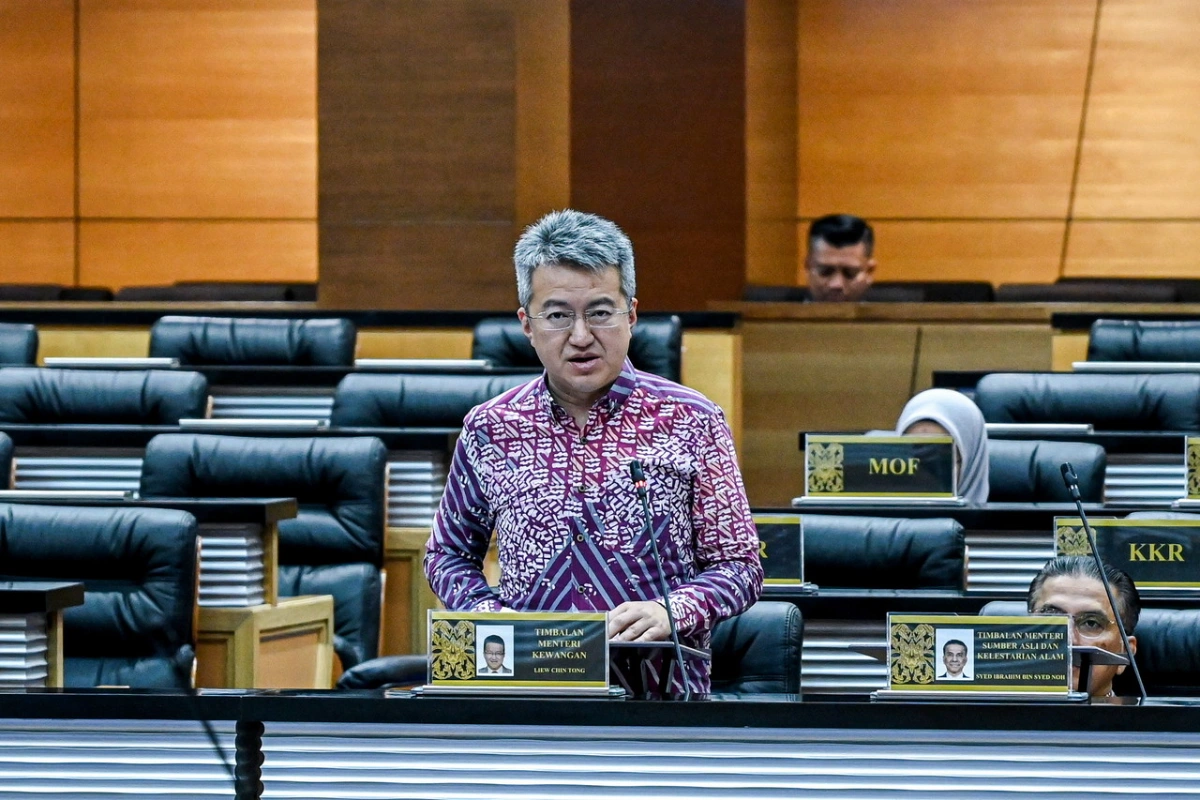
The bill, tabled by Deputy Finance Minister Liew Chin Tong, was passed with a majority of votes in favour after being debated by 14 Members of Parliament in the Dewan Rakyat today.
In winding up the debate, Liew said the KWAN group assets amounted to RM22.43 billion as at the end of 2024, with Petronas remaining the only voluntary contributor, amounting to RM13.5 billion after almost four decades since KWAN was established in 1988.
During the same period, the experience of administering the fund, including the RM5 billion withdrawal episode in 2021 that received public attention, showed that the existing framework needed to be improved, with contributions being entirely discretionary, with no withdrawal limits, and with a general purpose of use.
“This bill is enacted to strengthen the framework through statutory contributions, withdrawal discipline and modern governance,” said Liew.
He said the contribution rate of 0.1% that was set was a minimum rate and that the obligation to contribute to inter-generational savings must remain strong across fiscal cycles and successive governments.
Liew added that the rate can only be changed by Parliament itself through an amendment Act and any government that wants to change it must return to the Dewan Rakyat.
In reply to a question by Datuk Awang Hashim (PN-Pendang) on the fund’s dependence on Petronas, Liew said contributions were no longer at the discretion of one party, with three statutory streams being made mandatory for the first time.
He said Clause 5 maintained a wide scope for voluntary contributions, including from state governments, grants, donations, endowments and bequests, as well as any party conducting research or development of diminishing resources.
“In terms of direction: The fund will continue to be developed as an inter-generational savings, and with consistent statutory flows plus compounded returns, its net assets are expected to double in about 10 years and double every ten years,” he added.
Liew said the bill does not interfere with the Petronas board’s freedom to determine the amount of dividends paid to the federal government, and that remains entirely at the discretion of Petronas.
“What is required by Clause 4(1)(b) is that, of the dividends received by the federal government, whatever the amount, at least 2.0% shall be channelled into the fund. The contribution shall be taken from the federal government’s own share, not imposed on Petronas,” he added.
In terms of determining the long-term real rate of return, Liew said the rate is determined by the board with the approval of the minister, in line with the expected return in the approved Strategic Asset Allocation and the rate cannot be set by one party alone.
“The procedure can be detailed through regulations under the Act. The rate can also be tested by the Dewan Rakyat every year against the fund’s real return record, which is an average of 6.0% per year since its establishment,” said Liew.
He said the government does not intend to make disbursements for needs that have already been allocated through the annual budget, whether operating or development expenditure.
He said the fund is for contingency needs within the three purposes stipulated and the Act sets out the purpose at the principle level, and specific regulations will be issued under Clause 33(2)(a) to control the procedures for withdrawal and use in detail.
Withdrawals from the fund can only be made for contingency needs involving the three purposes, namely education, healthcare and climate change mitigation and adaptation, he added.
He said the minister is prohibited from approving applications outside the three purposes, while every withdrawal must be disclosed and each recipient must report on the use of funds and the results until the money is used up.
He said the bill also strengthens the accountability of Parliament by requiring the audited accounts and annual report of the fund to be tabled in both Houses of Parliament every year, besides not preventing any parliamentary committee from examining the affairs of the fund according to their respective jurisdictions.
Meanwhile, Liew said Bank Negara Malaysia will continue to administer the fund during the transition period of Clause 42; and no issue of employee transfers will arise because the fund does not have its own staff.



