




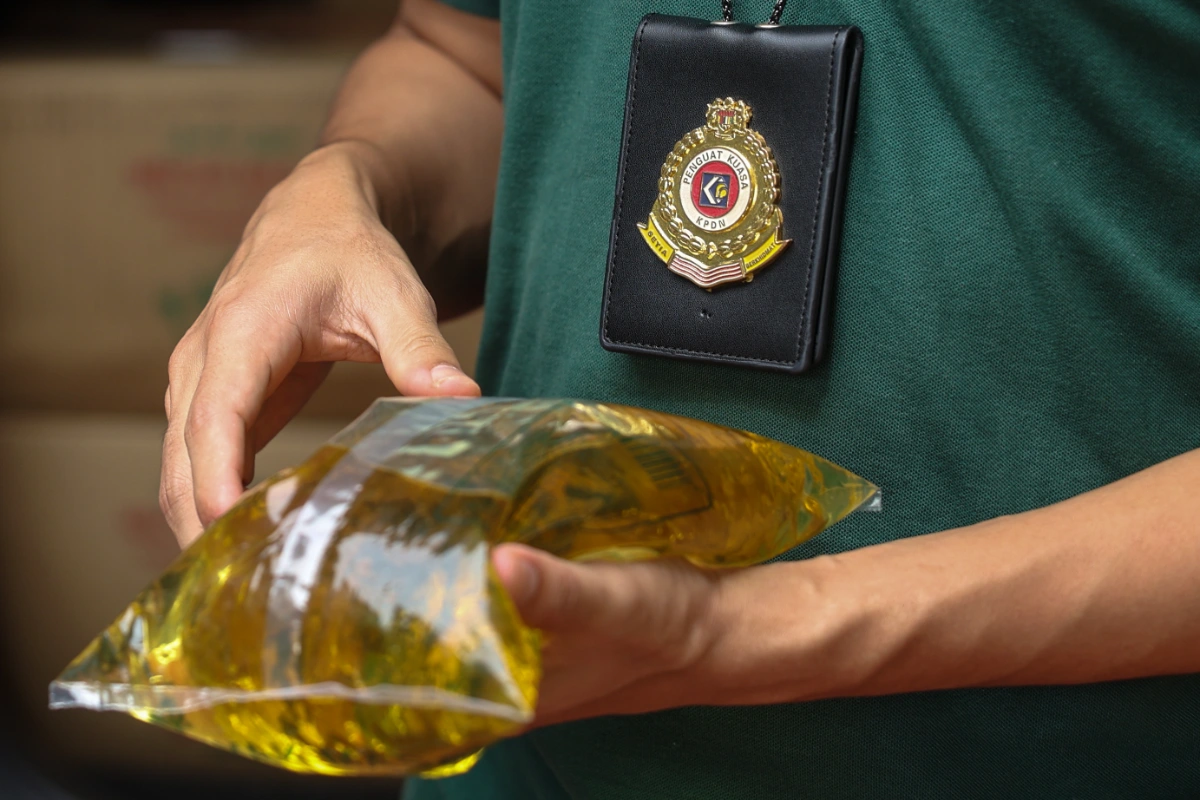
PAC urges KPDN to review the entire cooking oil supply chain and cut quotas by 60,000 metric tonnes monthly to curb subsidy leakage.
KUALA LUMPUR: The Public Accounts Committee (PAC) has recommended that the Ministry of Domestic Trade and Cost of Living (KPDN) conduct a review of the entire cooking oil supply chain and reduce the quota by 60,000 metric tonnes per month.
PAC deputy chairperson Teresa Kok said this was among eight recommendations made based on the results of the investigation during the proceedings on the management of cooking oil price controls and subsidies to be in line with actual domestic needs to avoid leakage and waste of public funds.
“KPDN should review the subsidy rate of RM600 per metric tonne to packaging companies to be more reasonable and competitive in line with current operating costs to save public funds,” she said at a press conference in Parliament today.
She said 10 proceedings were held from August 5 to October 15 last year by calling witnesses including from KPDN, the Malaysian Islamic Development Department (JAKIM) and the Home Ministry (KDN) to give evidence following the Auditor-General’s Report (LKAN) 2/2025 which found that the management of cooking oil price controls and subsidies was unsatisfactory.
She said that as a result of the investigation, PAC concluded that the Cooking Oil Price Stabilisation Scheme (COSS) quota was set at 60,000 metric tonnes per month while the actual domestic needs of Malaysians were estimated at around 19,000 to 30,000 metric tonnes per month.
“The absence of a targeted distribution mechanism has caused the government subsidy funds of RM10.879 billion for the period 2019 to February 2025 to not fully reach the target group, where one-kilogramme packets of cooking oil are often misused by ineligible parties, including foreigners and commercial sector operators,” she said.
According to her, there are two packaging companies that still do not have halal certificates out of the total nine packaging companies raised by the auditors, which should not have happened because JAKIM has improved the halal certification process.
In addition, the proceedings found that there were serious weaknesses in the management of spoiled cooking oil stocks because there was no specific standard operating procedure (SOP) to manage spoiled cooking oil at the packaging company level, which resulted in the government still bearing the subsidy on spoiled stocks that would not reach consumers.
“Ineffective monitoring at the retailer level has resulted in the practice of conditional sales, stock hoarding, and sales above the RM2.50 control price becoming increasingly prevalent in the market,” she said.
She said the market share of subsidised cooking oil at the refining level was found to be unbalanced, with 67% of the quota controlled by foreign companies while the involvement of local government-linked companies (GLCs) such as FGV and SD Guthrie was only 10.6%, while the rest was by local companies.
“The profit margin for repackers who received a subsidy of RM600 per metric ton was seen as too high compared to the actual processing cost which was much lower, thus increasing the burden of government subsidies without a reasonable justification for operating costs,” she said.
She said the PAC also proposed that KPDN ensures subsidy payments to packaging companies are only made on undamaged cooking oil stocks to reduce unnecessary excessive subsidy payments.
In addition, she said the government needs to accelerate the transition from bulk subsidies to fully digital targeted subsidies through the Cooking Oil Price Stabilisation Scheme System (eCOSS) to ensure that assistance is only enjoyed by eligible citizens and to prevent manipulation by irresponsible parties.
“The government needs to study the possibility of redistributing the cooking oil refining quota by giving priority to competitive local companies to reduce the dominance of foreign companies,” she said.
Earlier, the PAC presented the PAC Statement on the Management of Price Control and Cooking Oil Subsidies under KPDN, which among other things outlined recommendations for immediate action by the government.



