




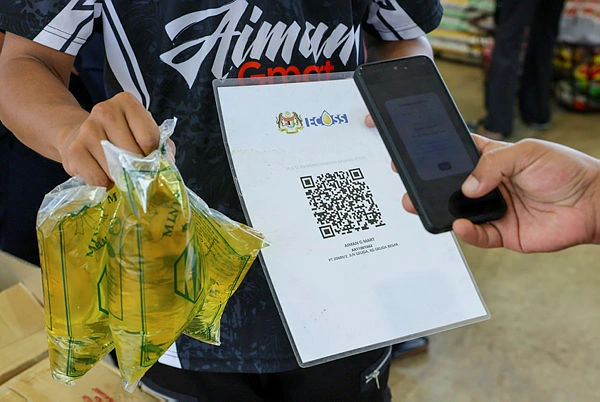
KPDN says the Essential Goods Distribution Programme has standardised prices for controlled items in rural areas, reducing costs for residents.
KUALA LUMPUR: The Essential Goods Distribution Programme has been effective in ensuring the alignment of prices for controlled items, including sugar, wheat flour, packet cooking oil, white rice, liquefied petroleum gas (LPG), RON95 petrol and diesel, in rural and remote areas, according to the Domestic Trade and Cost of Living Ministry (KPDN).
It said that before the implementation of the programme, residents in rural areas had to bear significantly higher costs due to accessibility challenges.
“For example, in the Pulau Libaran zone (Sabah), the price of LPG, which previously reached RM39 per cylinder, has been reduced to the controlled price of RM26.60 per cylinder. Packet cooking oil, which previously reached RM3.50 per packet, has been reduced to the controlled price of RM2.50 per packet,” the ministry said in a written reply to a question from Datuk Suhaimi Nasir (BN-Libaran) in the Dewan Rakyat today.
The ministry said RM250 million has been allocated for the programme this year, benefiting 1.03 million residents in six states, namely Sabah, Sarawak, Terengganu, Kelantan, Pahang and Kedah.
The allocation covers 212 zones, 828 distribution areas and 1,532 points-of-sale (POS), it said.
It said RM107.3 million had been allocated for Sabah this year, covering 78 zones, 228 distribution areas and 587 POS, benefiting 492,566 recipients.
“For the Libaran area, the programme is implemented with an allocation of RM1.76 million, covering eight distribution areas and nine POS, benefiting 17,061 residents,” it said.
To enhance the programme’s effectiveness and curb leakages, KPDN said it had implemented control measures, including establishing standard operating procedures (SOPs) for deliveries and setting up Programme Monitoring and Coordination Committees at the ministry and state levels.
To assess the impact on target groups, it added that the Programme Outcome Evaluation Committee found that the majority of respondents agreed that the initiative had directly helped ease their cost of living and wanted it to be continued.



