




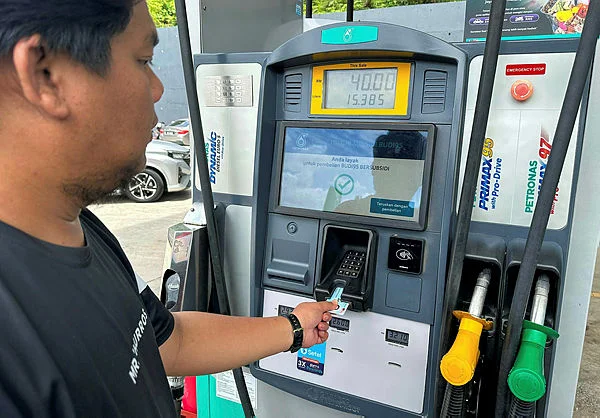
Economist suggests a tiered petrol subsidy system to curb consumption and reduce fiscal pressure as Malaysia navigates global oil market volatility.
PETALING JAYA: Malaysia could consider a tiered petrol subsidy system to curb fuel consumption and ease pressure on public coffers, as the nation navigates lingering risks from the Middle East conflict, economist Geoffrey Williams said.
While Prime Minister Datuk Seri Anwar Ibrahim has assured Malaysians that petrol supplies should last until May, Williams warned that prolonged tensions – or a closure of the Strait of Hormuz – could choke global oil flows and send prices even higher.
As a solution, he proposed a tiered pricing model to encourage more mindful consumption.
“Under a tiered system, petrol could cost RM1.99 for the first 50 litres per month, RM2.33 for the next 25 litres, RM2.63 for the following 25 litres, and the full market price of RM3.27 for anything above 100 litres.
He described it as a bold reform that could help the government save money while nudging consumers to economise.
Williams also highlighted the fiscal pressures of keeping RON95 at RM1.99 amid surging global rates.
“There are three pressures: subsidies for current customers will rise, some consumers will switch from RON97 so the extra demand must be subsidised, and previous savings are minimal and could be wiped out, requiring additional funds,” he said.
Despite these risks, he said current petrol supplies should be enough to see Malaysia through the remainder of the Middle East conflict, which appears to be easing – for now.
The key risk, he said, is if tensions persist and the Strait of Hormuz remains closed, further restricting global oil supplies.
“Oil prices have been volatile, spiking to around US$120 (RM471) per barrel last Monday, but the recent release of 400 million barrels from global reserves is expected to stabilise, rather than lower, prices due to expectations of restricted supply,” he added.
On subsidies, Williams said that more adjustments may be needed as May approaches, potentially catalysing substantial structural reforms.
“If the current situation is short-lived, volatility will spike but recover quickly.
“But if the conflict drags beyond two to three months, we could see serious impacts on growth, trade, and domestic prices,” he warned.
Yesterday, the Finance Ministry in a statement said that retail fuel prices for the week of March 12 to 18 have surged.
Unsubsidised RON95 is now RM3.27 per litre, up 60 sen from last week’s RM2.67.
RON97 has jumped to RM3.85 from RM3.25, and diesel now costs RM3.92, compared with RM3.12 previously.
The steep hikes come amid volatile global oil prices, further pressuring households already grappling with higher living costs.
However, the ministry reassured that under the BUDI95 initiative, RON95 petrol will continue to be sold at RM1.99 per litre, as confirmed by Anwar, despite the recent increases in pump prices for RON95 and diesel amid rising global oil prices.



