



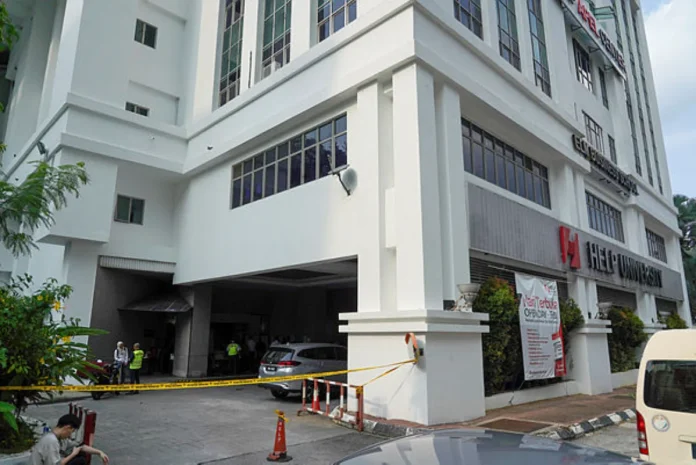
Experts cite ageing infrastructure, weak governance and lax enforcement as key risks
PETALING JAYA: Poor maintenance of air-conditioning systems is a widespread and dangerous problem across Malaysian universities. The fatal explosion at a private campus in Bukit Damansara serves as a stark reminder of the risks of neglect.
The blast, allegedly caused by a faulty air-conditioning compressor, killed one person, injured several others and disrupted campus operations.
A fatal warning on campus safety
Universiti Teknologi Malaysia property economics and finance expert Assoc Prof Dr Muhammad Najib Razali said such risks are especially pronounced at older campuses, where ageing infrastructure, tight budgets and weak maintenance governance often converge.
“Poor maintenance is fairly common, especially in older campuses where systems are ageing and budgets are constrained,” he said.
Ageing infrastructure, weak governance heighten risks
Citing research on Malaysian public universities, Muhammad Najib said inadequate funding, deteriorating infrastructure and reactive maintenance practices contribute to higher risks of electrical faults, overheating, poor indoor air quality, mould growth and fire hazards – all of which directly threaten occupant safety.
“From a risk management perspective, inadequate maintenance of mechanical and electrical systems, including air-conditioning, can escalate into serious incidents such as fires, electrical short circuits, refrigerant leaks and even explosions,” he said.
“These incidents can result in loss of life, serious injuries, damage to property, operational shutdowns, legal liabilities, reputational harm and significant financial costs for remediation and compensation.”
Not an isolated incident
Muhammad Najib stressed that the explosion was not an isolated case.
“In 2024, a major fire at Universiti Sains Malaysia’s engineering campus destroyed critical equipment in a computer laboratory and forced the temporary closure of facilities.
“Internationally, tragedies such as the Florida International University pedestrian bridge collapse (2018) demonstrate the catastrophic consequences of lapses in engineering oversight and safety management.
“These cases underline the critical importance of robust maintenance regimes, regular inspections and effective risk mitigation to protect lives, assets and institutional continuity.”
Maintenance failures can lead to catastrophic outcomes
Muhammad Najib said maintenance practices tend to be weakest on campuses with decentralised management structures, limited funding and a culture that prioritises reactive repairs over preventive planning. While policies and regulations governing building safety are already in place, enforcement remains inconsistent, he said.
Rules exist, enforcement lags
Public universities, although statutory bodies under the Universities and University Colleges Act 1971, are still legally required to comply with national laws, said Muhammad Najib.
“These include the Occupational Safety and Health Act 1994, the Fire Services Act 1988, the Factories and Machinery Act 1967, and state and local requirements including the Uniform Building By-Laws. Stronger guidelines, clearer accountability and tighter regulatory oversight are needed to ensure consistent compliance.”
Supporting this view, Malaysian Association of Facility Management vice-president Dr Mohd Mazhar Mohd Marzuki said recent infrastructure-related disasters – including the CityOne Megamall explosion in 2018 and the Putra Heights gas pipeline incident in 2025 – show how quickly safety lapses can escalate into large-scale emergencies.
Recent disasters expose safety gaps
“Following an incident such as the explosion at HELP University, subsequent inspections and investigations should be handed immediately to authorities such as the Fire and Rescue Department,” he said, stressing that post-incident inspections are critical to rule out hidden structural damage.
“Shockwaves from blasts can induce unseen cracks or weaknesses in beams, columns and walls that may pose collapse risks.
“Electrical systems, air-conditioning and mechanical ventilation plants, and fire protection systems must also be thoroughly checked to prevent secondary hazards.”
Post-blast checks must be immediate and thorough
Mohd Mazhar said early findings suggest the blast occurred in an air-conditioning compressor room during routine maintenance, with a Hazmat assessment ruling out hazardous gases. Nevertheless, he warned against complacency.
“The key lesson is not speculation, but prevention. Preventive maintenance is the first line of defence. Many disasters are avoidable if equipment wear, gas leaks or system faults are detected early.”
Prevention is the priority
He emphasised the need for permit-to-work systems, proper supervision, lockout and isolation procedures and strict adherence to Hazard Identification and Risk Assessment protocols and industry safety codes. Ageing buildings, he added, require special attention.
“Once buildings exceed 20 years, outdated wiring, corroded pipes and ageing air-conditioning systems can become dangerous if neglected. Institutions must budget for lifecycle replacements and avoid ‘fix-it-when-it-breaks’ approaches.”
Older buildings need urgent attention
Both experts agreed that universities must act decisively following recent events.
Muhammad Najib urged managements to immediately secure affected areas, commission independent structural and mechanical assessments and communicate transparently with stakeholders.
“Building users should report unusual conditions such as heat, smell, vibrations or leaks without delay. From a governance standpoint, universities must strengthen oversight of maintenance funding, enforce safety compliance at all levels and integrate building risk management into executive decision-making.”
Mohd Mazhar said investing in up-to-date maintenance practices and relevant technologies, upgrading ageing infrastructure and rigorously enforcing safety protocols are critical to protecting campus communities.
“The blast at the private university is a sobering reminder for all facility managers that safety must be actively managed day-to-day and not only responded to in crisis.”



