




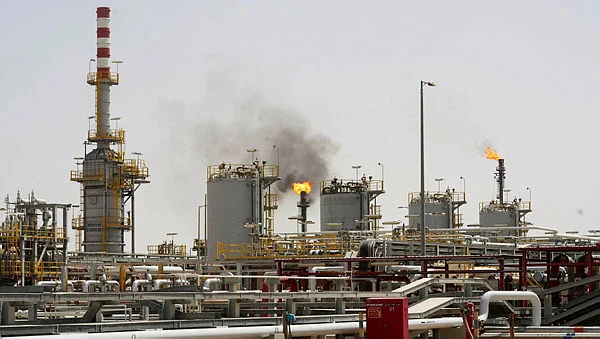
The conflict in West Asia is a stark reminder for Malaysia to accelerate its renewable energy transition to hedge against volatile global oil prices and bolster energy security.
KUALA LUMPUR: An academician has warned that the war in West Asia is a stark reminder for Malaysia to accelerate its transition to renewable energy (RE) as quickly as possible to avoid the pitfalls and cost pressures from unprecedented jumps in crude oil prices.
Malaysia should move quickly to hedge its energy risks and enhance energy security by diversifying into hydro, electrical, solar, or even wind energy, Dr Tan Chee Meng from the University of Nottingham Malaysia said.
Malaysia should reduce its dependence on fossil fuels such as crude oil, which has led to higher prices for diesel and RON97, he said during the Bernama World programme, “Global Energy Crisis and Malaysia’s Clean Energy Future”, hosted by Jessy Chahal recently.
Tan, an assistant professor of business economics at the university’s Faculty of Social Science, said the blockage of crude oil transport through the major maritime chokepoint of the Straits of Hormuz, which led to oil prices at the pump skyrocketing globally, also severely affected Malaysia.
This rise in oil prices also led the government to face a huge financial burden due to the marked increase in payouts for petrol and diesel subsidies when war broke out between the United States and Iran on Feb 28, 2026.
“We are exposed to global oil prices as Malaysia, which, although it is a net exporter of gas, also imports crude oil from Saudi Arabia to power our refineries.
“And when certain energy choke points, including the Strait of Malacca, for instance, are blockaded, and there’s no way of transporting the energy supplies, our energy security will be severely compromised,” he said.
“This becomes a big problem, and, therefore, we need to think about moving to green and renewable technologies as quickly as we can to power our industries,” he said as crude oil prices surpassed the US$100 per barrel mark since the war erupted.
The price of crude oil has climbed to above US$105 per barrel currently after US President Donald Trump announced a blockade of the Strait of Hormuz following the collapse of weekend negotiations with Iran in Pakistan.
“We must look at energy buffers instead of trying to be resilient in this volatile global oil market.
“The more diversity we have when it comes to energy generation, the better it is to ensure our energy security,” Tan said.
This being the case, he said experts are even suggesting that Malaysia bring forward its 2050 target by a decade to realise the National Energy Transition Roadmap (NETR).
In bringing forward the target to 2040, Tan said the question is whether the government and the private sector are ready for the transition.
Tan also questioned whether there are adequate industrial and university partnerships to ensure that Malaysia is not just a major importer of green technology but also if the country is moving into a high-value economy premised on green technology as a platform.
He said that among the challenges to advancing to such a high-value economy are the commercialisation of intellectual property and the development of the research and development (R&D) ecosystem.
“Malaysia has to be self-reliant with our own technologies so that we don’t depend on others if there is an ongoing conflict,” he said.
With sufficient drive from the government and the private sector, Tan said
Malaysia can develop its green technology capabilities within the next 15 to 20 years.
He emphasised that Malaysia needs to be innovative, not merely an assembly line, in areas such as high-tech semiconductor manufacturing.
“STEM (science, technology, engineering and mathematics) becomes so important to commercialise intellectual property and convert science and research projects into actual products that we can use,” he said.
Tan also said that the government needs to provide sufficient incentives to encourage a transition to RE, while the private sector has to realise that RE will have strong demand going forward.
“You can block the Straits of Hormuz and block crude oil supplies, but you can’t exactly blockade solar energy.
“So, obviously, if you have a diverse energy supply coming from renewables and these are things that come naturally, it doesn’t depend on transportation nor on political issues or political stability.
“Malaysia definitely would have a much better time weathering the energy storm. We need to go green or at least ensure that most of our energy consumption comes from renewables,” he added.



