




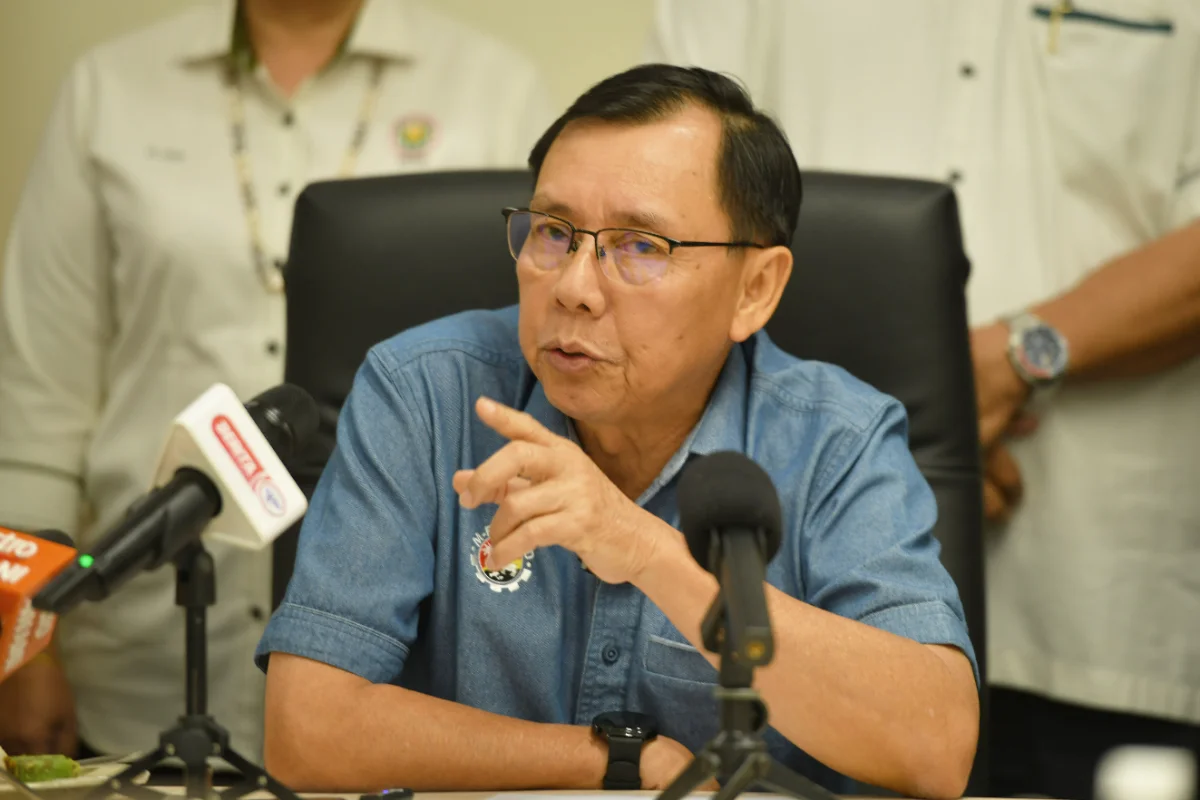
The Bill seeks to create legislation to regulate the use of state land for rice cultivation.
KUCHING: Sarawak will enact a specific law to regulate land use for rice cultivation and production as part of its long-term food security strategy, amid soaring food import bills running into billions of ringgit.
State Minister for Food Industry, Commodity and Regional Development Datuk Seri Stephen Rundi Utom is expected to table the Sarawak Padi and Rice Board Bill 2026 during the upcoming State Legislative Assembly sitting in Kuching, according to a statement by the State Public Communications Unit.
The unit said Sarawak Speaker Tan Sri Mohammad Asfia Awang Nassar confirmed that the Bill would be tabled for debate and is expected to be passed.
“The Bill seeks to create legislation to regulate the use of state land for rice cultivation.
“A special board will be established with legislative powers to govern matters relating to rice production as an important step towards strengthening food security in Sarawak for the years ahead,” the unit quoted the Speaker as saying during a briefing.
It added that two supplementary financial Bills and a Bill on amendments to the Sarawak Economic Development Corporation would also be tabled.
The proposed rice Bill has identified seven large areas in Sarawak to be developed as rice cultivation zones.
The State Assembly sitting at the State Assembly Complex will begin tomorrow and continue until May 20.
It was previously reported that Sarawak imported more than RM7.62 billion worth of food products last year.
The food import bill, which includes rice, vegetables, livestock and animal feed, represented an increase of about RM3 billion from the previous year, Rundi said last year.
“The increase is rising year by year, but the ministry is adopting numerous strategies to increase local food production and strengthen food security,” he said.
“The use of more efficient technology to increase production is essential.
“We cannot continue planting purely on a subsistence basis,” he added.
Rundi also called on younger generations to venture into modern agriculture.
“The young must not view agriculture as dirty, difficult and exhausting work.
“Agriculture can be a major income generator if modernised and supported by advanced technology in planting, cultivation and harvesting, as practised in developed countries,” he said.
He added that Sarawak aims to become a food exporter by 2030.
“Our goal is to drastically reduce the food import bill by increasing local production.
“This will strengthen food security, make food production a key contributor to the Gross Domestic Product, and turn Sarawak into a food exporter by 2030,” he said.



