



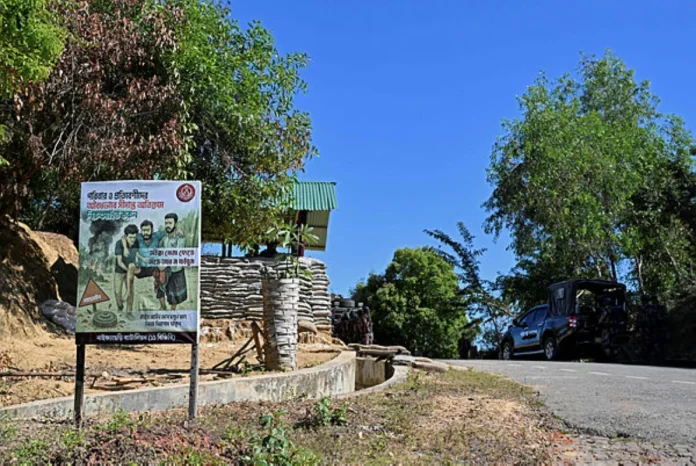
Civilians in Bangladesh lose limbs to landmines from Myanmar’s conflict, with casualties rising as villagers risk forests for survival.
BANDARBAN: Villagers along the Bangladesh-Myanmar border are losing limbs to landmines, becoming casualties of a foreign conflict as they forage for survival.
Ali Hossain, 40, was collecting firewood when an explosion blew off his leg. “I screamed at the top of my voice,” he told AFP.
Neighbours rushed to stem the bleeding and carried him to hospital, where surgeons amputated his leg above the knee.
Now using an artificial leg and crutch, Hossain can no longer work on a rubber plantation. His two young sons must collect firewood after school to help pay for his medicine.
Similar tragedies echo across the region. Mohammad Abu Taleb, 47, lost his leg after stepping on a mine while collecting wood in Myanmar.
“It took away my whole life,” said Taleb, whose 10-year-old son has since dropped out of school to support the family.
Nurul Amin, 23, also lost a leg while trying to bring a cow across the border. His monthly income has now fallen to around $25, which he says is not enough to survive.
Myanmar is the world’s most dangerous country for landmine casualties, according to the International Campaign to Ban Landmines.
The group recorded over 2,000 casualties in Myanmar in 2024, double the previous year’s total. Its report noted a significant increase in mine use in 2024-2025, with more victims near the Bangladesh border.
Bangladesh accuses both Myanmar’s military and rival armed factions of planting the mines. At least 28 people were injured by landmines in Bangladesh in 2025.
In November, a Bangladesh border guard was killed when a landmine tore off both his legs. “This cruelty cannot be legitimised,” said Lieutenant Colonel Kafil Uddin Kayes, a local border commander.
Bangladesh’s border force has erected warning signs and conducts mine-sweeping operations. Yet villagers say the warnings offer little protection when their survival depends on entering the forests.
“The population is increasing, and people are moving closer to the border, as we have farmlands there,” said farmer Dudu Mia, 42. “Planting landmines cannot be the solution.”



