



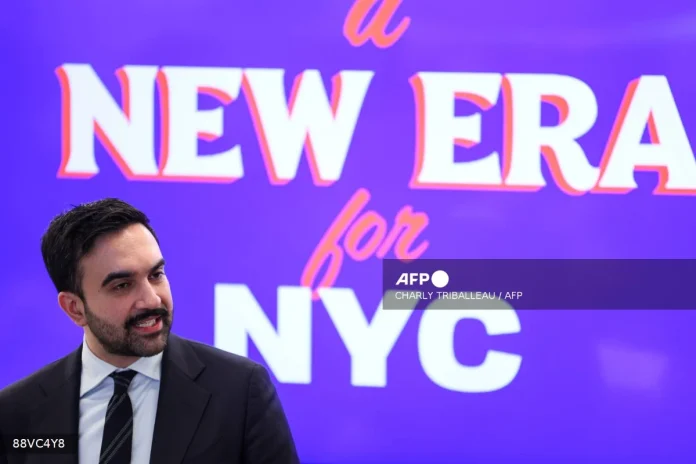
Zohran Mamdani becomes New York’s first Muslim mayor, bringing a Democratic Socialist platform focused on rent control and affordable housing
NEW YORK: Mayor-elect Zohran Mamdani is set to become New York City’s first Muslim mayor. His youthful Democratic Socialist platform faces high expectations as he begins a four-year term.
Attorney General Letitia James will swear him in just after midnight on New Year’s Eve. Vermont Senator Bernie Sanders will preside over a midday ceremony outside City Hall.
The 34-year-old campaigned on addressing the city’s prohibitive cost of living. A key proposal is freezing rent on more than a million apartments.
Other campaign promises include building 200,000 affordable housing units and providing universal childcare. Details of these plans have yet to be fully spelled out.
Mamdani has an excellent relationship with New York Governor Kathy Hochul. She approves measures like the tax hikes he seeks.
Despite political differences, a late November meeting with President Donald Trump was cordial and calm. Mamdani sought common ground on making New York a better place to live.
Federal immigration officers are increasingly active in New York, which could become a flashpoint. Mamdani’s short political resume includes one previous term as a local State Assembly representative.
To compensate, he is surrounding himself with seasoned aides from past administrations. He has also opened dialogue with business leaders who once predicted a wealthy exodus.
As a defender of Palestinian rights, the Muslim mayor of Indian origin must reassure the Jewish community of his inclusive leadership. A recent hire resigned after antisemitic tweets from years ago were revealed.
“The mayor of New York is always a cultural figure,” said Columbia University professor Lincoln Mitchell. Mamdani has captured cultural attention with brief forays into rap and improv classes.
New Yorkers have noted his enthusiastic support of his wife, Syrian-born artist Rama Duwaji. Her Instagram gained over a million followers since November.
“At the end of the day, I’m not a politician,” Duwaji told The Cut magazine. “I’m here to be a support system for Z and to use the role in the best way that I can as an artist.”



