



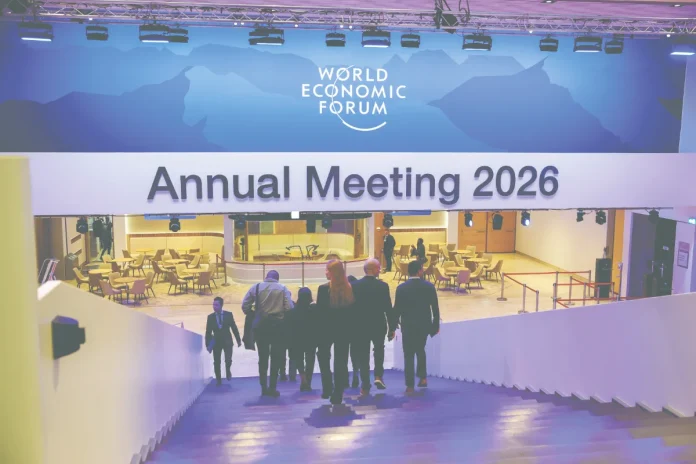
The ‘Spirit of Dialogue’ theme for Davos 2026 addresses a global leadership deficit, calling for empathy and compassionate growth over mere expansion.
FOR decades, businesses have been focused on efficiency, productivity and bottom line. This has delivered extraordinary growth but it has also come at a steep human cost, resulting in organisational fatigue, fraying trust inside institutions and a workforce that often feels disposable.
While leaders may have mastered the language of shareholders and systems, many have forgotten the true art of communication with people. This gap, often overlooked, now sits at the heart of a growing leadership deficit.
This is not only a corporate problem; the same deficit shows up in our societies, politics and even between nations. We talk past one another, optimise for winning and then wonder why cooperation feels impossible.
At a global level, the deeper challenge is not a lack of capability but a growing failure to listen, understand and lead with empathy.
In view of this, the Davos 2026 theme, “A Spirit of Dialogue”, is increasingly central, not only to corporate resilience and long-term relevance, but also to social stability and international cooperation in a fragmented world.
The theme invites us to rediscover the discipline of genuine conversation, to restore trust in an age of polarisation and uncertainty, and to re-examine what leadership must look like in the years ahead.
Growth without humanity is expansion without evolution
Our fixation on economic output has confused expansion with evolution. Growth without humanity may look impressive on paper but it creates a quiet deficit no balance sheet can record: the absence of listening.
This deficit has widened the distance between boardrooms and the workforce. While younger generations increasingly value empathy, many leaders still rank it low. The result is a fragile progress driven by top-down mandates and short-term gains, rather than trust and long-term vitality.
When societies lose the habit of dialogue, they replace understanding with suspicion and cooperation with rivalry, leading to polarisation, stalled reforms and brittle institutions.
This is why a shift towards the Madani framework is critical. By prioritising compassion, social protection and most essentially, dialogue, it bridges the gap to root national reforms in the lived experience of the workforce.
This directly counters the divide between leaders and people, aligning with the people-centred ethos championed by frameworks like the Asean Socio-Cultural Community Blueprint 2025.
It reaffirms a simple truth: organisations thrive not because they speak louder but because they listen better.
Reconstructing growth
Traditionally, growth has been defined by numbers like revenue and GDP. These measures are useful but incomplete. They tell us how much we produce, not how well we uplift the people who make that production possible.
True growth should be about what we become, not just what we build. If progress does not make people more capable, more secure and more connected, we have merely scaled a machine.
Sustainable growth must, therefore, be evaluated by its impact on human well-being. This requires a shift towards broader progress, evaluated by growth quotient that asks whether expansion improves lives, strengthens communities and builds fairness.
Achieving this demands genuine dialogue – moving beyond top-down reporting to feedback mechanisms where people are heard – and investing in human foundations such as learning, dignity and trust, which are essential. This aligns with the Asean Community Vision, prioritising shared well-being alongside economic progress.
The new AI and authentic AI
As organisations rush to adopt artificial intelligence (AI), a critical imbalance is emerging. We are building systems that can process information at extraordinary speed while human judgement and emotional awareness struggle to keep pace.
Without conscious oversight, technology risks amplifying our existing biases and automating yesterday’s prejudices into tomorrow’s realities.
AI excels at data but lacks moral reasoning. This is where authentic intelligence, rooted in empathy and ethics, must play a guiding role. Technology should be shaped by human values, not replace them.
Dialogue is the essential bridge between the two. Without it, AI becomes a megaphone for existing power, enabling faster decisions with less reflection.
Leaders who understand this recognise that innovation without ethical reflection does not lead to progress but repetition. Therefore, workforce development must balance digital skills with ethical awareness, a principle underscored by regional strategies.
Putting this into practice means building systems for participation, where employees and communities can question and contribute before technology hardens into policy.
Leading with compassion
Compassionate leadership is often misunderstood as softness. In reality, it is a strategic discipline. It requires leaders to shift from being the loudest voice in the room to creating the quietest space where others can speak.
This form of leadership honours dialogue as an act of respect, aligned with Asean’s people-centred aspirations, and recognises listening as the foundation for good decisions.
Reflecting this, Prime Minister Datuk Seri Anwar Ibrahim advocates for a leadership style that balances ambition with compassion and intellect with conscience. Leaders are thus tasked to build a compassionate society where economic success does not come at the expense of human dignity.
This spirit of dialogue has been a recurring theme in global leadership conversations, including those shaping the agenda for Davos. When communication evolves from a tactical exchange into a habit of understanding, cooperation becomes natural rather than enforced.
Therefore, the next chapter of growth will be written not just in code or policy but in conversations. For growth to regain its meaning, dialogue must be the currency leaders invest in, allowing communities to regain belonging. Expansion may increase size but only humanity will allow us to evolve.
Datuk Seri Vijay Eswaran is a Malaysian entrepreneur, philanthropist and author.
Comments: letters@thesundaily.com



