




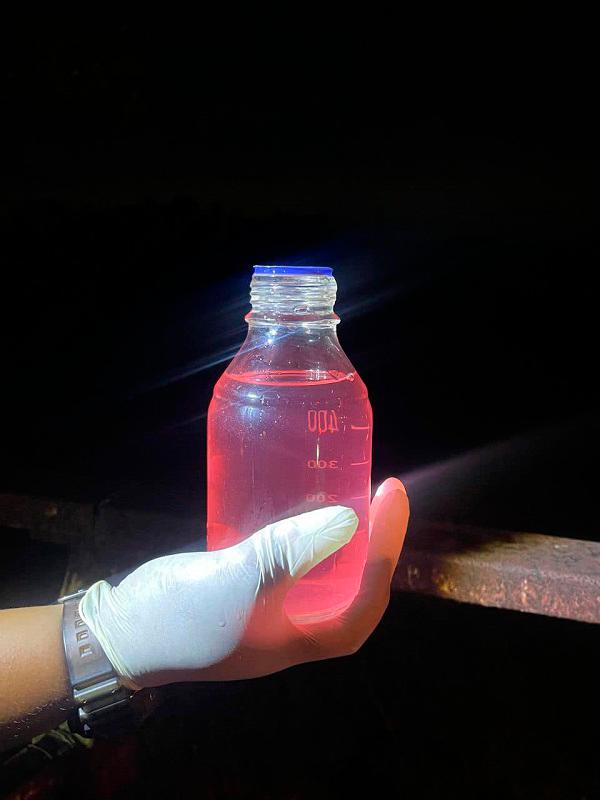
KUDOS to the Selangor Water Management Authority (Luas) for their efforts in detecting the source of the pink-coloured water flowing towards Sungai Kabul from a factory in Beranang on Jan 14.
The polluted water, which stretched for 500m, would have impacted the Sungai Semenyih Water Treatment Plant, located 16km downstream.
Luas’s efforts averted a possible shutdown of the water supply in Selangor, which would have affected thousands of households.
Recently, there have been several reports of water source pollution in Selangor and Johor.
The perpetrators who discharged wastewater showed little regard for the environment or the law.
Although Malaysian environmental laws stipulate heavy fines and imprisonment for violations, in most cases, the courts have been lenient, imposing meagre fines that are often far below the maximum permitted by law.
On June 6, 2024, the Department of Environment (DOE) amended the Environmental Quality Act (EQA) 1974.
The amended act, now the Environmental Quality (Amendment) Act 2024, took effect on July 7, 2024.
The EQA Amendment 2024 introduced changes in penalty fines for various violations.
For instance, the amended act now explicitly states a minimum fine of RM50,000 for discharging waste into water bodies, which was not specified in the previous law.
While the DOE’s laws are stringent, the court also plays a crucial role in protecting our environment.
The imposition of minimum fines alone does little to deter violators.
Instead, the court should consider imposing jail sentences where appropriate to send a clear message to polluters that Malaysia is serious about environmental protection.
In factories where wastewater is generated, the facility must have a wastewater treatment system.
Factories should not be allowed to accumulate wastewater and discharge it at night or during rainfall, a common practice among some factory owners looking to cut costs on operating treatment facilities.
It is time for the DOE to send officers to assess the wastewater generated by factories and verify the existence of proper treatment facilities. Officers should also ensure there is no route for untreated effluent to enter public drains.
The DOE must take a more proactive approach and develop a master plan to demonstrate to the public that they are determined to end pollution.



