




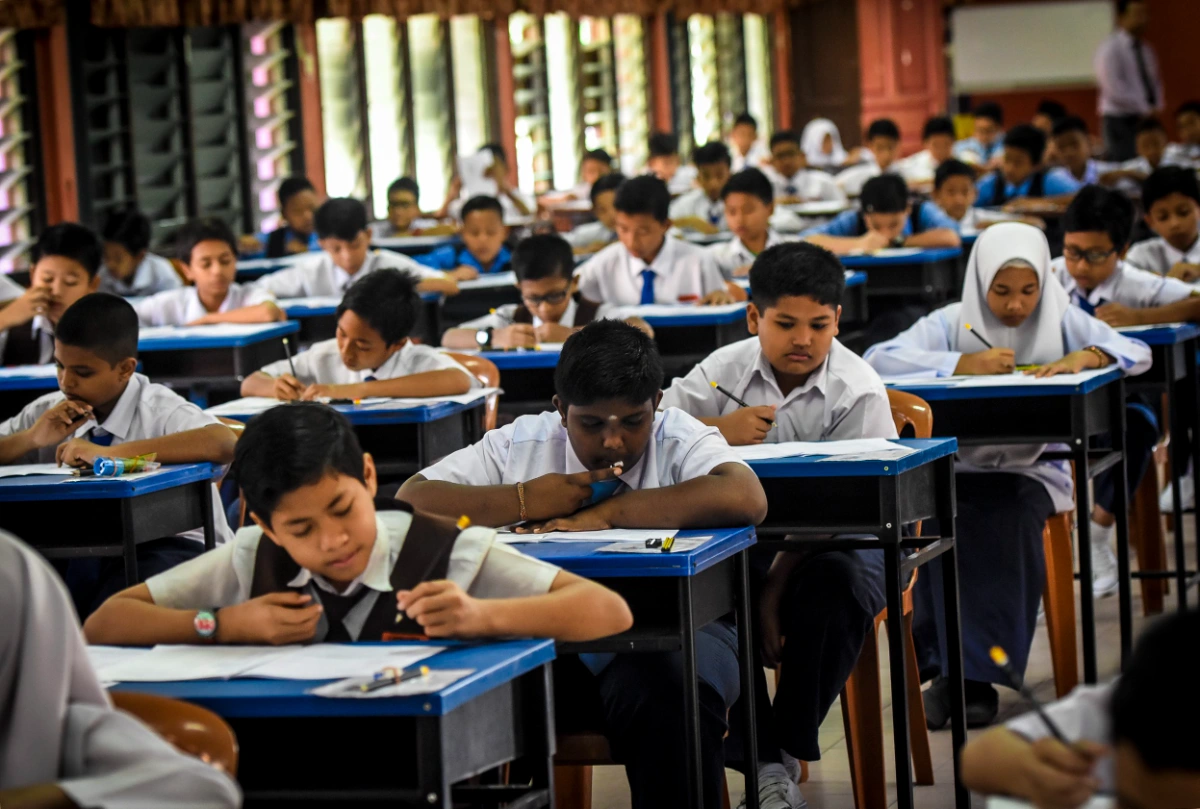
EVERY morning, more than five million Malaysian children shoulder their school bags and walk through school gates. Yet, what they are truly carrying is far more valuable than textbooks and stationery – they are carrying the future of our nation.
Whatever their race or religion, these children are our greatest national treasure.
Are we failing them?
These children dream of becoming doctors, engineers, teachers, scientists, entrepreneurs and innovators. Yet, too often, the lessons they receive from the adults around them tell a different story.
We teach them that race matters more than nation, religion matters more than humanity and politics matters more than progress. But no country has ever achieved lasting prosperity by dividing its children.
Malaysia speaks often of becoming a high-income, innovation-driven nation. Ministers unveil ambitious blueprints, politicians announce sweeping reforms, universities pursue higher global rankings and business leaders lament the shortage of skilled talent. Yet, we rarely confront the question that matters most: What are we doing in our classrooms to help every child realise their full potential?
Are we nurturing curious minds or obedient memorisers? Are we developing innovators or producing examination machines? Are we shaping ethical leaders or merely graduating degree holders?
The uncomfortable truth is that we continue to measure success primarily through examination results. We reward students for reproducing answers rather than questioning them. We celebrate grades while neglecting creativity and we praise compliance more than curiosity and courage.
The world has moved on, so must we
Artificial intelligence can now answer questions, write essays, analyse data and generate computer codes within seconds. But the jobs of tomorrow will demand far more than knowledge. They will require the qualities that machines cannot replicate: critical thinking, creativity, empathy, ethical judgement, leadership and collaboration.
These are no longer optional skills; they are essential for survival in the 21st century. Yet, an even greater danger than AI lurks in our classrooms: the politics of race and religion.
With every election cycle, suspicion seems to deepen. Too many controversies are framed through the lens of ethnicity and too many disagreements risk being inflamed into religious disputes.
Meanwhile, we adults remain trapped in our own echo chambers and our children are watching us closely. What lessons are they learning?
that a fellow Malaysian should first be judged by the colour of their skin?
that neighbours who worship differently should be viewed with suspicion?
that winning political battles matters more than building national unity?
If these are the lessons we pass on, should we be surprised when our brightest minds pack their bags and leave, seeking societies where talent is valued more than identity?
Every child matters
A nation’s greatest resource is not its oil, natural gas or palm oil. It is its people.
Countries like Singapore, South Korea and Finland recognised this decades ago. They invested relentlessly in education, talent development, innovation and social cohesion because they understood a simple truth: every child represents human potential waiting to be unlocked.
Malaysia cannot afford to waste a single child. Not the child in a rural school with limited resources. Not the child in Sabah or Sarawak. Not the Orang Asli child. Not the refugee hoping for an education. Not the struggling student in an overcrowded urban classroom. Because every child whose potential goes unrealised is not just a personal tragedy; it is a national loss.
Education must become more than a system for preparing students for examinations. It must cultivate integrity, resilience, compassion, entrepreneurship, scientific curiosity and independent thinking.
Our schools should be places where children learn to solve problems together, celebrate their differences and build a shared future – instead of inheriting the prejudices and divisions of previous generations.
Teachers deserve better support. They are not just delivering lessons; they are shaping the character, values and aspirations of future Malaysians. That is a profound responsibility.
Parents carry an enormous responsibility too. Values cannot be outsourced to schools alone.
Children learn tolerance by observing the adults around them. They learn honesty by watching their parents. They learn respect by witnessing how families speak about people of different races and religions.
Politicians must exercise greater restraint. Every irresponsible racial or religious statement may generate headlines today but it can leave wounds that take decades to heal.
Winning elections by dividing society is perhaps the easiest form of politics but it is also among the most destructive for the nation.
Malaysia’s children deserve better than becoming soldiers in someone else’s culture war. Imagine if every political speech, every education policy and every national budget began with one simple question: “Will this help today’s children become better Malaysians tomorrow?”
If the answer is no, then it deserves reconsideration. The classroom not a stage for political rallies; it is where Malaysia’s future is being decided.
The verdict
History will not judge us by how fiercely we defended our race or religion in political debates. It will judge us by whether we equipped an entire generation with the knowledge, values, courage and unity needed to build a prosperous and harmonious nation.
The children are already waiting. The future is already sitting in our classrooms. The question is whether today’s adults can move beyond division long enough to build a better Malaysia for tomorrow.
What will we choose to do about it?
Comments: [email protected]



