




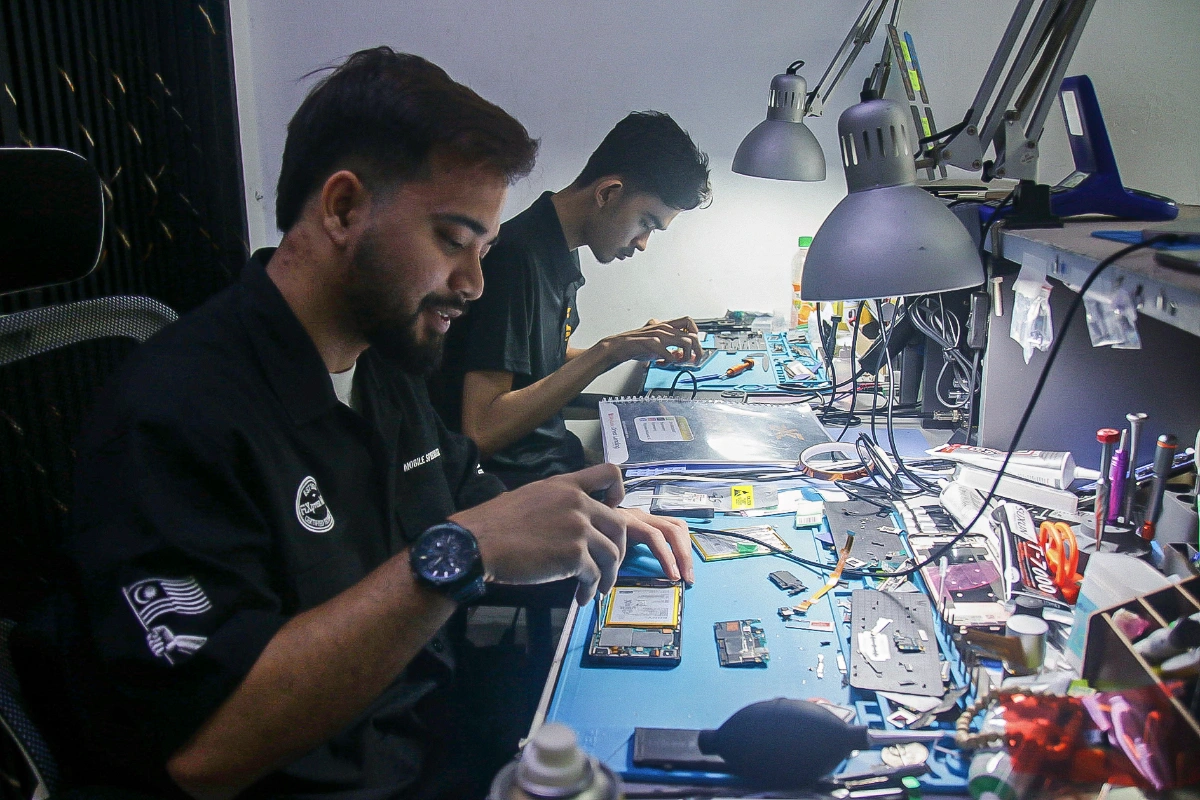
Malaysia must elevate TVET as national economic infrastructure to support high-value industries, advanced manufacturing and workforce competitiveness.
MALAYSIA is positioning itself for growth in advanced manufacturing, semiconductors, digital technologies, renewable energy, automation and other high-value industries.
Billions of ringgit are being invested into new facilities and industrial expansion. Yet, behind every investment announcement lies a critical requirement that cannot be imported indefinitely: skilled people.
In many ways, Malaysia’s industrial ambitions will succeed or fail based on one factor: whether we can develop a sufficiently skilled technical workforce.
It is time we reflect on the strategic role of technical and vocational education and training (TVET) in supporting the nation’s economic future.
For far too long, TVET has been discussed primarily as an alternative educational pathway or a solution to graduate employability challenges. While these remain important considerations, such perspectives no longer reflect the strategic role that TVET must play in a rapidly evolving economy.
TVET should not merely be viewed as an education agenda. It should be recognised as a form of national economic infrastructure that underpins industrial competitiveness, technological capability and long-term resilience.
Many advanced economies understand this reality well. Germany’s dual vocational training system and Switzerland’s highly regarded vocational education model have demonstrated how strong technical education pathways can support industrial excellence and economic competitiveness.
These countries did not become industrial powerhouses by relying solely on university graduates. Their success was built upon ecosystems of engineers, technologists, technicians and skilled trades professionals working in tandem.
Embracing a similar mindset
The conversation should never be about whether engineers are more important than technicians. Modern industries require both.
Engineers typically focus on design, optimisation and innovation while technologists and technicians play critical roles in operation, maintenance, troubleshooting and implementation. Industrial excellence depends on this complementary relationship. This is precisely where TVET becomes critical.
The future workforce will require more than theoretical knowledge. It will demand practical technical competence integrated with digital capabilities.
Modern industrial environments, especially in process industries, advanced manufacturing and the energy transition, are increasingly shaped by automation, robotics, artificial intelligence, industrial data analytics, advanced process control systems and smart factory technologies.
Consequently, outdated perceptions of TVET as low-skilled manual labour are obsolete. Today’s technical workforce must combine hands-on competence with digital literacy, technological adaptability and a commitment to lifelong learning. This presents a significant opportunity for Malaysia.
As high-value industries expand across the country under the New Industrial Master Plan 2030, competition for technical talent will intensify. If the nation can consistently supply competent, industry-ready technical professionals, it will possess a decisive competitive advantage in attracting and retaining high-value foreign direct investment.
In this context, TVET is no longer just an education issue; it is a core pillar of national economic strategy. However, industry itself must also play a more active role in this transformation.
Too often, collaboration between an industry and educational institutions is viewed as a corporate social responsibility activity rather than a strategic workforce investment.
Many TVET institutions are eager to strengthen industry engagement but often struggle to secure sustained participation from experienced practitioners.
Industrial placements, curriculum reviews and mentorship programmes all depend on meaningful contributions from the private sector. Industries cannot afford to complain about talent shortages while remaining disengaged from talent development.
Industries also have a responsibility to ensure that technical careers remain attractive to Malaysians. While foreign workers will continue to contribute to many sectors of the economy, employers should actively create opportunities for skilled local technical talent to thrive.
Shaping a self-reliant workforce
Career progression, continuous skills development and performance-based remuneration are essential to attracting and retaining competent TVET graduates.
The long-term objective should not simply be to fill vacancies but also to build a stronger, more capable and more self-reliant workforce that can support Malaysia’s industrial aspirations.
Equally important is the need to elevate the perception and prestige of technical careers. In countries such as Germany, Switzerland and Singapore, technical expertise is widely respected because it is recognised as a critical contributor to economic productivity.
Malaysia is making strides here, particularly through professional bodies, such as the Malaysia Board of Technologists (MBOT), which provides formal professional recognition pathways for technologists and technicians.
This professionalisation is a crucial step in moving society beyond the outdated notion that success can only be measured through conventional academic degrees. There is profound honour, dignity and economic value in technical mastery.
Malaysia has already made encouraging progress in elevating the national TVET agenda. However, the pace of global industrial transformation demands greater urgency.
Stronger industry participation, modernised facilities, updated curricula and sustained policy commitment are essential to fully unlock TVET’s potential.
Ultimately, Malaysia’s future competitiveness will not be measured by how many conventional graduates we produce but by whether we can build a workforce capable of supporting increasingly sophisticated industries.
If Malaysia truly aspires to become a resilient, innovative and high-value economy, TVET must move from the periphery of national conversations to the centre of our industrial strategy.
Hong Wai Onn is a chartered engineer and environmentalist and a fellow of the Institution of Chemical Engineers, the Royal Society of Chemistry and the Malaysian Institute of Management. He is also the founder of the Research Institute for Sustainable Excellence and Leadership. Comments: [email protected]



