




THE sports industry could well be reaching an “inflection point” – whereby the dissatisfaction and resentment of our athletes at the relevant governing bodies have reached near-irreconcilable levels.
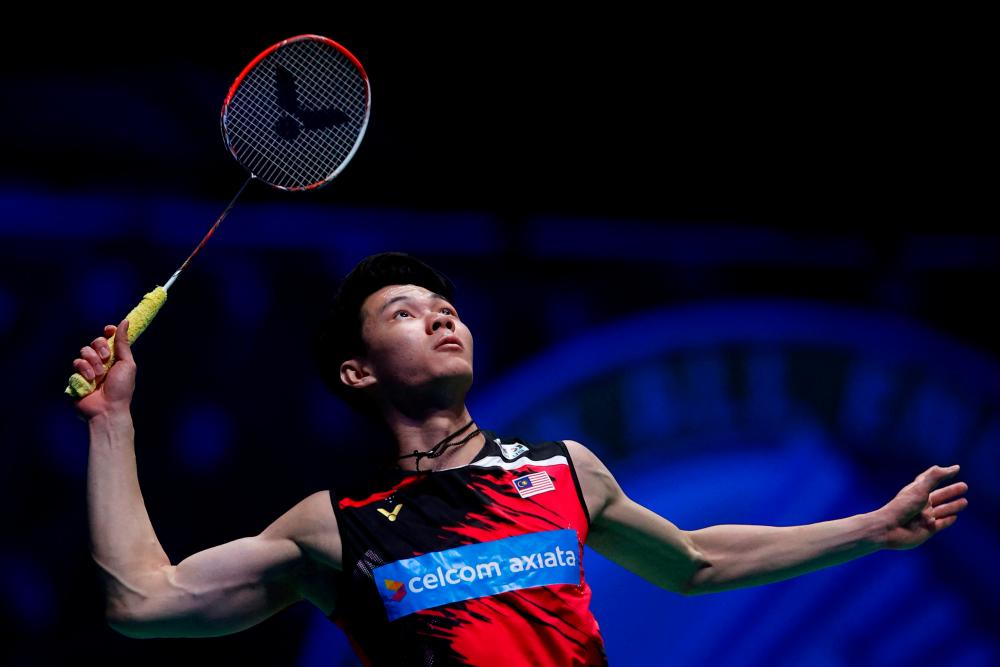
A case in point is when the Badminton Association of Malaysia (BAM) banned national shuttler Lee Zii Jia and former junior world champion Goh Jin Wei from international tournaments for two years. This incident sparked a massive outcry from the public, who felt it was unfair to “bury” the professional careers of the two players as national icons under government’s tutelage and patronage.
The move represents a waste of precious talent and self-inflicted setback to their outstanding achievements when they have done nothing that could be considered as “disrespectful” or churlish. All Zii Jia and Jin Wei wanted was to move on from BAM’s culture and influence after 10 and seven years, respectively.
Take Zii Jia for example. He wants to go ahead with his motivation to become an independent badminton player, which would allow him greater freedom and flexibility to plan and execute his schedule accordingly. This is understood and appreciated by the public, who responded to an online petition, requesting that the ban on the duo be lifted. Currently, the petition has garnered more than 120,000 signatures and is supported by badminton players from various countries such as Denmark, Thailand and Singapore.
This incident is the result of conflicting interests between the athletes and the sports governing bodies. It is symptomatic of the wider malaise and angst or anxieties experienced by our athletes in general. Their interests can be framed as follows:
> Stable income and pension scheme to safeguard their livelihoods even after retirement;
> First class coaches and medical teams to improve skills and treat injuries; and
> Funding and investment in top-notch facilities.
While the “key performance indicator (KPI)” of sports governing bodies are driven by:
> Having a large pool of world-class players representing Malaysia, with outstanding results;
> The compliance and cooperation of the athletes in ensuring the realisation of the organisational vision and mission; and
> Maximisation of the returns on resources invested in the athletes.
Conflict arises when either side cannot meet the expectations and interests of the other. With the broiling undercurrent of mutual antipathy and distrust on both sides, this will inflict lasting damage to the reputation of our sports industry, and heighten the risk of brain drain and exodus of talented athletes.
As there is an imbalance of bargaining power, the athletes are always at a disadvantage. This puts the athletes at risk to manipulation (direct and indirect), or it becomes a case of autocratic imposition of will by the sports governing bodies, irrespective of the sentiments and concerns of the former.
The axing of 144 athletes from the conventional training programmes under the National Sports Council (NSC) was done without prior consultation and, therefore, in a high-handed and disruptive manner. The athletes claimed that there had been no engagement sessions at all. For example, Low Wee Wern – one of the 144 athletes axed – clarified in her tweet in response to NSC that she was never invited to any engagement sessions at all.
It is little wonder that our athletes feel victimised and abandoned. Unfortunately, this kind of power play has long been reflected in our social culture. The most significant feature of this management model is that accountability and transparency are significantly/markedly lacking. This has resulted in most victims being forced to suffer the consequences of decisions without accountability and transparency on the part of the decision-maker.
Thus, borne of frustration or desperation, they may choose to retire when the powers that be are deemed to be unempathetic or no longer supporting them. The athletes may even choose to be coaches overseas or play for their newly-adopted country. This will be a huge loss for Malaysia as many of these athletes have carved a name in high-level international sporting events. Their hard won efforts came about through sheer discipline and sacrifice, including perseverance and mental strength.
On top of that, the experiences of former national athletes could frighten existing ones who are still with NSC, leaving the latter uncertain about the security of their professional careers.
Consequently, existing athletes will become less motivated to perform better because the enormous power and control wielded by the sports governing bodies makes them vulnerable to institutional and political vagaries that is constantly present.
What is more, when there is conflicting interests, the sports governing bodies, institutional and political interests of the day will take precedent by default. Likewise, there could be a situation where potential sports talents may “migrate” to other countries with better facilities and benefits. Should we be heading in that direction, it will be an irreparable blow to our nation – with adverse effects on our performance and potential in international sporting events.
It cannot be strongly emphasised enough that the outstanding performance of players will not only improve the country’s prestige on the international stage but also strengthen national unity and contribute to the development of a more harmonious society. If conflicting interests between athletes and sports governing bodies become rife, constant and irreconcilable with the ensuing situation, whereby a large pool of athletes decide to develop their careers overseas, we will lose one of the potent tools to unite our nation’s diverse communities. We should understand the critical importance of not overlooking and neglecting the welfare and interests of our athletes.
South Korea is one country we can emulate and look up to. The South Korean government is committed to allocating a staggering 1.8 trillion won (approximately RM63 billion) for the sports sector in 2022. It is a vast difference from the allocation of RM289 million to the sports sector mentioned by our Finance Ministry in Budget 2022.
Sports analyst Dr Pekan Ramli said that with such a large budget, South Korea has no fear of disruptions and, thus, can go on improving the strength of its sports in all aspects.
As in our case, without sufficient funds and even zero allocation for the Podium Programme that was introduced in 2015 to groom world-class athletes, there is no point in requiring athletes to fulfil the “towering” expectations and demands of the sports governing bodies.
If the sports governing bodies still insist on outstanding performances from existing athletes in upcoming major sports events (e.g. 2021 Hanoi SEA Games (in March this year) and 2022 Hangzhou Asian Games) under current conditions (e.g. budget cuts and entrenched institutional vested interests), they should brace for conflicting interests to eventually arise.
At the time of writing, Li Zii Jia and BAM appear to have reached a settlement and win-win agreement after meeting with Prime Minister Datuk Seri Ismail Sabri Yaakob and BAM president Norza Zakaria.
As for Jin Wei, she too has met with the prime minister, together with Youth and Sports Minister Datuk Seri Ahmad Faizal Azumu to find a mutually acceptable resolution. Nonetheless, we should understand that such an issue will still arise for the other athletes if the root cause (unresolved conflicting interests) persists in our sports sector – which could trigger a brain-drain phenomenon. Therefore, addressing the root cause should be of the utmost priority and not just the symptom(s).
Jason Loh Seong Wei and Tan Tze Yong are part of the research team of EMIR Research, an independent think tank focused on strategic policy recommendations based on rigorous research.
Comments: [email protected]



