




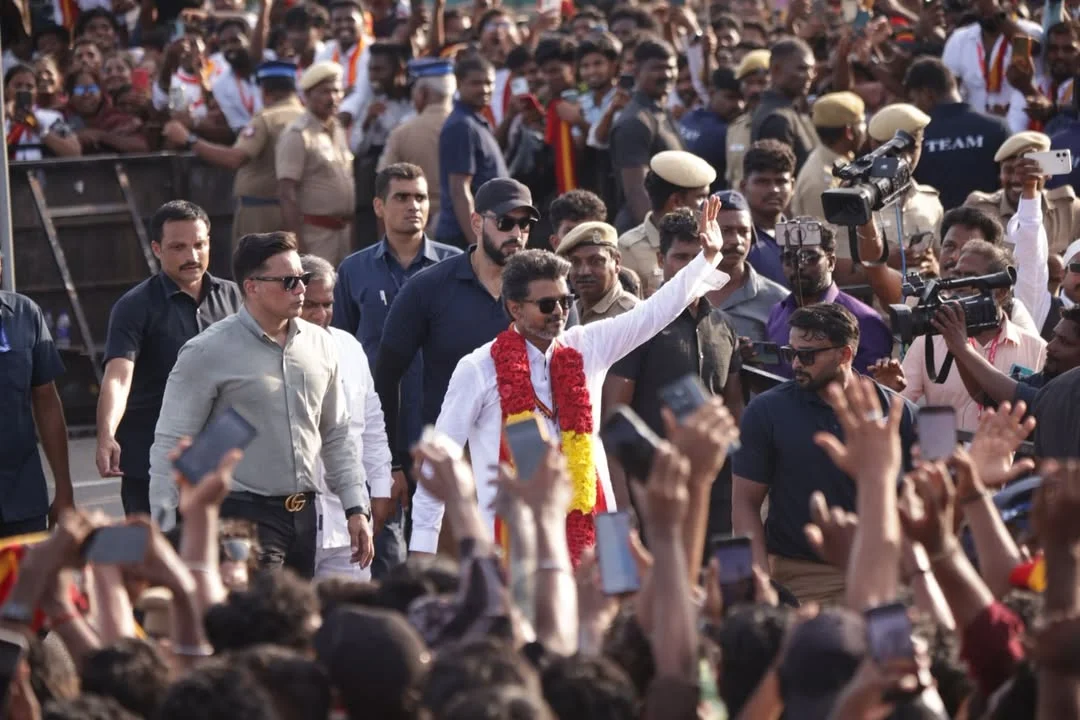
Actor Vijay contests Tamil Nadu elections, shifting voter loyalties and testing traditional party dominance in a fractured political landscape.
VIJAY is how my son knows him.
Not Joseph Vijay, not a politician, not a man contesting one of India’s most closely watched state elections – just Vijay. The hero who always arrives at the right moment, who fixes what is broken, who lives in that comforting space between certainty and spectacle.
In our living room, like in so many Tamil homes far from India, his films are not just watched – they are felt. And maybe that is where this story really begins: not in the political heart of Tamil Nadu but in homes like mine, where identity has always been stitched together through language, memory and cinema.
So, when Tamil Nadu went to the polls on April 23, it did not feel distant; it felt personal. This is a state that has long understood something the rest of the world often underestimates – that cinema is not separate from politics; it is a rehearsal for it.
Long before manifestoes are read, narratives are believed. Long before candidates are tested, they are trusted.
M.G. Ramachandran or famously known as MGR did not simply enter politics; he carried devotion with him, built over years of being seen on screen as a protector and provider.
J. Jayalalithaa did not have to introduce authority; she embodied it, drawing from a legacy in which performance and power were never entirely separate.
In Tamil Nadu, the distance between reel and real has always been negotiable. But what is unfolding now is not a repetition of that past. It is something more unsettled and far more revealing of the present moment.
Vijay is not stepping into a system waiting to crown him. He is stepping into one that is fractured, restless and no longer held together by the same emotional certainties.
The towering figures are gone. The loyalties they commanded are thinner. And the electorate, especially the young, is no longer willing to inherit political allegiance without question.
And into that space walks Vijay. Not with a legacy, not with a political machine but with something arguably just as powerful – familiarity that has already been tested, absorbed and believed.
It is easy, perhaps too easy, to reduce this moment to a simple question: Will he win? With results due on May 4, the expectation remains that established parties will hold their ground.
But to frame Vijay’s entry purely in terms of electoral victory is to misunderstand what is actually happening. He is no longer just a candidate; he is a force to be reckoned with – not because of the seats he may secure but because of the votes he is capable of shifting.
What he brings into this election cannot be neatly measured. It is emotional capital, built over decades, now being redirected into politics. It draws in first-time voters, unsettles long-held loyalties and opens up the possibility – however fragile – that power does not have to remain where it has always been.
In a state where elections are often decided by narrow margins rather than sweeping landslides, that matters. A small shift in sentiment, a fracture in a traditional vote bank or a handful of constituencies tipping differently. This is how outcomes change – quietly but decisively.
For decades, Tamil Nadu politics has been defined by the dominance of the Dravida Munnetra Kazhagam and the All India Anna Dravida Munnetra Kazhagam – two poles that shaped not just governance but identity itself.
This election will not dismantle that structure overnight but it is beginning to test its limits.
There is a restlessness beneath the surface – among voters less bound by history and more open to disruption. Vijay does not resolve that restlessness – he channels it.
Of course, the criticisms are already forming – and not without reason: that this is charisma without clarity, that he risks splitting votes rather than consolidating them and that cinema cannot substitute governance.
These are necessary questions. But they do not cancel out what is already unfolding because politics is not built on policy alone. It is built on belief – on emotion, on connection and on the pull of a figure people feel they already know. And belief, once stirred, does not easily retreat.
From where I sit in Malaysia, this feels like more than just another election. It carries the familiar mix of cinema and power we grew up with but something about it is shifting. We inherited these icons from a distance. We understood Tamil Nadu through films long before we understood it through policy.
And now we are watching that same cultural language reshape its politics in real time – not as spectators but as people still emotionally tethered to what the state becomes.
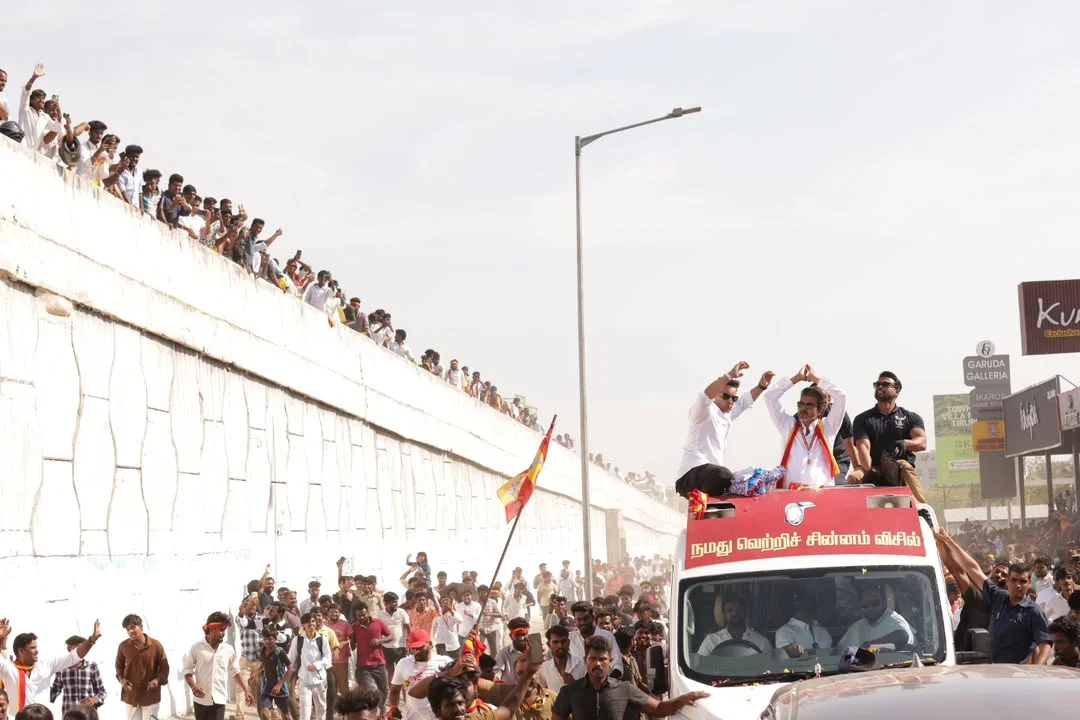
So what happens after May 4? Perhaps the same parties will return, perhaps the same names will hold power but it will not be the same state – because something has moved.
Vijay may not rise to power in the way MGR once did, nor command the sweeping authority of Jayalalithaa. But he does not need to – not yet. Because this moment is not about arrival; it is about entry.
The beginning of a new phase in Tamil Nadu politics – one that is less predictable, less anchored and far more open to disruption.
He may not win this election but he has already changed the terms of it. And in Tamil Nadu, that is often how power begins.
Hashini Kavishtri Kannan is the assistant news editor at theSun. Comments: [email protected]



