




GUANYUN: Americans like their lingerie to be risque, Europeans prefer it more classy, and Chinese remain a bit shy but are opening up. But the biggest order of all came from North Korea.
So goes the street-corner discussion in Guanyun, a sleepy coastal county that for generations followed the rhythms of wheat and rice cultivation, but today concerns itself with global preferences on sensual wear.
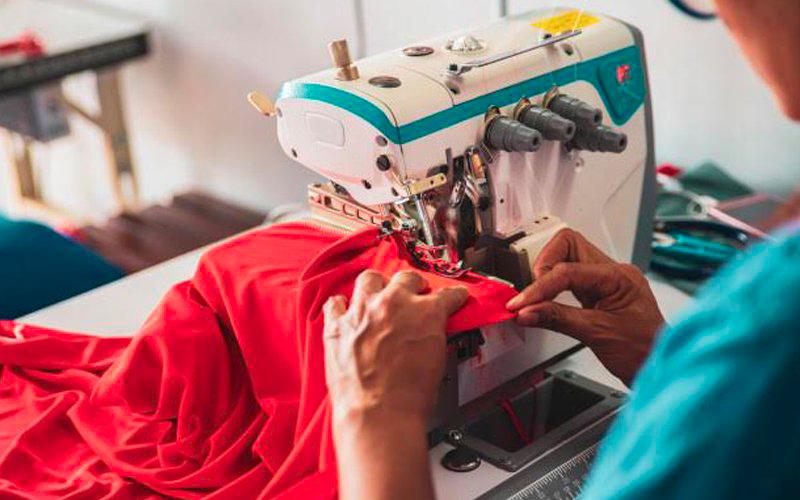
The flat farming region between Beijing and Shanghai is Chinaâs self-proclaimed âLingerie Capitalâ, where sewing machines hum in village-level micro-factories to meet up to 70% of the fast-growing domestic demand.
Millions more items are exported annually in a textbook example of the ability of internet-enabled Chinese entrepreneurs to profit from even the most off-the-wall idea.
The man widely credited with lighting the spark is Lei Congrui, a lanky 30-year-old with a ponytail and cap who would look at home on a skateboard. It all happened almost by accident.
As a teenager, Lei began making extra cash by hawking various consumer goods on Chinaâs rapidly growing e-commerce sites 15 years ago.
âCustomers kept asking if we have any lingerie. I had never heard of it before, but I just said âyesâ and then looked up what it was,â he said.
Lei âfigured out a wayâ and now employs more than 100 workers who push lacy black and red panties and bustiers through stitching machines. His brands such as âMidnight Charmâ pull in more than $1.5 million (RM 6.1 million) in annual revenue, he said.
The success of early movers like Lei inspired an industrial revolution.
Guanyunâs government says there are now more than 500 factories employing tens of thousands and churning out more than $300 million (RM 1.2 billion) worth of lingerie annually.
– âAttitudes are catching upâ –
Loosening Chinese sexual attitudes made it all possible.
Communism left a prevailing legacy of modesty. Pornography is banned and authorities launch periodic crackdowns on anything deemed âvulgarâ.
But prolonged exposure to more open foreign attitudes is liberating a younger generation, especially women.
Market consultancy iiMedia said Chinese online sales of sex-related products grew 50% in 2019 to $7 billion (RM 28.7 billion). It predicted a further 35% growth in 2020 despite pandemic disruptions.
âYouth attitudes are catching up and bringing sensuality into the home. (Lingerie) is becoming popular,â said Li Yue, a local lingerie factory worker.
When Lei first started, most buyers were over 30 and many had lived abroad or had some other exposure to foreign ways.
But by around 2013, volumes soared as younger Chinese consumers began discovering their sensuality, Lei said. Most buyers are now between 22 and 25.
Initially, loose-fitting, not-too-revealing designs were favoured in China. Today, semi-transparent, âbody-huggingâ numbers dominate.
– âEveryone loves lingerieâ –
Guanyunâs industrial reinvention didnât happen overnight. Early pioneers found it hard to hire squeamish local staff.
âWhen they first came in contact with these things, they didnât quite understand,â said Chang Kailin, 58, who runs a factory and is Leiâs uncle.
âBut after the industry got bigger and stronger, people could make money and shake off poverty.â
âNow everyone loves it.â
Lei exports 90% of his output, mostly to the United States and Europe.
Significant volumes also go to South America, where sales indicate role-playing costumes rule the bedroom.
Middle Eastern buyers â favouring longer, more modest items â are also surprisingly active, as are Africans, who like a splash of colour. Southeast Asia is growing fast as well.
But Leiâs biggest single order, worth $1 million, came from a mysterious North Korean buyer in 2012. The customer abruptly backed out without explanation and the merchandise was sold elsewhere.
– âReady to play againâ –
Lingerie has transformed Guanyun, with factories sprouting up next to wheat fields, and newfound wealth displayed in new homes and cars.
Previously, many of the countyâs roughly one million inhabitants left for the hard life of a migrant worker in far-off factories. No more, said Li, the garment worker.
âWorking away from home, you get homesick,â said the mother of two.
âThese companies allow us to come home to work. Itâs not easy out there.â
Guanyun is feeding its golden goose.
It has broken ground on a $500 million (RM 2 billion), 690 ha lingerie-themed industrial zone that will âintegrate R&D and design, fabric accessories, e-commerce operations, warehousing and logisticsâ.
Pandemic lockdowns last year hit output. It has since roared back, but demand remains tepid in overseas markets still struggling with the coronavirus while home-bound consumers are concentrating spending on basic household necessities, said Lei.
âAfter these problems are solved,â he says with a smile, âthey will be ready to play again.â â AFP



