




PETALING JAYA: While there is a rationale to continue with efforts to raise bumiputra participation in the economy to 30%, changes should be made to ensure that all benefits accrued through the policy is shared equitably within the community.
âThis is where careful planning is necessary,â Universiti Tun Abdul Razak economist Dr Barjoyai Bardai told theSun.
For a start, he said, the government should stop giving out major contracts to individuals.
âIf we continue along this path, only those who are close to the government will benefit,â he said.
âThere will not be a trickle-down effect, leaving equity in the hands of just a few,â he added.
Instead, Barjoyai said, contracts should be given to professionally-run bumiputra institutions to ensure that every bumiputra gets a fair share.
He said government procurement should also go to institutions that will distribute all contracts equitably.
Barjoyai proposed that the government creates a platform to help bumiputra entrepreneurs who have viable ideas that can be made profitable.
He said bumiputra entrepreneurs should also start thinking outside the box. âThey should not rely solely on the government,â he said.
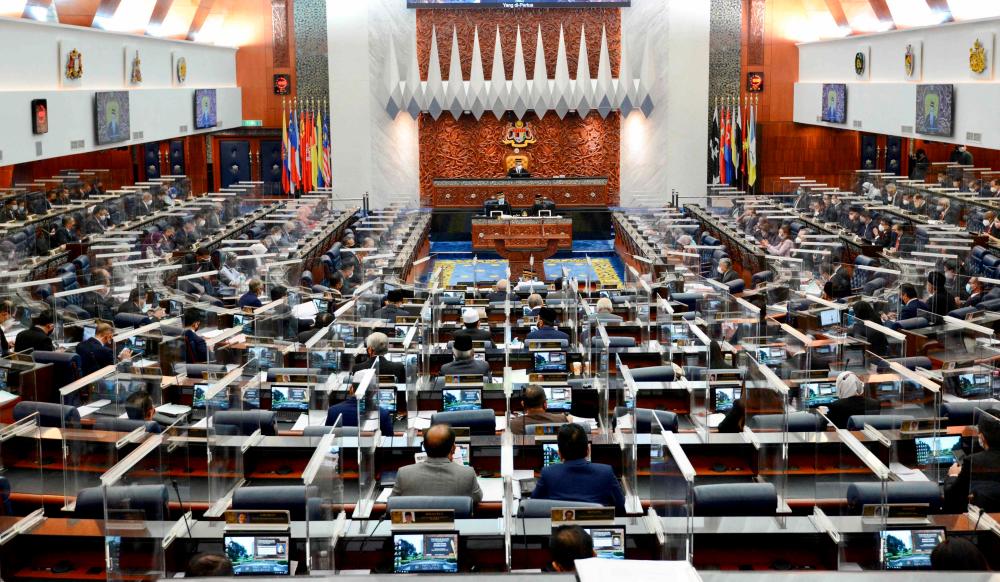
When tabling the 12th Malaysia Plan (12MP) for debate at the Dewan Rakyat on Monday, Prime Minister Datuk Seri Ismail Sabri Yaakob (pix, centre) announced that to achieve 30% bumiputra equity in the economy, bumiputra shares should remain in bumiputra hands.
However, the government has also been advised to step gingerly on the issue of bumiputra share in the economy.
Former Treasury secretary-general Tan Sri Sheriff Kassim singled out a Finance Ministry rule that requires freight forwarding companies to have at least 51% bumiputra shareholding to get their business licence renewed.
However, this applies only to companies that seek government contracts.
âThis means that a logistics company that is now wholly-owned by a non-bumiputra will have to sell 51% of his equity to a bumiputra,â he told theSun.
âItâs well and good if he can find a suitable bumiputra partner, but what if he canât?â he asked.
Sheriff said exceptions should be allowed, especially for companies that have been held by the same family for generations.
He pointed out that many non-bumiputra companies in gaming, banking or the energy business have been able to get government contracts without a minimum of 51% bumiputra equity participation.
Sheriff said that any company that does not seek help or contracts from the government is free to âbe as non-Malay or as foreign as they wantâ.
However, he said, these companies also realise that it is in their interest to have Malays in their staff, management and board and to also hold some shares in the business.
According to another economist, there is a rationale behind the decision to bar bumiputra shareholders from selling their equities to non-bumiputras.
Universiti Utara Malaysia professor of economics Dr K. Kuperan said this has been a long-standing rule necessary to protect bumiputra interests.
He said the government has no choice but to take such action. âOtherwise, some people will take the opportunity to sell their stocks in the open market where they can fetch higher prices,â he told theSun.
In the process, he said, the bumiputra equity in the economy would be reduced.
âBy not allowing the sale of shares to non-bumiputras, the government hopes to raise bumiputra equity to 30%,â he said.
However, Kuperan said, such a policy could weaken the nationâs economy in the long term.
âWe need those with share ownership to work together to grow the economy. They should not just own shares,â he added.



