




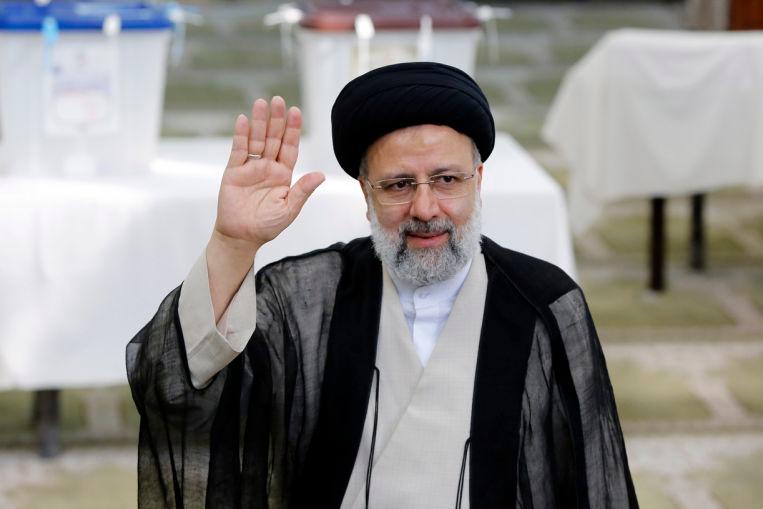
TEHRAN: Ultraconservative Ebrahim Raisi (pix), who was inaugurated as Iranâs president on Tuesday, portrays himself as a pious figure and corruption-fighting champion of the poor.
The 60-year-old takes over from Hassan Rouhani, a moderate whose signature achievement was a 2015 nuclear deal that gave Iran relief from international sanctions.
Critics charge the June 18 presidential election was skewed in Raisiâs favour as strong rivals were disqualified, but to his loyal supporters he is Iranâs best hope for standing up to the West and bringing relief from a deep economic crisis.
Raisi is not renowned for great charisma but, as head of the judiciary, has driven a popular campaign to prosecute corrupt officials.
In the election campaign, he vowed to keep up the fight on graft, construct four million new homes for low-income families, and build âa government of the people for a strong Iranâ.
Many Iranian media outlets see him as a possible successor to the countryâs 82-year-old supreme leader, Ayatollah Ali Khamenei, who was chosen after eight years in the post of president.
Raisi, whose black turban signifies direct descent from Islamâs Prophet Mohammed, holds the title of âhojatoleslamâ â literally âproof of Islamâ â one rank below that of ayatollah in the Shiite clerical hierarchy.
Like other ultraconservatives, he harshly criticised Rouhaniâs camp after the 2015 nuclear deal was torpedoed by then US president Donald Trump, who imposed punishing sanctions.
But like Iranian political figures across the spectrum, Raisi supports efforts to revive the deal to bring relief from Iranâs painful economic crisis.
– Student of the guide –
Born in 1960 in the holy city of Mashhad in northeastern Iran, Raisi rose to high office as a young man.
Aged just 20, in the wake of the 1979 Islamic revolution that toppled the US-backed monarchy, Raisi was named prosecutor-general of Karaj, which neighbours Tehran.
For the exiled opposition and rights groups, his name is indelibly associated with the mass executions of Marxists and other leftists in 1988, when he was deputy prosecutor of the Revolutionary Court in Tehran.
Asked in 2018 and again last year about the executions, Raisi denied playing a role, even as he lauded an order he said was handed down by the Islamic republicâs founder Ayatollah Ruhollah Khomeini to proceed with the purge.
In 2019, the US placed Raisi and others on a sanctions list citing the executions and other alleged rights abuses â charges Tehran dismissed as symbolic.
Raisi has decades of judicial experience, serving as Tehranâs prosecutor-general from 1989 to 1994, deputy chief of the Judicial Authority for a decade from 2004, and then national prosecutor-general in 2014.
He studied theology and Islamic jurisprudence under Khamenei and, according to his official biography, has been teaching at a Shiite seminary in Mashhad since 2018.
In 2016, Khamenei put Raisi in charge of a charitable foundation that manages the Imam Reza shrine in Mashhad and controls a large industrial and property asset portfolio.
Three years later, Khamenei appointed him head of the Judicial Authority. Raisi is also a member of the assembly of experts who select the supreme leader.
He is married to Jamileh Alamolhoda, an educational sciences lecturer at Tehranâs Shahid-Beheshti University. They have two daughters.
– âUproot seditionâ –
Raisiâs election triumph came after he lost to Rouhani in 2017.
This time, only five ultraconservatives and two reformists were approved to run after many other prominent figures were disqualified.
Raisi gathered support from traditional conservatives, who are close to the Shiite clergy and the influential merchant class, as well as ultraconservatives who are united in their anti-Western stance.
He also sought to extend beyond his traditional base by pledging to defend âfreedom of expressionâ and âthe fundamental rights of all Iranian citizensâ.
Raisi has vowed to eradicate âcorruption hotbedsâ â a theme he already pursued in his judicial role, through a spate of highly publicised corruption trials of senior state officials.
Even judges have not been spared by his much trumpeted anti-graft drive; several have been sentenced over the past year.
Raisi has also taken a hard line against protest groups.
When the Green Movement in 2009 rallied against populist president Mahmoud Ahmadinejad winning a disputed second term, he was uncompromising.
âTo those who speak of âIslamic compassion and forgivenessâ, we respond: We will continue to confront the rioters until the end and we will uproot this sedition,â he pledged. â AFP



