




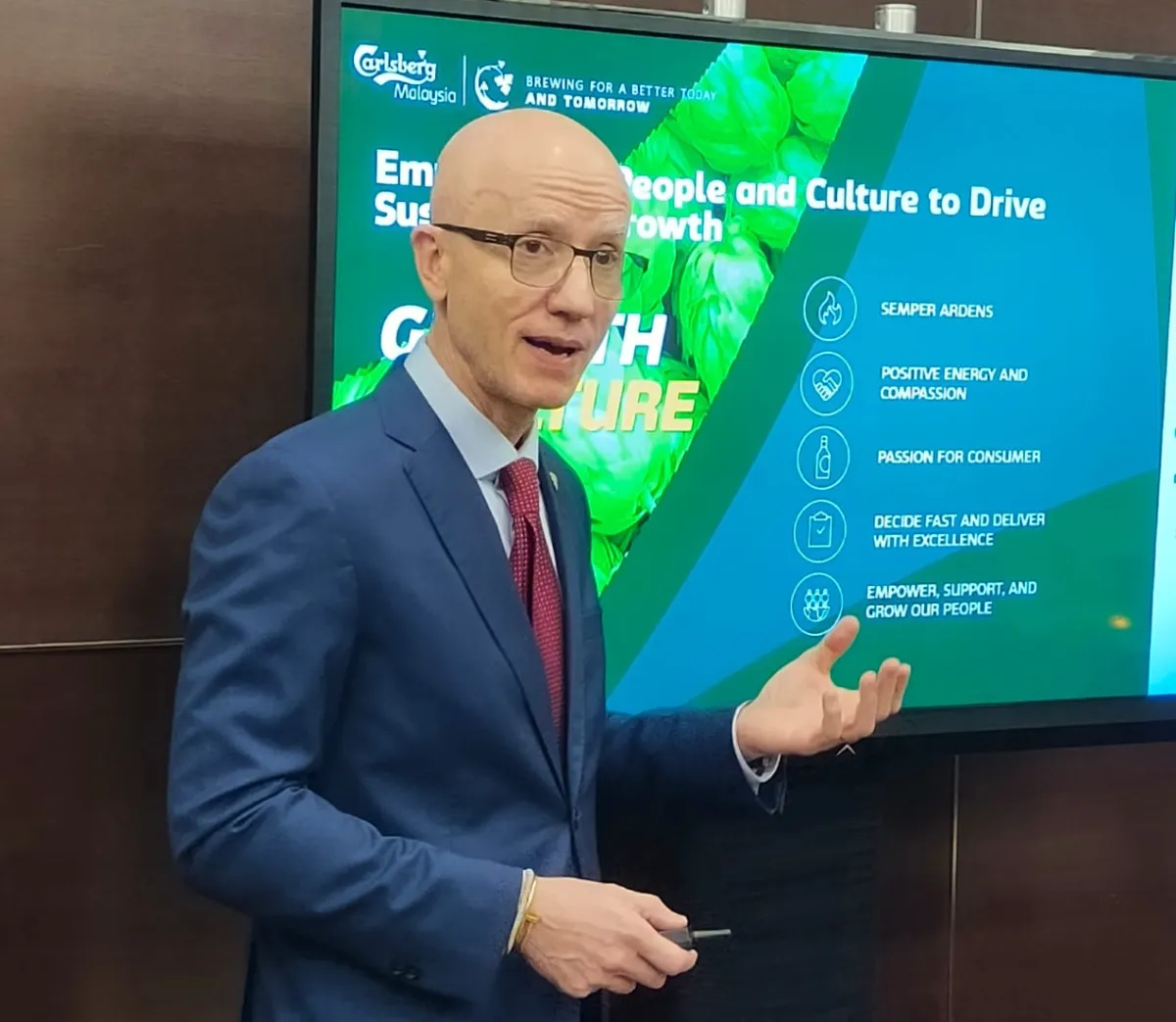
KUALA LUMPUR: Carlsberg Brewery Malaysia Bhd will focus on ensuring business continuity in 2026 amid soaring energy prices driven by the ongoing conflict in the Middle East.
Group managing director Stefano Clini said the group will conduct a detailed assessment of all raw materials and technical inputs to identify potential risks that could disrupt operations, including brewing, packing, shipping and sales.
“Based on this evaluation, there are no immediate concerns, and the business is expected to continue operating as normal. Cost, however, remains a separate issue.
“There will be an impact on costs, and inflation in the country is expected to rise. However, there is significant uncertainty around both the magnitude and duration, so it is not possible to provide a definitive figure at this stage.
“The company is therefore focusing on scenario planning, assessing both best- and worst-case outcomes to ensure it is prepared to manage the situation. This approach is not new, as the company has navigated multiple macroeconomic shocks and periods of hyperinflation in recent years,“ he told reporters after the group’s 56th annual general meeting today.
Clini said the group has experience operating in high-inflation environments, including periods when food inflation reached 15%, and input costs rose by around 10%, and is accustomed to managing such conditions.
“We rely on a well-established toolkit – covering cost control, value management, portfolio optimisation, and pricing—to navigate these pressures, and will continue to apply and adapt these measures with speed and discipline.
“Suppliers are expected to manage their own cost structures, although the company remains open to collaboration where mutual efficiencies can be achieved.
“Some cost increases from suppliers are anticipated and viewed as inevitable, and the company is preparing to manage these challenges with the same approach that has proven effective in the past,” he added.
Clini said the group has also observed some off-trade and on-trade trends among consumers amid the geopolitical tensions.
The trend observed over the past three years is expected to continue this year, with a sustained shift from on-trade to off-trade consumption, reflecting increased at-home consumption, he said, adding that this is consistent with periods of macroeconomic instability, which tend to heighten consumer anxiety and prompt more cautious spending behaviour.
“Consumers are going out less and spending more time at home, partly because buying beer from a supermarket is significantly cheaper than drinking in a pub.
“This shift has been evident over the past two to three years and is likely to persist. Broader geopolitical tensions, including the war in Iran, add to macroeconomic instability, which in turn heightens consumer anxiety and encourages more cautious spending, with people preferring to save.
“In Malaysia, however, there is no clear indication of a significant decline in consumption, although this trend is more noticeable in Singapore.
“Globally, the group operates as a total beverage player, while in Singapore it remains more focused on alcoholic drinks, with gradual expansion underway,” Clini said.
For the financial year ended Dec 31, 2025 (FY25), Carlsberg Malaysia posted an 11.4% year-on-year increase in net profit to RM375.6 million from RM337.1 million, on the back of revenue of RM2.3 billion.
Regarding prospects, the group remains cautious amid geopolitical tensions, volatility in energy and input costs, and broader macroeconomic uncertainty.
“Against this backdrop, our priorities for 2026 will centre on disciplined value management, cost optimisation and prudent resource allocation, while we continue to innovate and invest in our brands, brewery capabilities and digital transformation initiatives.
“Through consistent execution and financial discipline, we aim to strengthen resilience and reinforce our commitment to long-term sustainable value creation,” Clini said.



