




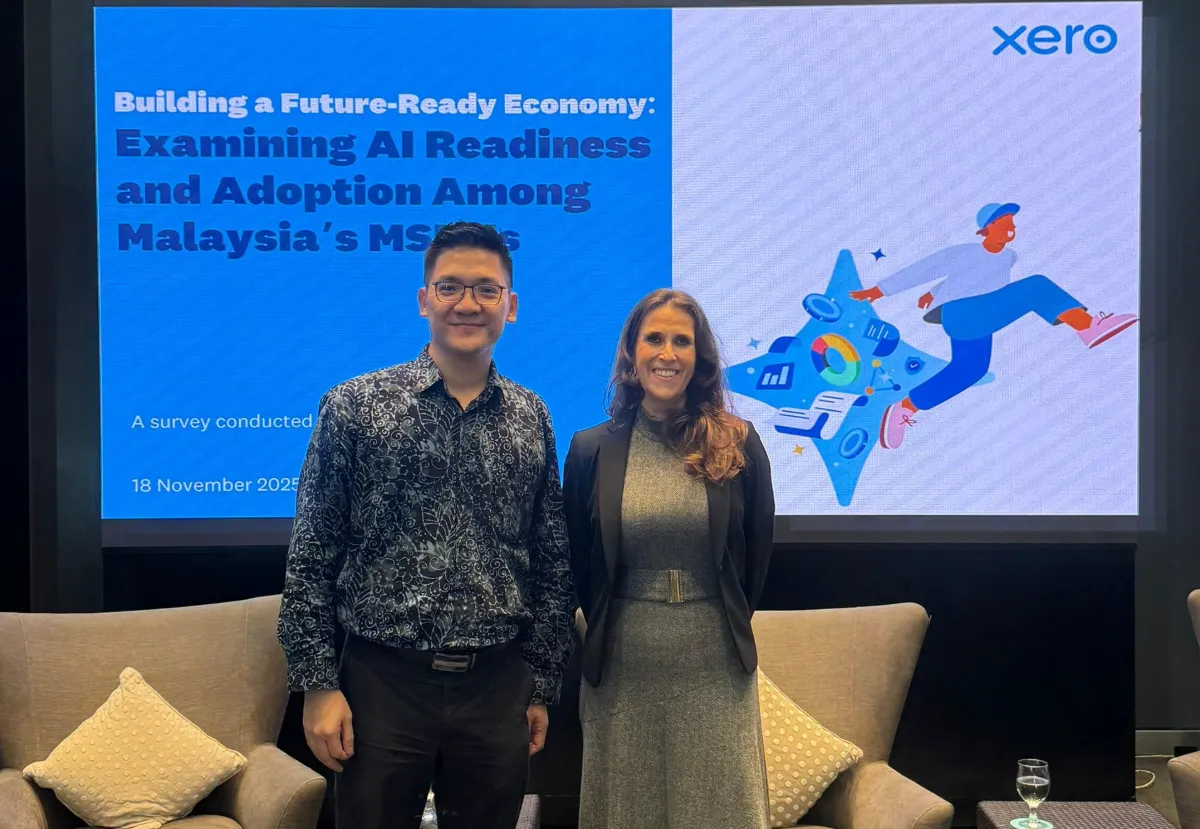
KUALA LUMPUR: Malaysian micro, small and medium enterprises remain optimistic about artificial intelligence (AI) but continue to face significant gaps in readiness, awareness and adoption, according to the Xero MSME AI Sentiment Survey report and white paper launched today in collaboration with the Small and Medium Enterprises Association (Samenta).
The research, titled “Building a Future-Ready Economy: Examining AI Readiness and Adoption Among Malaysia’s MSMEs”, found that while business owners acknowledge AI’s potential to drive efficiency and competitiveness, most remain in the early stages of adoption, with many unsure of the right tools, skills, or governance structures needed to implement the technology meaningfully.
Xero Asia managing director Koren Wines said the study aimed to understand how MSMEs perceive AI, the barriers they face and the potential role of cloud accounting and digital financial tools in accelerating adoption.
“There is a really large emphasis on what AI means for the future of work and how it can help businesses remain agile. But what we also found is that MSMEs want clearer guidance, better training and more support on how to adopt AI safely and effectively.”
She added that the lack of data hygiene remains one of the biggest structural barriers. “AI is only as powerful as the data you feed into it. If the underlying financial records are inaccurate or inconsistent, the insights produced will be flawed. That’s why the move to digital accounting platforms is such a critical first step.”
Wines said awareness among Malaysian MSMEs is promising, but adoption is still slow. Many respondents are experimenting with basic AI tools such as chatbots or automated customer responses, but few are using AI for business-critical functions like forecasting, financial insights or workflow automation.
“What the survey tells us is that MSMEs recognise AI is no longer optional. But they do need more confidence, more examples relevant to their size and clearer pathways to start,” she said.
During a panel discussion, Samenta digitalisation and AI committee member Alain Lye said that while many MSMEs are keen to explore AI, they often perceive it as expensive, complicated or suitable only for large corporations.
“A lot of SMEs still think AI is a luxury, or that adopting AI means hiring a team of data scientists. But the reality is that today’s AI tools are becoming more accessible and affordable. The challenge is awareness, many SMEs don’t know what solutions are available or how to begin integrating them,” he said.
Lye added that the lack of standardised frameworks and government-backed training programmes contributes to the adoption gap. “MSMEs don’t just need financial incentives; they need knowledge. They need to understand what AI can do for a micro business, a retail shop, a contractor, a manufacturing SME. We have to move beyond slogans and show practical, real examples.”
He pointed out that AI adoption for SMEs should be incremental rather than overwhelming. “It’s not about automating everything at once. Start with simple functions like inventory management, customer follow-ups, or financial organisation. These small steps can generate immediate value.”
One concern highlighted in the survey is the lack of confidence among MSMEs in handling data governance, cybersecurity and compliance. Many respondents admitted they were unsure how to protect sensitive data or assess the reliability of AI-generated insights.
Wines said this concern is valid and reinforces the need for clear industry guidance. “When SMEs don’t know what’s safe and what’s not, they hesitate. This is where ecosystem partners, accountants, industry bodies and technology providers must work together to offer practical, trustworthy solutions.”
She also emphasised that accountants are a key part of the ecosystem and as technologies evolve, their role becomes even more important.
“They help business owners interpret financial data, plan strategically and adopt new tools confidently.”
Despite the challenges, both Xero and Samenta believe that Malaysia has strong potential to scale AI adoption quickly, given the government’s push for digitalisation and the growing availability of cloud-based solutions for small businesses.



