




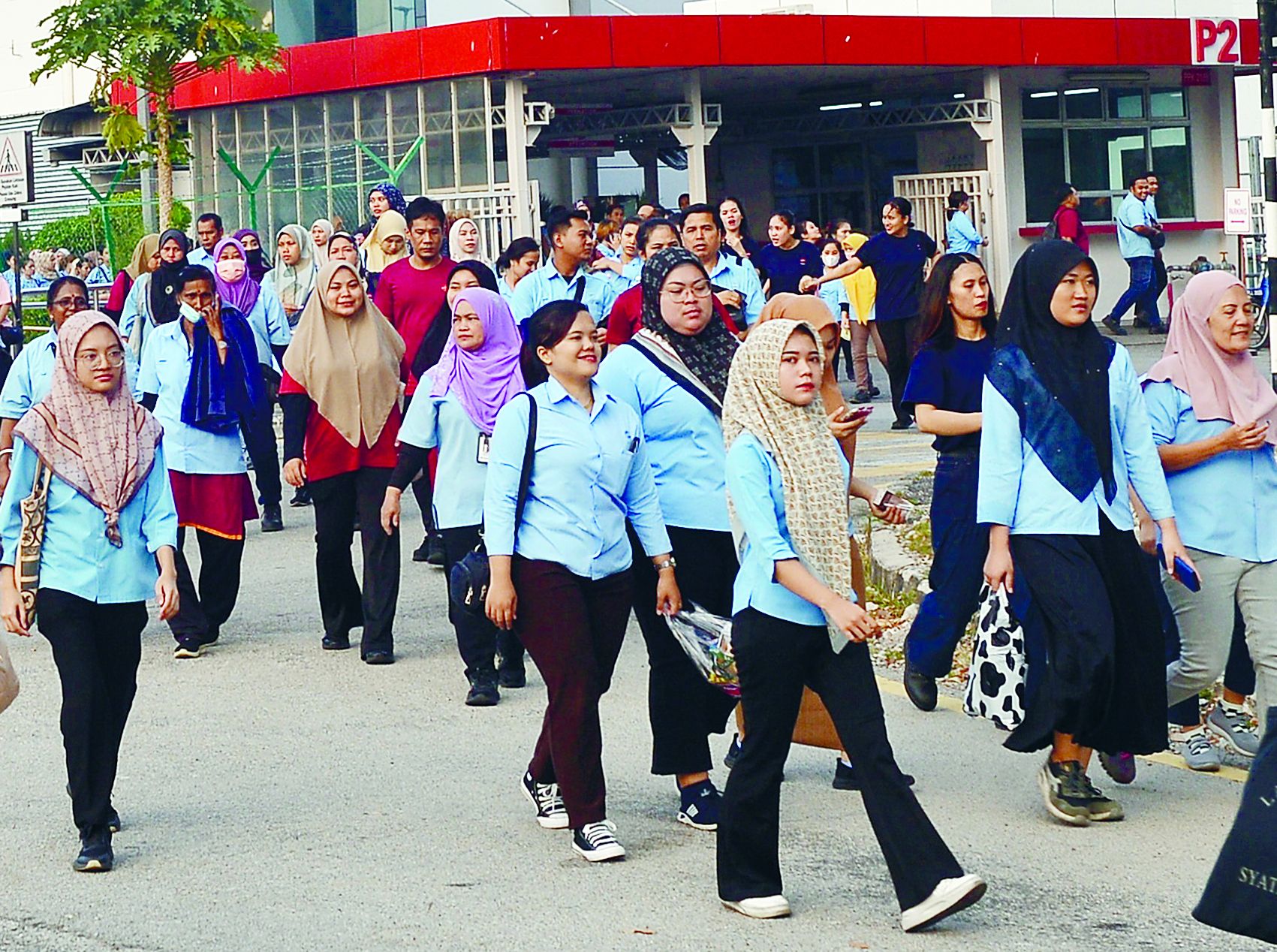
Malaysian employers cannot use AI adoption as a standalone reason for retrenchment, as ordinary legal principles still apply, say legal experts
ARTIFICIAL intelligence (AI) is no longer futuristic. Globally, employers are increasingly adopting AI tools to automate tasks once performed by people, including automated data processing and generative AI platforms.
Microsoft’s 2025 Work Trend Index reported that 84% of leaders in Malaysia are considering new AI-focused roles. This raises a difficult question: Does the adoption of AI automatically justify retrenchment?
The short answer is no. While AI adoption may explain the commercial rationale for business restructuring, the ordinary legal principles governing retrenchment continue to apply. Employers must demonstrate genuine redundancy arising from restructuring and show that affected employees were selected based on fair and objective criteria.
Foreign court decisions reinforce this position. In China, the Hangzhou Intermediate People’s Court reportedly awarded compensation to a quality assurance supervisor who was dismissed after refusing a demotion and salary reduction following the introduction of AI systems. The Court held that employers cannot rely on AI replacement as a shortcut to bypass labour protections.
Similarly, in Italy, an employee of a multinational shipping and logistics company was reinstated following an AI-driven dismissal. The Genoa Labour Court found the dismissal unlawful because the employer had failed to consider whether the employee could be redeployed to another suitable role before termination.
Although these decisions are not binding in Malaysia, they highlight an important principle: AI adoption alone should not be treated as a standalone justification for retrenchment. The key tension lies in balancing AI adoption with job security.
AI can significantly enhance efficiency and accuracy, particularly in process-driven tasks. However, many aspects of work still depend on human judgement, ethical reasoning, creativity and critical thinking.
As AI continues to evolve in unpredictable ways, employees must be prepared to adapt by embracing lifelong learning and AI literacy, developing new capabilities and strengthening distinct human strengths, to remain relevant in an AI-driven workplace.
For employers, AI should not be viewed solely as a cost-cutting tool. Before resorting to retrenchment, employers should consider whether affected employees can be reskilled, upskilled or redeployed within the organisation.
Retrenchment should only be considered where roles are genuinely redundant after reasonable efforts to reskill, upskill or redeploy affected employees. Even then, such measures must be carried out responsibly, transparently and fairly.
AI’s impact on the workplace is expected to deepen. In time, AI systems may be used to analyse roles and identify redundancy, creating a risk that employees are affected by decisions they do not fully understand.
In Malaysia, the Code of Conduct for industrial harmony provides guidance on retrenchment. It requires that the selection of employees be conducted in a clear, transparent and objective manner.
Traditional factors such as length of service, age and family circumstances remain relevant but they should not be applied rigidly. The court should place greater emphasis on employees’ skills, adaptability and ability to work alongside technology. This shift better reflects the realities of a modern workplace.
At the same time, there is a growing need to revisit legal protections, particularly in relation to retrenchment benefits to ensure that employees across all income levels are adequately safeguarded in an AI-driven workforce.
The rise of AI does not signal the end of human labour, at least not in the foreseeable future. Instead, it reflects a transformation in how work is performed and valued. Employees, employers and the law must evolve together to meet these changes.
While AI will undoubtedly reshape business operations, it should not undermine the fundamental principle that employees are to be treated fairly.
Ultimately, the question is not whether AI will change employment but whether the law can evolve quickly enough to preserve fairness in an increasingly technology-driven workplace.
Leonard Yeoh is a senior partner and Pua Jun Wen and Stella Beh are associates with the law firm, Tay & Partners. Comments: [email protected]



