




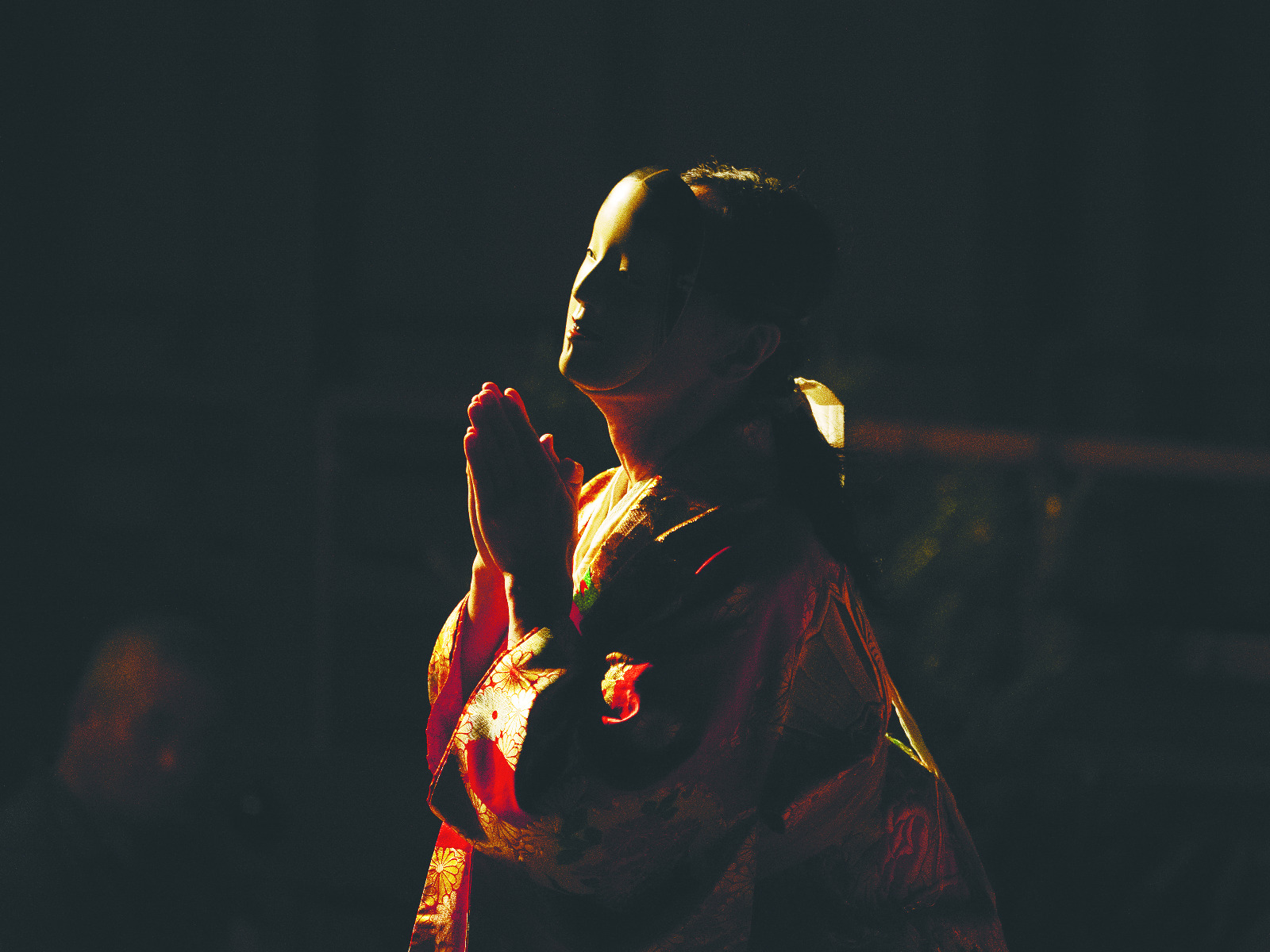
KL Shakespeare Players and Japanese Noh troupe unite for Desdemona
SHAKESPEARE’S Othello is a story about love and jealousy, said KL Shakespeare Players (KLSP) co-founder Lim Kien Lee. “Othello, a moor in the service of Venice, marries Desdemona against the wishes of her father. Manipulated into believing that she has been unfaithful, he does violence to the very person he loves, only to discover too late that he has been deceived.
“What draws us to the story is that the questions it raises remain as relevant today as they were in the 16th century.
“Issues of race and patriarchy continue to shape our societies, sometimes quite openly, and Othello asks us to consider what happens when prejudice, insecurity and the desire to possess another person go unchallenged,” explains the producer, director and actor.
KLSP staged its own abridged version of Othello twice, first in 2015 and then again almost ten years later in 2024.
“Each production offered us a slightly different understanding of the play,” said KLSP co-founder and chief producer Lim Soon Heng. Interestingly, a cross-cultural production between KLSP and a Japanese team led by renowned Noh actor Jinya Imai will present Shakespeare Meets Noh: Desdemona come July 30.
It reimagines Othello through the aesthetics and discipline of Japanese Noh theatre, blending haunting movement, vocalisation, music and classical text.
The work premiered in Tokyo in July last year, receiving strong responses from audiences there. Following requests in Malaysia, Desdemona is set for a restaging in Kuala Lumpur and Penang, directed by Imai. The Penang run is under the George Town Festival 2026.
Learning unfamiliar rhythms
Five KLSP performers will collaborate with Imai and his team. They are Soon Heng, Lee Swee Keong, Kien Lee, Santosh Logandran and Zaifri Husin.
“What interests KLSP about this collaboration with Noh is that it does not simply retell Shakespeare’s story. Through a Noh reimagining, drawing on some of the links between Noh and certain rituals, the story continues beyond Shakespeare’s ending,” said Kien Lee.
“It offers another way of looking at Desdemona’s fate, and perhaps of putting right something that, in Shakespeare’s play, can never be undone,” added Soon Heng. On the rehearsal process, Kien Lee said it has been both challenging and rewarding.
“Because the cast speaks different languages – Japanese, English, Malay and Chinese – and most of the Malaysian cast do not understand Japanese, we had to learn our cues in different ways.
“We learnt to recognise the rhythm of the Japanese dialogue, a particular gesture, or even the direction someone turned their head. Sometimes, it was just a breath, or simply intuition.
“We have also had to learn the basics of Noh theatre. That includes how to walk, where to look, how far to tilt our heads, how to sit, how to fall, and even how to produce our voices in a way that is very different from what we are used to. These may seem like small details, but together they create the distinctive style of Noh,” said Soon Heng.
“For us, however, learning new skills, being exposed to new ideas, and making new friends are the very essence of an international collaboration.
“Last year, we spent time in Japan rehearsing before the premiere of Shakespeare Meets Noh: Desdemona. We were there not as tourists, but as residents with work to do. We slept on tatami and futons instead of hotel beds, walked to the rehearsal studio every morning, and picked up breakfast and lunch along the way.”
The cultural exchange did not stop when rehearsals ended each day. “It continued over meals, conversations and shared experiences. And yes, as Malaysians, we certainly appreciated the food,” said Kien Lee.
Worldviews juxtaposed
For Imai, the toughest part of doing the cross-cultural production was “the seamless integration of disparate mythologies, dramatic traditions and religious philosophies to construct a singular, cohesive theatrical universe”.
“It was the greatest challenge and the most arduous aspect of this creation. “Specifically, the work juxtaposes three massive, inherently divergent worldviews – the Greek mythology of Aphrodite’s love and Apollo’s punishment, the profound human jealousy and tragedy of Shakespeare’s Othello, and the Buddhist teachings that flow deeply beneath the world of Noh.
“Weaving these threads together through the requiem of Desdemona required a meticulous logic and a delicate balancing act. Establishing this hybrid stage expression, marrying international mythological elements with the traditional techniques of Noh, was the most difficult and vital task of the playwriting process.”
He said he particularly cherished the fusion of Noh and Shakespeare with how the “white handkerchief” from Shakespeare’s original text is inextricably bound to the Hagoromo (feathered mantle) of Noh.
“This Hagoromo is then elevated to the realm of Greek myth as Aphrodite’s divine symbol of love, dramatically expanding the handkerchief’s meaning from a mere prop of jealousy to a profound emblem of ‘the sin of love and its ultimate salvation’.”
He said the traditional structure of Mugen-Noh (dream Noh), in which a monk’s chanting summons the spirit of Desdemona to recount her past agonies of love and hate, harmonises perfectly with the progression of Western drama.
“By introducing the celestial perspectives of the goddess Aphrodite and the Jester, the narrative transcends mere human tragedy, taking flight as an epic, universal tale of love that spans across both space and time.
Dynamic blend of sounds
On why the ending of this particular production is about release, he said: “The ending seeks to transmute Shakespeare’s tragedy through the Japanese aesthetic of Chinkon (the pacification of spirits) and Saisei (rebirth) inherent in the traditional performing art of Noh, ultimately portraying a vision of true salvation.
“As symbolised by the entire cast chanting Buddhist sutras in the final scene, the play does not condemn the fierce human karma of love, hate and jealousy. Rather, from a cosmic vantage point, it affirms these very passions as states of immaculate purity. Instead of dividing the characters merely into victims and perpetrators, it embraces them all, forgiving their transgressions as ‘the sin of loving too deeply’.” It is a refusal to let the curtain fall on the despair of death, he added.
“The true destination of this work is to liberate these souls from the endless chain of karma, returning them to their inherently pure, unblemished state. This is the profound ‘release’ achieved in the culminating scene, in which the chanting of sutras, song and music beautifully intersect.”
Kien Lee feels Malaysian audiences will first be struck by the meeting of different theatrical traditions.
“Shakespeare’s text is spoken by both the Malaysian and Japanese performers, in English, Japanese, Malay and Chinese. It is not simply a Shakespeare production with Noh elements added on. The two traditions genuinely meet on stage.
“One of the most fascinating aspects is the sound. Imagine Carnatic music and singing blending with the resonant, guttural tones of highly stylised Noh chanting. Together, they create a soundscape that is at once haunting and otherworldly. Visually, the production is equally distinctive. The Japanese performers appear in colourful traditional Noh costumes, moving with the slow, deliberate precision that is characteristic of the art form, while the Malaysian performers bring a different physicality and theatrical language. The contrast between the two traditions is, we hope, something audiences will enjoy discovering.”
Soon Heng added: “Noh theatre is something we rarely have the opportunity to experience in Malaysia. At the same time, audiences do not need to know anything about Noh to appreciate the performance. It remains a story about love, jealousy and reconciliation, told through the meeting of two rich theatrical traditions.”
Shakespeare Meets Noh: Desdemona will be staged at the Damansara Performing Arts Centre in Petaling Jaya from July 30 to Aug 1, and at the Majestic Theatre in Penang on Aug 8 and 9. Get details on cloudjoi.com



