




Table of Contents
Gangsters and just criminals, in general, tend to occupy a rather strange part of people’s imaginations.
Tales of pirates such as Blackbeard or vigilantes such as Robin Hood have long been part of popular culture, being idolised (or feared) as brave, dangerous men running from the law.
In Malaysia, one mobster whose name still elicits responses, especially from folks who lived through the 1970s, has to be the infamous Botak Chin, whose real name was Wong Swee Chin.
Executed in Pudu Jail on June 11, 1981, his story remains an interesting one decades on, worth examining for the twists and turns alone.
A link to the past
For that reason, theSun turned to Danny Lim, a journalist who published a book on the subject, trawling through archives to piece together the story of the man.
Lim said he was enlisted to write the book by a friend who was interested in publishing novels for “precocious young readers”.
As Lim himself was being kept at home by the movement control order, he saw little reason not to hop onto the project.
He also had some familiarity with the subject, having written an extensive article related to Botak Chin back in the early 2000s.
“I had done an interview with Dr M. Mahadevan. He was the chief psychiatrist for Malaysia for a very long time throughout the 70s and 80s,” said Lim.
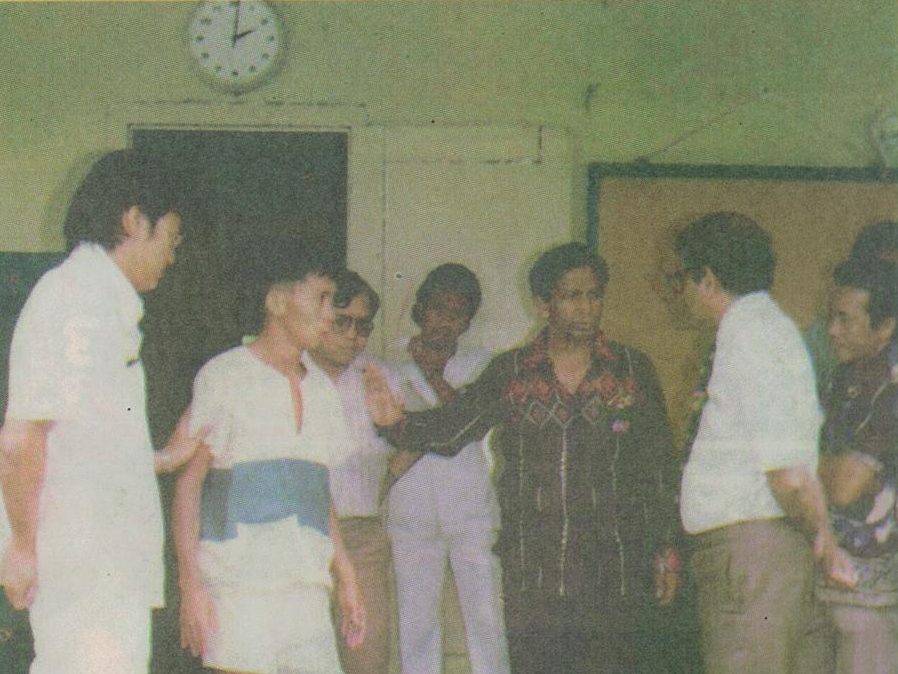
As it happened, Mahadevan was involved with Botak Chin’s trial, being the psychiatrist who evaluated the man to determine whether he was of sound mind.
“He was the one who spent the longest time (with Botak Chin). He observed him at Tanjung Rambutan for 18 days.
“So, he had a lot to say and he also testified in court regarding Botak Chin’s sanity and background.
“Mahadevan also gave me some original material and his impressions of Botak Chin during those 18 days,” Lim added.
It was this experience that made Lim the right person to write a book on him, although Lim iterated Wanted: Botak Chin is a simplified retelling of the gangster’s life.
The journalist said the sheer number of newspaper articles on Botak Chin that he found in newspaper archives made his job a lot simpler.
Additionally, it was also indicative of public interest in Botak Chin during his lifetime, as newspapers worked hard to cover the subject as much as possible.
Nature or nurture
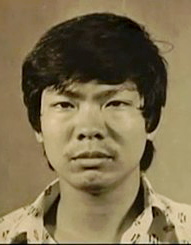
On the topic of Botak Chin’s criminal career, Lim said it is unclear whether the gangster threw himself into a life of crime or if he was pushed into it by external circumstances.
“I think everybody makes a choice. Lots of people from poor backgrounds, bad environments don’t commit crime.
“What is often forgotten is that it’s not like Botak Chin didn’t have a second chance. He did a spate of robberies in 1969 when he was 18 years old,” said Lim.
Botak Chin was subsequently jailed and released in 1974, presumably with the desire to “turn over a new leaf”, which he reneged on shortly after.
That said, Lim said Botak Chin did indeed come from a poor background, with his mother passing away just a year before he began his life of crime.
It probably did not help that he was one of many siblings living in the then-underdeveloped suburb of Sentul.
According to Lim, Mahadevan did attribute Botak Chin’s criminality to his background and environment.
And the late Yuen Yuet Leng, a former Kuala Lumpur police chief, apparently lamented Botak Chin could have made an excellent lawman “if not for his background”.
There is also discourse on why Botak Chin, with his healthy head of hair, had the moniker botak (bald).
Some suggested it was an acronym of sorts, including for “bantu orang tak ada kerja” (helping the unemployed).
Lim had a more mundane explanation he sourced from one of Botak Chin’s colleagues.
“As a kid, he was shaven-headed. The name precedes his criminal background.”
It is unsurprising that people still prefer the more “legendary” explanations.
Makings of a legend

Another story told about Botak Chin depicts him as a Robin Hood-like figure, stealing from the rich to give to the poor.
According to Lim, Botak Chin himself apparently denied this in court, although he was not above the occasional act of charity like anyone else.
Lim suggested the belief might stem from the fact that Botak Chin would have bribed and gifted money to civilians who knew of his whereabouts, likely to keep them quiet should the authorities come knocking.
This was especially useful when Botak Chin operated out of Sentul, a poor area where every sen would be duly appreciated by the recipient.
It also helped that Botak Chin himself was charismatic. “He was not a street thug or uncouth. (The police) believed he had high intelligence, he had discipline and real leadership qualities.”
Mahadevan told Lim that during his initial evaluation of Botak Chin, the man pretended to be an illiterate bumpkin, only later revealing he spoke English on par with Mahadevan himself.
He was also capable of being sardonic, throwing sharp-witted remarks at the bench during his own trial.
There was also apparently a certain cheekiness to him, sending a flower wreath to the funeral of the late prime minister Tun Abdul Razak.
Cat and mouse
Botak Chin’s story cannot be completed without a mention of S. Kulasingam, the police officer who was the nemesis of sorts to Botak Chin.
The man led the hunt to bring Botak Chin to justice and the latter, in fact, tried to assassinate him in a drive-by shooting.
“Kulasingam actually survived. He had two bullets lodged in him,” said Lim.
The papers unsurprisingly played up the enmity between Kulasingam and Botak Chin, in a Sherlock versus Moriarty manner.
Organised crime has long been a part of Malaysian history, so why did Botak Chin end up a name known throughout Malaysia?
“(The answer) is quite easy. He was the viral sensation of his time,” said Lim.
The power of the press cannot be understated when it came to amplifying stories such as Botak Chin’s, especially when the newspaper was the dominant source of information for most citizens back then.
Even televisions could not hold a candle to newspapers in those days.
“(Televisions) were for the elite and the middle class. Most people would not have had them.”
It is unknown if Botak Chin revelled in his infamy, although he apparently spent his ill-gotten gains on wild parties in a Kenny Hills (now Bukit Tunku) bungalow.
Clickbait material
Botak Chin and his criminal spree sold papers. Lim described Botak Chin as “the clickbait of his time”.
The cat-and-mouse game between Botak Chin and police also felt like a real-life television serial to many back then, hence people’s interest in the subject.
Lim compared this to today’s acts of crime, in which police tend to catch suspects shortly after the act.
In short, there is nothing much for people to follow.
Any criminal worth their salt would prefer to stay anonymous anyway.
Local news also did not have to compete with international headlines as much back then.
It was in the interest of the established newspapers to publish every bit of news on Botak Chin to get readers to buy their papers.
Noting how most people know Wong by his criminal moniker than his actual name, Lim said: “There are lots of robberies throughout Malaysian history. But it’s always one-off or in twos or threes. In (Botak Chin’s case), you had a name (and) a face to it.”
READ MORE:
How Perak’s busiest railway disappeared from memory
Fact vs fiction: The Trojan War & The Odyssey
World’s first durian museum opens in KL



