




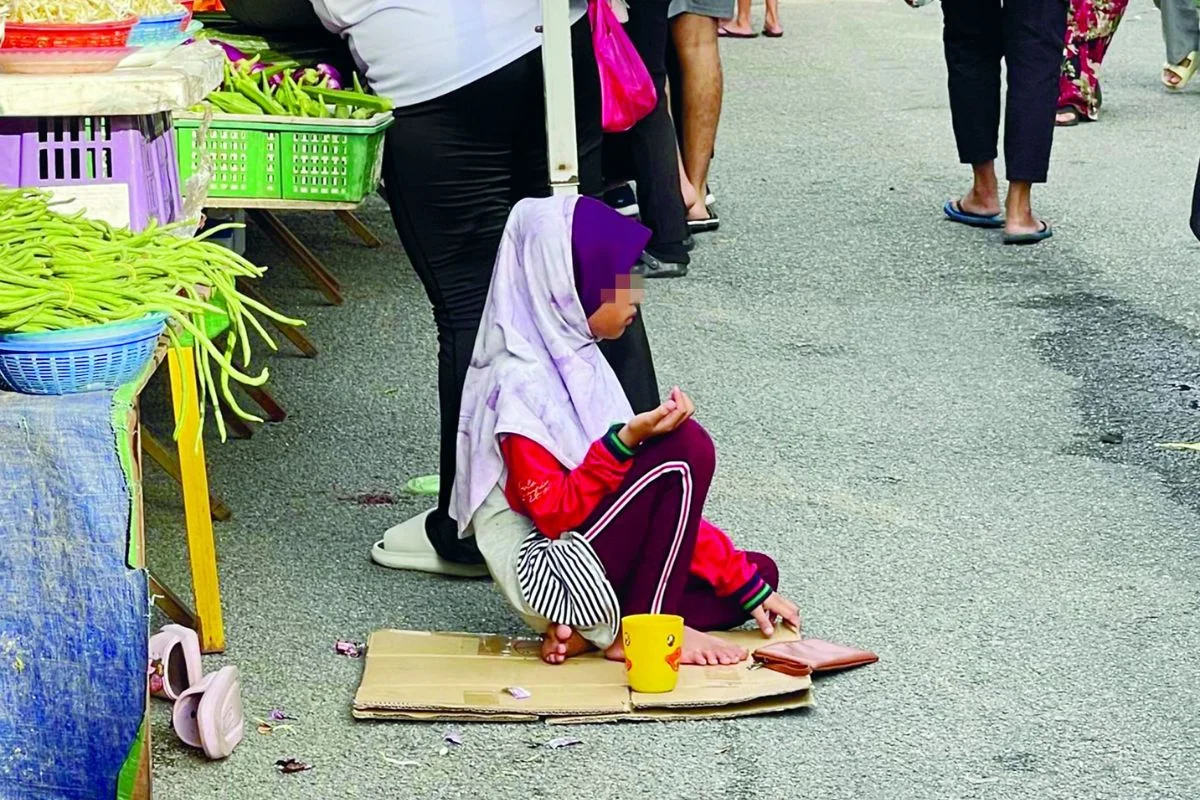
Rights group says syndicates use infants, sedated children and coercion, urge authorities treat incidents as trafficking cases
PETALING JAYA: Behind the visible image of children begging in Malaysia’s streets lies a hidden, organised network of exploitation, with syndicates systematically profiting from refugee and undocumented minors, Tenaganita executive director Glorene Das warned.
She said forced child begging is increasingly coordinated, falling squarely within international definitions of trafficking and forced labour.
“The scale, however, is widely underestimated, as many trafficked children are still treated as petty offenders or ‘public nuisances’ instead of victims,” Das added.
A study by the International Labour Organisation has documented Rohingya children being forced to beg in Peninsular Malaysia, while the US Trafficking in Persons Report noted that Malaysian orphans and refugee minors are also systematically exploited, she said.
“A stark illustration was the 2024 Immigration Department raid in Kuala Lumpur, which uncovered a syndicate using children – including infants – who were allegedly drugged before being sent out at night. This shows a systematic and profit-driven pattern.”
Tenaganita’s frontline work indicates that the crime involves both cross-border trafficking and local syndicate operations.
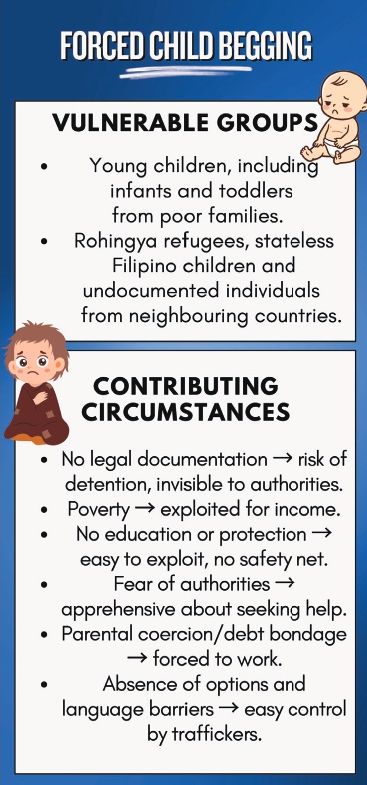
“Many victims come from communities already living without legal documentation – Rohingya refugees, stateless children and undocumented families from Indonesia or the Philippines,” she added.
In June 2024, authorities in Kuala Lumpur raided a four-storey shophouse linked to a human trafficking and passport forgery syndicate.
Das said the building housed foreign nationals – both adults and children – who were reportedly under the syndicate’s strict control.
According to her, children were sedated, kept indoors during the day and transported at night to high-traffic “earning points.”
“The collection of money, as well as the movement, housing and transport of the children was centrally coordinated, disproving the assumption that these children beg independently.” She added that local fixers from the same ethnic or language community often recruited families with false promises or pressured them into letting their children “help earn income”.
“In some cases, parents trapped in debt were coerced into allowing their children to beg to repay the debt.”
Das explained that children were rotated between traffic junctions and tourist zones, discreetly monitored by adults on motorbikes or in parked cars and quickly removed whenever enforcement officers approached.
She said syndicates specifically target very young children because they elicit more sympathy and income.
“People are more likely to give to a baby or toddler who looks hungry or distressed. This ‘sympathy economy’ drives profits.”
Children are easier to control due to dependence, language barriers and fear, with traffickers using threats, deprivation or even drugging.
“An unattended child on the street isn’t acting independently – it signals organised exploitation.”
She said Rohingya refugee children remain the most frequently identified victims, followed by stateless Filipino children, undocumented Indonesian minors and children of migrant workers in informal sectors.
Meanwhile, Unicef case studies in Sabah highlighted that stateless and semi-documented children face high vulnerability to labour exploitation due to poverty, invisibility and lack of services – conditions syndicates readily exploit, Das said.
“Some Malaysian and long-term migrant families facing hardship may also be manipulated by syndicates offering ‘help’ or ‘transport’, which can escalate into exploitation.”
Das said the common thread is structural vulnerability: insecure legal status, poverty, lack of education and fear of enforcement.
“These are the conditions traffickers look for.”
Tenaganita urged a protection-first approach whenever a child is found begging.
Authorities should:
• Treat all children as trafficking victims and activate the Anti-Trafficking in Persons and Anti-Smuggling of Migrants Act 2007 (ATIPSOM) and child-protection protocols;
separate children immediately from exploiters and verify adults claiming to be parents;
• Conduct urgent medical checks for drugging, malnutrition, or trauma;
• Use trained child protection officers and interpreters for child-sensitive interviews;
• Place children in safe shelters – not immigration depots – and coordinate with the Social Welfare Department, UNHCR (United Nation High Commissioner for Refugees) and qualified NGOs; and
• Investigate the wider network controlling movement, transport and profits – not just street-level handlers.
NGOs, she said, must provide psychosocial support, legal aid and strong advocacy for systemic improvements, including mandatory trafficking screening and expanded access to education and legal documentation.
“Until these structural vulnerabilities are addressed, children will continue to be exploited in broad daylight, while traffickers operate with impunity.”



