




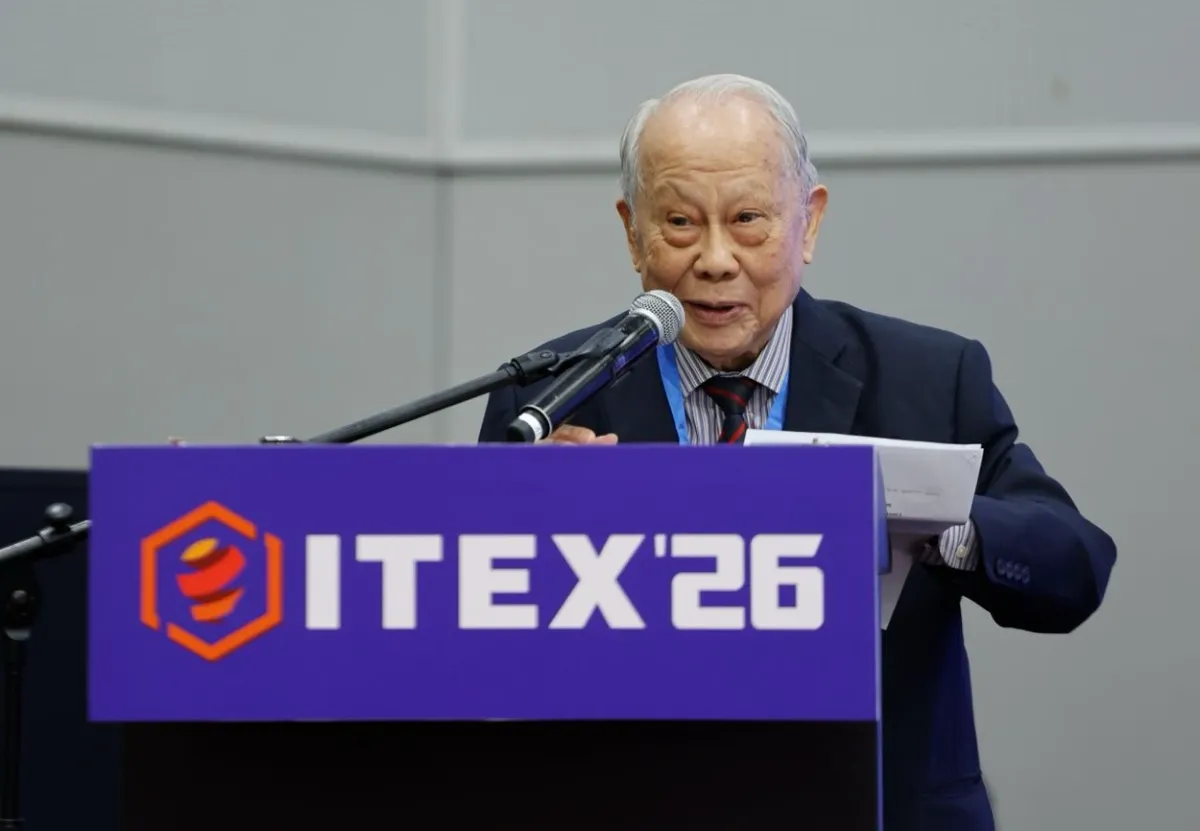
KUALA LUMPUR: Malaysia has had the technical capability to commercialise 100% palm biodiesel for more than four decades, with the level of industry participation and manufacturer backing during earlier large-scale trials, said veteran scientist Tan Sri Augustine Ong Soon Hock.
He also said this reflected confidence that the fuel was both technically workable and commercially viable.
Ong questioned why the country is still moving cautiously on wider biodiesel adoption even as rising geopolitical tensions and energy-security concerns revive global interest in alternative fuels.
“We successfully conducted large-scale trials using 100% palm biodiesel 45 years ago, including collaborations with Mercedes-Benz, but failed to commercialise the technology more aggressively,” he told reporters after the opening of the International Invention, Innovation and Technology Exhibition 2026 (Itex 2026) at the Kuala Lumpur Convention Centre today.
Ong, who previously served as director-general of the Palm Oil Research Institute of Malaysia, which is now part of the Malaysian Palm Oil Board, said the biodiesel blending process itself was relatively straightforward and did not require highly sophisticated infrastructure.
“The process of blending is just stirring, just like you stir your coffee. What technology is required then? No technology at all,” he said, arguing that the technical barriers to wider biodiesel adoption were often overstated.
Ong expressed frustration that the country is still debating wider biodiesel adoption despite having proven the technology through extensive field trials more than 45 years ago.
He said Malaysia had previously carried out extensive long-term biodiesel trials involving vehicles operating entirely on palm biodiesel, including buses that ran continuously over several years under real operating conditions.
“We have done 100% biodiesel. We have tried Dongfeng bus running three years, 300,000 kilometres, collaborating with Mercedes-Benz. We have done a lot of work,” he said.
According to Ong, the biodiesel programme at the time involved collaboration with Mercedes-Benz, which had guaranteed the engines used during the trials despite the vehicles operating fully on biodiesel.
“Mercedes-Benz said you use biodiesel, we guarantee your engine. Why is Malaysia still hesitant to scale wider biodiesel adoption despite the earlier results?” he said.
Malaysia should revisit sustainable aviation fuel and broader palm-based renewable fuel initiatives more seriously, Ong said.
According to the government, Malaysia has 34 biodiesel blending depots, most of which were originally designed to support B10 capacity.
Malaysia currently mandates a B10 biodiesel blend for motorists, comprising 10% palm biodiesel and 90% petroleum diesel.
The government recently announced plans to raise the mandate to B15, with production at 19 licensed biodiesel plants set to begin on June 1, 2026, as part of efforts to reduce dependence on imported fossil fuels, strengthen energy resilience and ease pressure from rising diesel prices.
The government said the programme could eventually expand to B20 and potentially even B50 within the next two to three years.
Indonesia currently operates a B40 biodiesel mandate and is preparing to move towards B50, while Malaysia remains largely at B10 nationwide.
Itex 2026, themed “AI Unleashed: Pioneering Research and Innovation with Generative AI”, opened with a stronger focus on commercialisation, artificial intelligence and investment-ready technologies, as organisers positioned the exhibition as a platform to move innovation beyond research and prototypes into market deployment.
The 37th edition of Itex features more than 1,000 inventions from 17 countries and regions across 10 categories and 15 classifications.
Organisers said 70% of the innovations showcased this year are market-ready, with many already reaching Technology Readiness Level 6 and above, reflecting growing emphasis on industrial scaling, licensing opportunities and commercial adoption.



