




Table of Contents
Get to know the national dishes that showcase Southeast Asia’s heritage
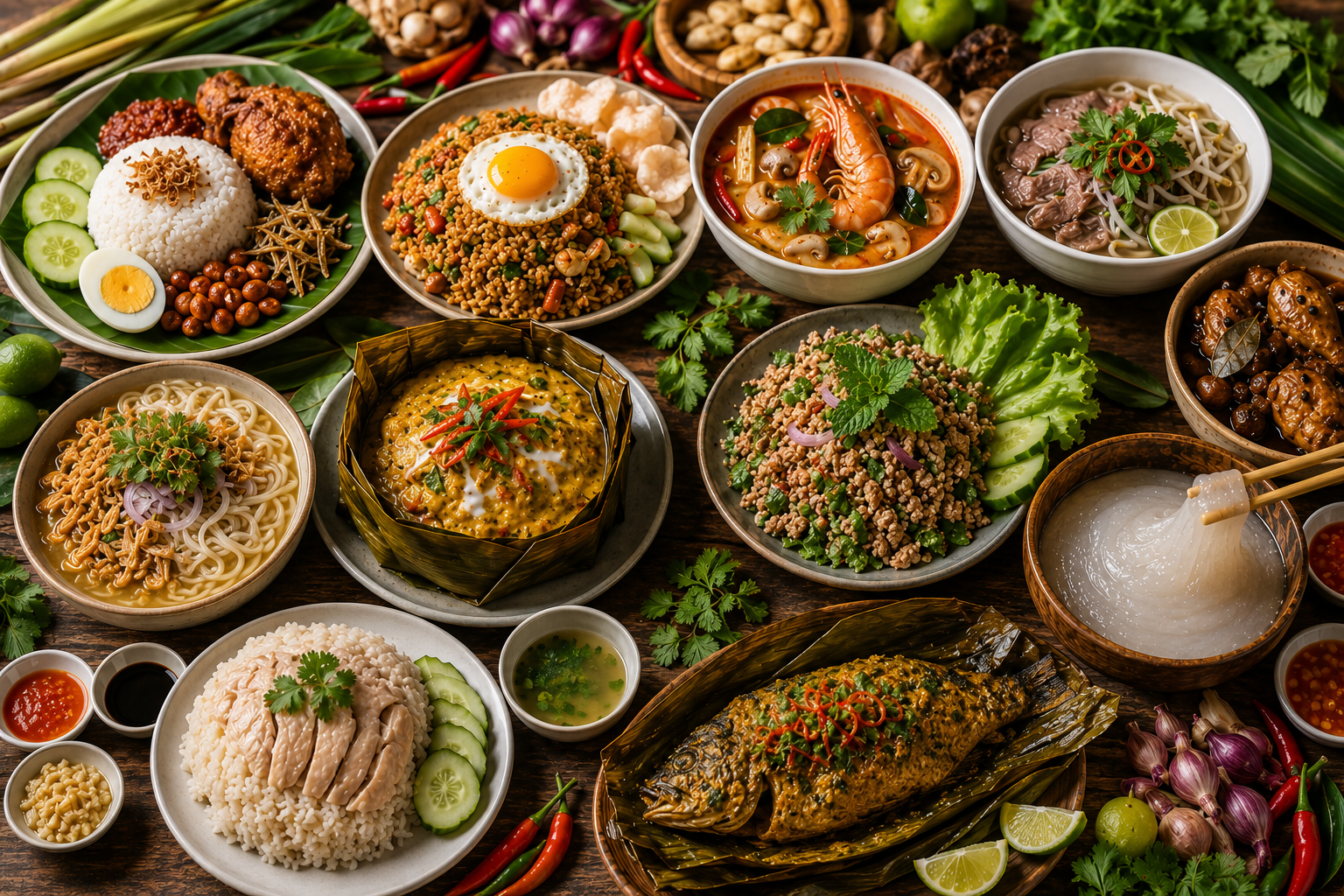
FOOD is one of the clearest ways to understand Southeast Asia. Across the region, national dishes often reflect trade routes, colonial histories, local agriculture, migration and everyday eating habits. Some are official symbols, while others became national favourites through popularity, memory and identity. Together, they show how deeply rice, noodles, herbs, spices, coconut, fish sauce and chilli shape the region’s kitchens.
Malaysia: Nasi lemak
Malaysia’s nasi lemak is built around rice cooked in coconut milk and pandan leaf, giving it a rich fragrance before anything else is added. The classic plate usually comes with spicy sambal, crispy anchovies, roasted peanuts, cucumber and a boiled egg.

It can be eaten simply or made heavier with fried chicken, rendang, squid sambal or beef. Its strength lies in balance. The rice is creamy, the sambal is sweet and fiery, the anchovies give salt and crunch, while the egg softens the heat.
Indonesia: Nasi goreng
Indonesia’s nasi goreng turns leftover rice into something bold and satisfying. The key flavour usually comes from kecap manis, the thick sweet soy sauce that gives the dish its dark colour and caramel-like depth. It is often cooked with shallots, garlic, chilli and egg, then topped with a fried egg and served with crackers, cucumber or pickles.

Nasi goreng is found everywhere from street stalls to hotel breakfasts, making it one of Indonesia’s most recognisable everyday dishes.
Thailand: Tom yum
Thailand’s tom yum is a soup that announces itself immediately. Hot, sour and fragrant, it is flavoured with lemongrass, kaffir lime leaves, galangal, chilli and fish sauce. The most famous version is tom yum goong, made with shrimp. What makes tom yum memorable is its sharpness.
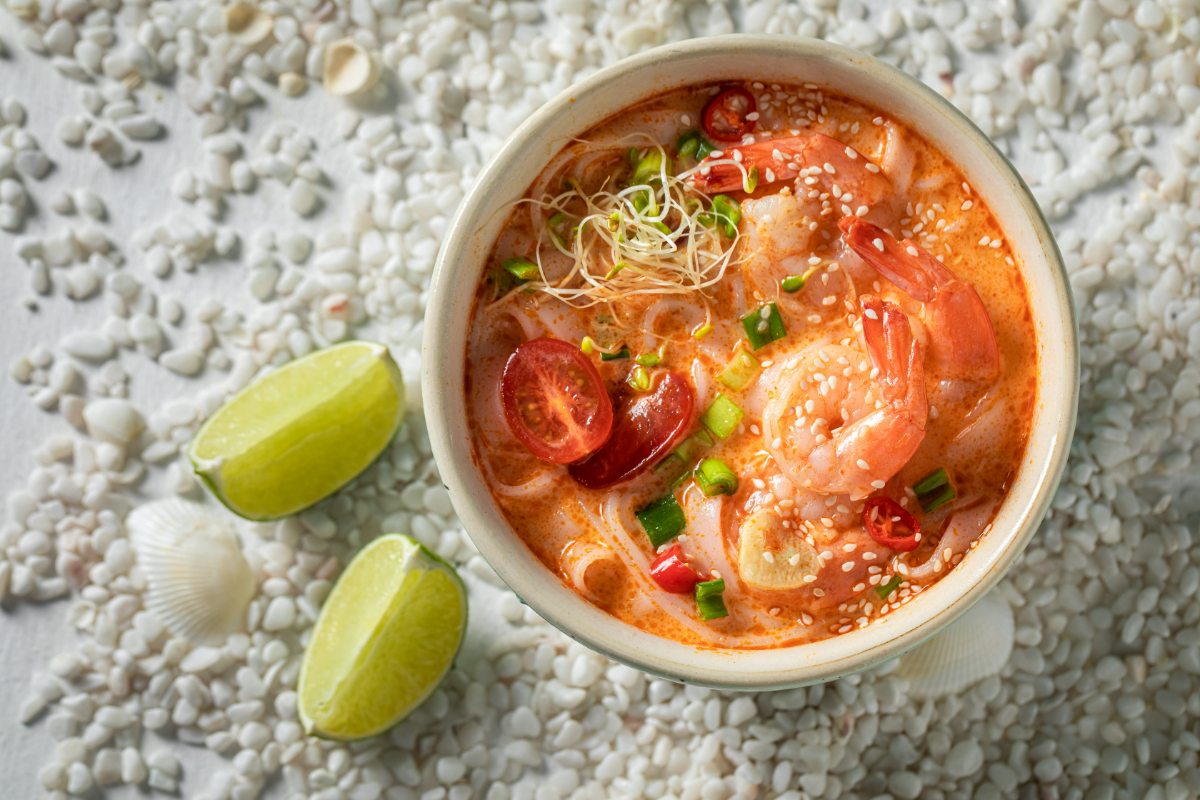
The broth carries heat, citrus, salt and herbaceous aroma at once. It reflects the Thai approach to flavour, where no single element should dominate for too long.
Vietnam: Pho
Vietnam’s pho is often described as comfort in a bowl. It combines a clear, aromatic broth with soft rice noodles and slices of beef or chicken. The broth is usually the centre of attention, simmered with bones and spices until it becomes light but deep in flavour. Fresh herbs, lime, bean sprouts and chilli allow each diner to adjust the bowl.

Pho is gentle compared with some of the region’s louder dishes, but its restraint is part of its appeal.
Philippines: Adobo
The Philippines’s adobo is practical, hearty and deeply familiar. Chicken or pork is braised in vinegar, soy sauce, garlic, bay leaves and black peppercorns until the meat becomes tender and the sauce turns savoury and sharp. Vinegar gives adobo its staying power, as the dish developed partly from preservation methods suited to a hot climate.
Every family has its own version, with changes in sweetness, saltiness and sauce thickness. It is a national dish because it feels ordinary and personal.
Myanmar: Mohinga
Myanmar’s mohinga is a fish noodle soup often eaten for breakfast, though it can be enjoyed throughout the day. It features a herbaceous fish broth served over thin rice noodles, commonly thickened with chickpea flour or rice powder. Lemongrass, garlic, onion and banana stem may be used, while crispy fritters add texture on top.
Mohinga is filling without being heavy, and its many regional versions show how one dish can carry a whole country’s variations.
Cambodia: Amok
Cambodia’s amok is a rich, creamy curry usually steamed in banana leaves. Fish amok, or amok trey, is the best-known version. It is made with kroeung, a traditional spice and herb paste that may include lemongrass, galangal, turmeric, garlic and kaffir lime. Coconut milk gives the dish its soft richness, while the banana leaf adds aroma during steaming.
Amok is refined, fragrant and closely tied to Cambodian culinary identity.
Laos: Larb
Laos’ larb is often called a salad, though it is more substantial than that word suggests. It is made with minced meat mixed with lime juice, fish sauce, herbs, chilli and toasted rice powder. The toasted rice gives larb its nutty texture and distinctive flavour. It is usually eaten with sticky rice, which is central to Lao food culture.
Larb is fresh, sour, salty and aromatic, showing how much can be done with a few sharp ingredients.
Brunei: Ambuyat
Brunei’s ambuyat is one of the region’s most distinctive national dishes. Made from sago palm starch, it has a sticky, gelatinous texture and a mild taste. It is eaten by twirling it around bamboo prongs called candas before dipping it into sour and spicy sauces.
Ambuyat is less about strong flavour on its own and more about texture, technique and the sauces served with it. It reflects Brunei’s connection to the sago palm and local food traditions.
Singapore: Hainanese chicken rice
Singapore’s Hainanese chicken rice is a dish of precision. Tender steamed chicken is served over rice cooked with chicken fat, garlic and ginger, then paired with chilli sauce, dark soy sauce and ginger paste. The dish appears simple, but the details matter: Smooth chicken skin, fragrant rice, clear broth and balanced condiments.
It reflects Singapore’s migrant history, especially the influence of Hainanese communities, while becoming a national food icon in its own right.
Timor-Leste: Ikan pepes
Timor-Leste’s ikan pepes shows the importance of fish, spice and banana leaves in island cooking. Fish is seasoned with ingredients such as turmeric, tamarind, chilli and aromatics before being wrapped in banana leaves and grilled or steamed. The method keeps the fish moist while allowing the spices to soak into the flesh.
It is rustic, fragrant and closely tied to coastal life.
Across Southeast Asia, national dishes are rarely just meals. They are shorthand for home, history and identity. From nasi lemak and pho to ambuyat and adobo, each dish carries a different rhythm of flavour, shaped by the land, the sea and the people who cook it.
READ MORE:
Get to know the fried noodles across Malaysia
Get to know the different fried rice dishes across Asia
6 national dishes from around the world you might have never heard of



