




Development highlights need for coordinated industrial ecosystem, clearer policy direction
PETALING JAYA: Malaysia’s legitimate efforts to strengthen its long-term defence capabilities have come into focus following Norway’s decision to block the Naval Strike Missile (NSM) deal, which some defence observers have described as a flagrant breach of contract.
The development highlights the need for a more coordinated industrial ecosystem, clearer policy direction and stronger local expertise in strategic weapons development.
They said it also presents an opportunity for Malaysia to speed up efforts in building a more integrated and resilient defence industrial base capable of supporting advanced technologies in the future.
READ MORE: Malaysia explores new missile options after Norway cancels NSM deal
National Defence University of Malaysia Maritime Technology Department lecturer Lieutenant Mohamad Azrin Abd Aziz said the issue goes beyond the absence of a local missile manufacturer, pointing instead to the importance of aligning national talent, research institutions and industry under a clearer long-term strategy.
He said Malaysia’s defence industry has yet to reach the technological threshold required for guided missile development.
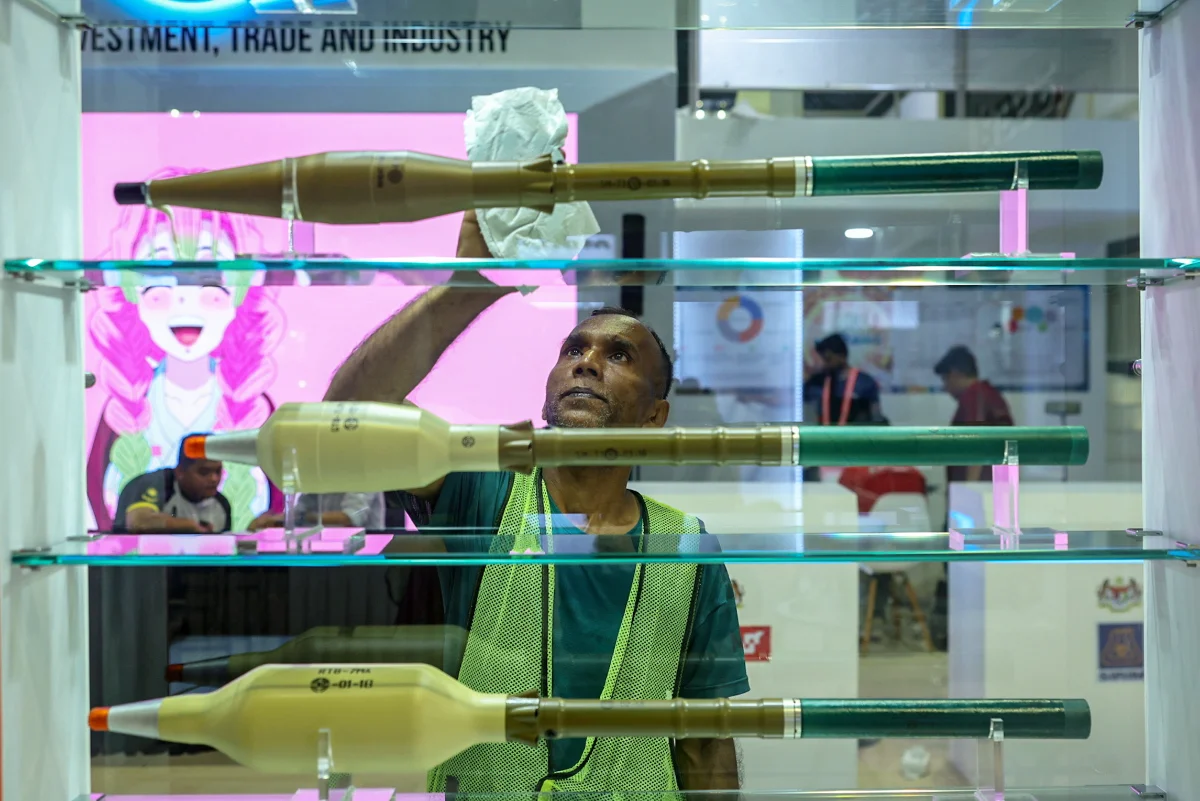
“There is no Malaysian company that makes missiles. Rockets, maybe, but even so, it is still at the research stage.
“But missiles are different from rockets because missiles are guided. They have sensors in front. So, there is no Malaysian company or local industry yet that can build a missile at that level.”
Azrin said the country’s main weakness is not a shortage of expertise but an absence of a clear national mission to channel universities, defence agencies, industry players and research funding towards a single strategic objective.
“To focus on a guided missile programme, the amount of research and development required is huge. But there is no clear objective from the government.
“Even though we have the Defence White Paper and other documents, we still do not have a direction in which we say we want to produce an industry capable of making missiles.
“That objective, or government policy direction, has not yet supported this.”
He said the Defence Ministry’s RM21.7 billion allocation under Budget 2026 should be viewed in perspective, arguing that the figure remains insufficient for building a sustainable defence industrial base despite being the government’s third-largest allocation after education and health.
Meanwhile, retired air force veteran and defence industry practitioner Lieutenant Colonel Mohammad Juani Sujana said Malaysia should avoid reacting to the NSM setback by expecting a single local company to develop a complete missile system.
He added that advanced weapons development requires the government to identify different domestic capabilities, integrate them systematically and build a functioning ecosystem rather than treating localisation as a one-company project.
“For a system such as this, you need many types of expertise to be brought together to produce one technology.”
Juani stated that Malaysian companies exist across parts of the defence supply chain, including trading, manufacturing, maintenance, repair and overhaul, engineering and research.
However, he said those capabilities have never been integrated into a proven end-to-end missile development system.
“There is no local industry yet with that full capability. If there are companies involved, many are more like traders or brokers.
“You cannot simply appoint one company and ask it to develop the product. The government must orchestrate the effort.”



