




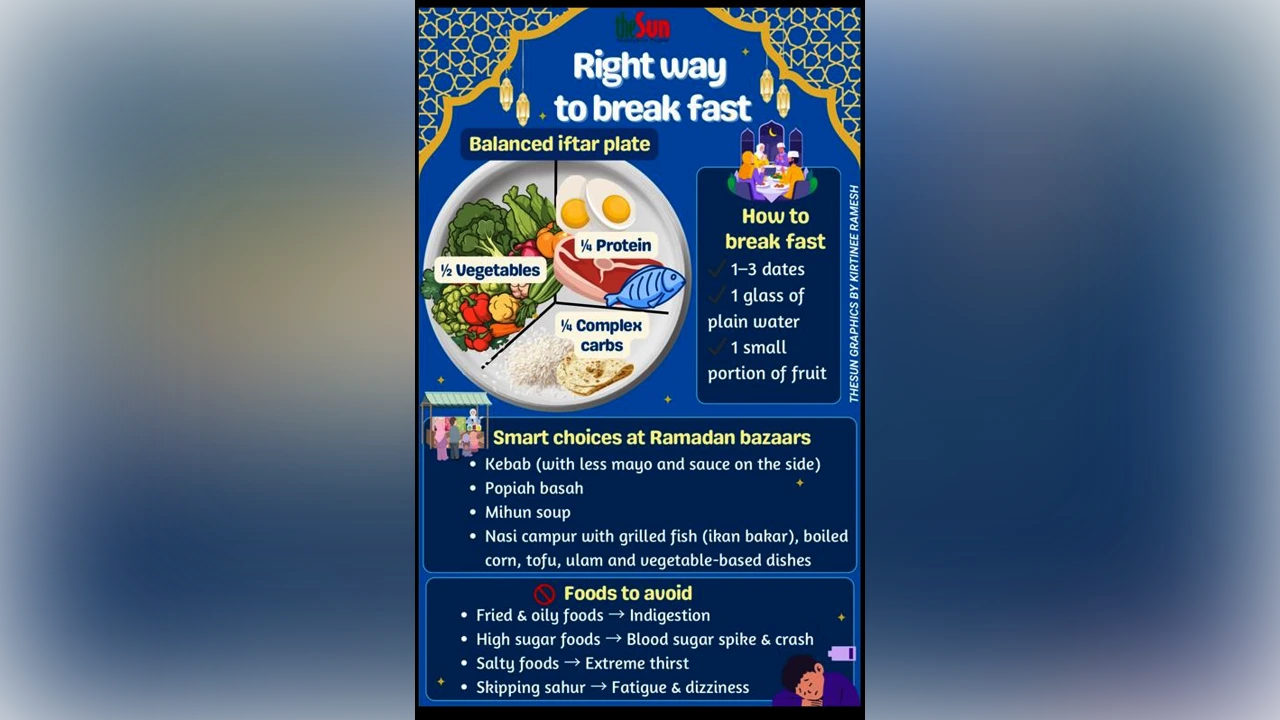
A dietitian explains how to observe Ramadan healthily, emphasising moderation, balanced meals and proper hydration to sustain energy and avoid common ailments.
PETALING JAYA: For Muslims, Ramadan is more than just abstaining from food and drink; it is also a rigorous exercise in self-discipline, particularly when it comes to eating, said a health expert.
Malaysian Dietitians’ Association council member Rozanna M. Rosly said Islam promotes moderation in all aspects of life, including diet, a principle clearly outlined in the Quran.
“Ramadan is a time to moderate food intake,” she said, advising Muslims to break their fast with dates or water, following the Sunnah of Prophet Muhammad.
“Dates are easy to digest and provide carbohydrates, fibre, iron, potassium and magnesium. Within half an hour, the body regains energy. Breaking fast lightly also helps prevent overeating.”
Overindulgence at iftar (evening meal) remains a common problem, particularly with the tempting variety of options at Ramadan bazaars, she said.
“After more than half a day without food, many feel compelled to eat excessively.
“But overeating can cause unstable blood sugar, weight gain, indigestion, gastritis and heartburn. Ramadan is about self-control and discipline, not feasting.”
She recommended prioritising complex carbohydrates and fibre-rich foods at sahur (pre-dawn meal).
Brown rice, oats, barley, wholemeal bread, chapati, lentils and baked beans digest slowly, providing sustained energy throughout the day, she added.
“In the earlier hours of fasting, carbohydrates are the main fuel source. As liver glycogen stores decline, the body shifts towards using fats for energy.”
Rozanna advised between two and three servings of lean protein daily, alongside two servings of vegetables and three of fruit, plus fibre-rich foods to support digestion, blood sugar and cholesterol.
Bananas, rich in carbohydrates, potassium and magnesium, are ideal for sahur and iftar.
Malaysia’s hot, humid climate also makes dehydration a concern during Ramadan, causing headaches, dizziness and fatigue.
She recommended eight glasses of water daily using the 2-4-2 method, meaning two at iftar, four between iftar and bedtime, and two at sahur.
“Replenishing fluids at night is essential to prevent dehydration, muscle cramps and disorientation,” she said, cautioning against caffeinated, sugary, carbonated, salty, processed or heavily spiced foods, which could worsen thirst and indigestion.
Common Ramadan ailments include constipation, indigestion and headaches, often triggered by skipping sahur, consuming fried or sugary foods, dehydration, sudden caffeine withdrawal or disrupted sleep patterns.
“Fasting headaches usually ease as the body adapts, but skipping sahur or relying on refined carbs could trigger blood sugar spikes and drops, causing headaches even in healthy individuals.”
Rozanna suggested:
- eating sahur as late as possible before imsak (when fasting begins);
- including carbohydrates, protein and fibre in the pre-dawn meal;
- gradually reducing caffeine intake before Ramadan;
- maintaining consistent sleep routines; and
- resting when needed during the day.
Although sahur is not obligatory, it is highly encouraged in Islam.
“The pre-dawn meal provides energy for daily responsibilities and acts of worship. A balanced sahur supports metabolism, mental alertness, lean muscle mass and reduces fatigue,” she said, adding that delaying sahur closer to dawn is ideal to avoid unnecessarily long fasting hours.
On overeating, Rozanna said excessive consumption between iftar and sahur, particularly of sweet or fatty foods, could lead to weight gain, high blood sugar and elevated blood pressure.
However, she added that Ramadan can be an opportunity to improve eating habits.
“If you are at a Ramadan bazaar, choose healthier options, such as grilled fish (ikan bakar), vegetable soups, popiah basah, mihun soup or nasi campur with balanced sides.
Ultimately, she stressed that Ramadan is not about compensating for daytime hunger with nighttime indulgence.
“Healthy fasting aligns with Islamic teachings, namely moderation, balance and gratitude. By being mindful of portion sizes, choosing nutrient-dense foods and staying hydrated, we could fast in a way that benefits body and soul.”



