




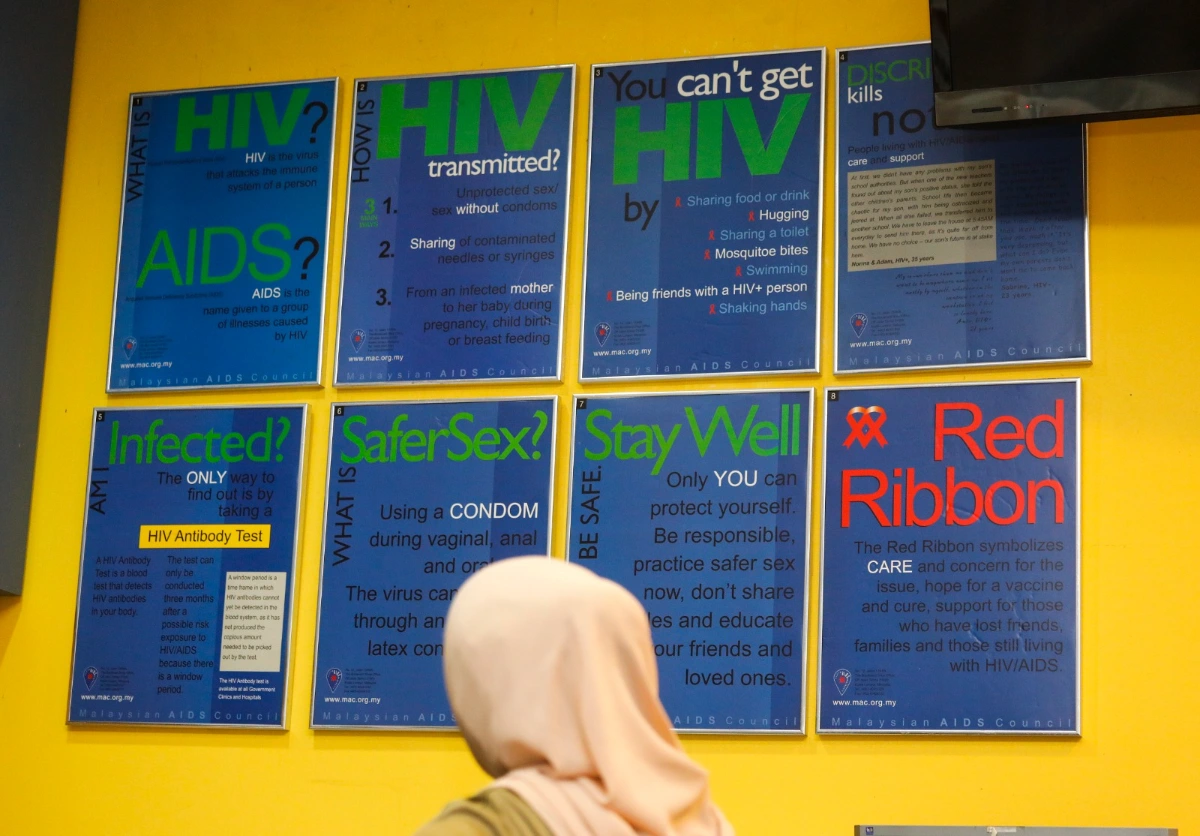
Malaysia’s HIV reversal shows how early harm reduction strategies save lives, cut costs and offer a model for tackling wider public health challenges.
KUALA LUMPUR: Malaysia’s success in reversing one of Asia’s most severe HIV epidemics demonstrates how early harm reduction strategies can save lives, strengthen communities and reduce long-term healthcare costs, according to four public health organisations.
The Malaysian AIDS Foundation (MAF), Malaysian AIDS Council (MAC), Humanize Malaysia and the Harm Reduction Action Network (HARAN) said the country’s experience in combating HIV should serve as a model for addressing other preventable health issues, including non-communicable diseases (NCDs), tobacco use and alcohol-related harm.
More than two decades ago, Malaysia faced a rapidly escalating HIV epidemic driven largely by transmission among people who inject drugs. Conventional approaches alone were insufficient to reverse the trend, prompting the government to adopt an evidence-based public health strategy under the Ministry of Health’s National Strategic Plan to End AIDS.
The strategy expanded Needle and Syringe Exchange Programmes (NSEP), Methadone Maintenance Therapy (MMT), HIV testing, early treatment and community outreach, shifting the national response from treating infections after they occurred to preventing transmission before it spread.
According to the organisations, the approach has contributed to new HIV infections falling by more than half from their peak while access to life-saving treatment has reached record levels.
MAF chairman Professor Emeritus Datuk Dr Adeeba Kamarulzaman said one of the greatest strengths of harm reduction is that its benefits extend beyond the individual receiving the intervention.
“Harm rarely remains isolated. When risk is reduced early, individuals are protected, but so are their families, partners and communities.
“Malaysia’s HIV response showed that reducing HIV transmission among people who inject drugs also protected spouses and children, reduced pressure on healthcare services and prevented infections from spreading into the wider community.
“The same public health principle applies across many health risks. Whether reducing alcohol-related harm, supporting smoking cessation, encouraging healthier diets or preventing HIV transmission, acting early protects people before harm becomes irreversible,” she said.
Dr Adeeba added that tobacco control also illustrates the need for public health policies to respond to real-world behaviour.
“Prevention, taxation, cessation support and youth protection must always remain our priorities. But where demand continues and illicit markets emerge, public health also needs practical pathways that reduce risk, help people quit and keep individuals connected to healthcare services. Harm reduction strengthens, not weakens, public health,” she said.
HARAN president and former Ministry of Health Disease Control director Dr Anita Suleiman said Malaysia’s HIV achievements were built not only on scientific evidence but also on making services accessible to those who needed them.
“Scientific evidence only improves public health when people can actually benefit from it. Malaysia succeeded because evidence was translated into acceptable services that communities trusted enough to use.
“Our HIV response combined harm reduction, addiction treatment, HIV testing, antiretroviral therapy, peer support and community outreach into one integrated system. No single intervention solved the epidemic on its own. The strength came from delivering multiple interventions together at scale, early and consistently,” she said.
She stressed that the same implementation model remains relevant as Malaysia grapples with rising NCDs and other emerging public health challenges.
The organisations also highlighted the economic benefits of prevention, noting that investments in harm reduction have significantly lowered treatment costs.
According to the Health Ministry’s Global AIDS Monitoring Report, annual HIV treatment expenditure has declined from about RM200 million to RM80 million following decades of investment in prevention, early treatment and community-based interventions.
A World Bank-supported analysis estimated that Malaysia’s NSEP and MMT programmes prevented more than 12,600 HIV infections, generating RM47.1 million in direct healthcare savings. The study also projected that maintaining harm reduction programmes could prevent more than 23,000 additional infections and save approximately RM210 million in healthcare costs over the following decade.
Economist Dr Muhammed Abdul Khalid said the same economic rationale applies to Malaysia’s growing burden of NCDs.
“Malaysia’s NCD crisis is not only a health crisis but also an economic challenge.
“Every preventable case of diabetes, stroke, heart disease or kidney failure that does not occur preserves productivity, protects household income and reduces future government spending. Prevention should be viewed as an investment in Malaysia’s long-term economic resilience,” he said.
He cited estimates showing that Malaysia’s NCD burden costs the country RM64.2 billion annually, comprising RM12.4 billion in healthcare expenditure and disability payments, as well as RM51.8 billion in lost productivity.
The Malaysia NCD Investment Case projects that proven prevention measures could generate RM30 billion in economic gains over the next 15 years, save more than 180,000 lives and deliver over 400,000 healthy life-years. Salt reduction alone is estimated to generate RM60 in economic returns for every RM1 invested.
International public health expert Professor Mark Tyndall said Malaysia’s experience mirrors evidence from countries such as Canada, Switzerland, Portugal and Australia, where comprehensive public health strategies combining prevention, harm reduction, treatment and community engagement have reduced HIV transmission and other drug-related harms.
“Malaysia showed that evidence-based harm reduction can work in an Asian setting. Its success demonstrates that when governments, healthcare professionals and communities work together, they can change the course of an epidemic,” he said.
Tyndall added that the principle extends beyond HIV.
“Whether tackling infectious diseases, tobacco use, alcohol-related harm or non-communicable diseases, the principle remains the same. The earlier we reduce risk, the more lives we save, the healthier our communities become and the lower the long-term cost to society,” he added.
The four organisations said Malaysia’s HIV response demonstrates that harm reduction complements, rather than replaces, prevention, treatment, regulation and enforcement by ensuring public health policies respond to how people live while reducing risks before they become disease.
They said that as Malaysia faces an ageing population, rising rates of NCDs and increasing healthcare costs, early prevention remains one of the country’s most effective long-term investments in public health and economic resilience.



