




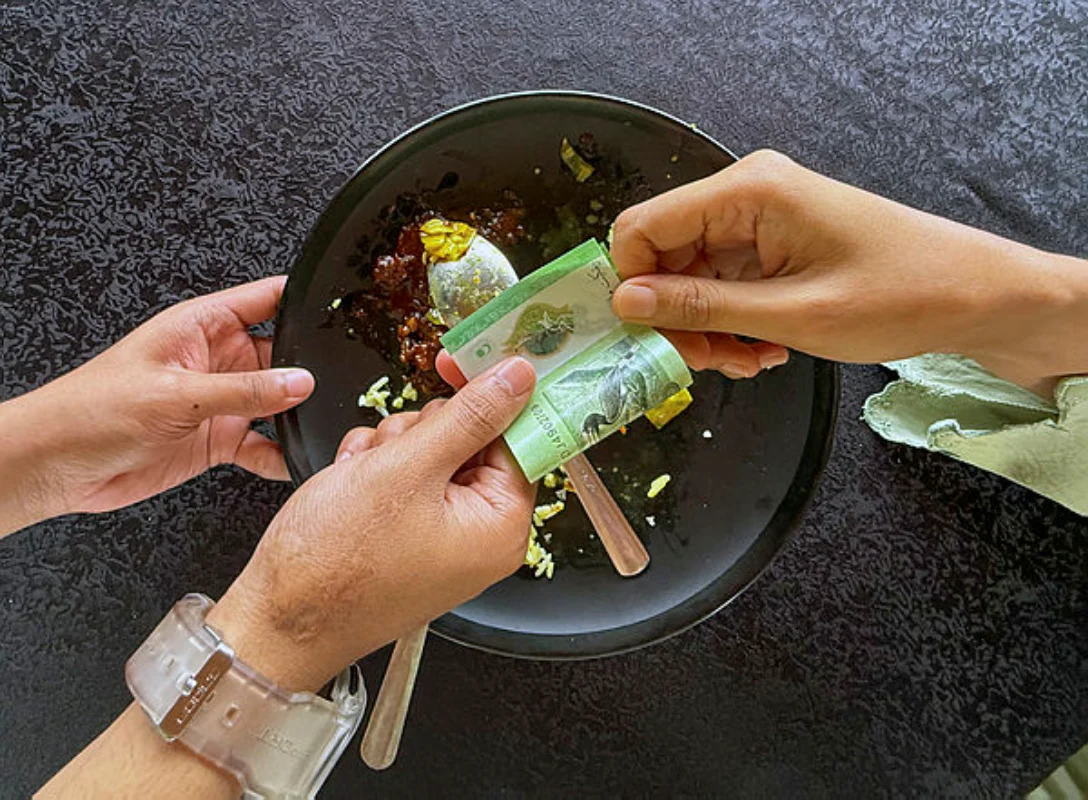
Experts say digital tipping prompts pressure Malaysian consumers, but service charges make tips unnecessary as tipping is not a social norm.
PETALING JAYA: For many Malaysians, paying for a meal or ride now comes with an unexpected test – a digital pop-up asking if they want to add a tip.
Experts said these prompts can make ordinary transactions feel like moral minefields, pressuring consumers to pay even when they do not want to.
Federation of Malaysian Consumers Associations CEO Savaranan Thambirajah said tipping has yet to become a widespread practice in Malaysia despite its growing visibility.
“What we are seeing is more a perception of increased tipping, largely driven by digital payment interfaces such as apps or e-wallets that prompt consumers to add a tip.”
He said even when labelled as optional, these prompts could create subtle psychological pressure.
“Consumers may feel awkward or guilty declining, particularly in face-to-face service settings.
“This can turn what should be a neutral transaction into a morally loaded decision, potentially causing discomfort, resentment or reduced satisfaction with the service experience.”
Economists say tipping has not been widely normalised in Malaysia, in part because service charges are already included in many transactions, making extra payments unnecessary.
Socio-Econmic Research Centre executive director Lee Heng Guei said the practice varies across countries and depends heavily on how service workers are compensated.
“In many countries, tipping varies by culture. In the US, it can be 10% to 20% of the bill and is considered an obligation. In Europe and much of Asia, expectations are lower, and service charges are more common.
“When a service charge is already included, that is effectively the tip. You generally don’t expect customers to give more. Even in Singapore, tipping is not widely practised.”
Lee said this distinction is key to understanding why tipping in Malaysia remains largely voluntary and situational, rather than a social expectation.
Echoing this view, Universiti Teknologi Mara economist Dr Mohamad Idham Md Razak said the rise of digital tipping options should not be mistaken for a full cultural shift.
“The increased visibility of tipping through digital platforms, QR payments and tip jars reflects greater exposure rather than a genuine behavioural change.
“In Malaysia, tipping remains largely voluntary and situational, not an established social norm.”
Mohamad Idham said most consumers still regard service charges as sufficient compensation.
“The emergence of tipping in Malaysia is more likely linked to heightened awareness of rising living costs and perceptions that many service workers are financially vulnerable.
“Consumers may tip out of empathy or solidarity rather than adherence to a social custom.
“If tips are seen as a supplementary income source, employers may feel less pressure to raise base wages,” he said.
“Over time, this could blur expectations of fair pay and introduce income instability, particularly during slower business periods.”



