




Wearable connected devices and artificial intelligence are helping doctors detect warning signs long before patients reach hospital doors
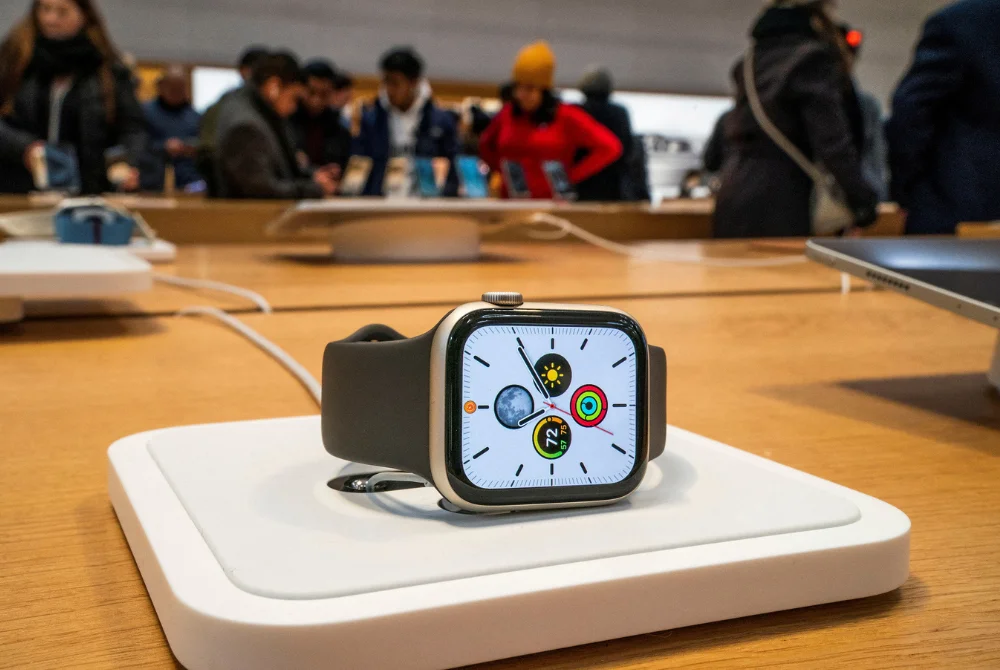
SALEHA (not her real name), 56, did not think much of the discomfort at first. It was the kind of dull, lingering pain that could easily be dismissed as something common after a long day. But then her smartwatch, something she had grown used to wearing, flagged an irregular pattern in her vital signs.
By the time Saleha arrived at the hospital, doctors were no longer starting from scratch as her data had already been transmitted, analysed and integrated into the system.
What might have once taken hours – tests, monitoring and repeated questioning – was already underway before she even stepped through the doors.
No longer a futuristic concept
During a recent media visit to Singapore, theSun spoke to industry players, including Prof Aurel K. Qian, a computational neuroscientist and leading figure in medical AI and digital health, who said the healthcare industry is entering a phase in which technology is no longer optional. “We don’t really have a choice. The elderly population is growing so fast, while government resources are not supporting them healthily.”
When every second and every signal counts
For patients like Saleha, early detection can make all the difference. Qian said in traditional healthcare settings, monitoring often relies on scheduled checks and manual recording, leaving gaps between observations.
But today’s digital systems are designed to close those gaps, continuously collecting and analysing data in real time. They present data in ways that support faster, more accurate clinical decisions, while reducing the burden on healthcare workers. In Saleha’s case, the seamless flow of information meant nurses did not have to manually record her readings, and doctors could immediately assess her condition through integrated digital records.
Device that stays with you
The smartwatch on Saleha’s wrist is part of a broader shift towards wearable healthcare, one that is gradually moving care beyond hospital walls.
Qian said remote monitoring is becoming a key pillar of modern healthcare. But getting individuals to consistently use such devices remains a challenge.
“What inspired me to initiate that project was what I’ve been seeing in the US, where wearable devices have become a clear trend in healthcare because remote monitoring is really the future.
“The challenge is figuring out which type of devices patients are willing to carry all the time,” she said. Designing these systems is far from simple.
As Saleha moves through the hospital, the same device on her wrist serves different purposes for different people.
Qian said for doctors, it is a source of long term data and clinical insight. For nurses, it helps track her movement and ensure her safety.
For engineers, it is a balancing act between collecting enough data and preserving battery life.
“These devices generate a lot of data, but collecting it too frequently can drain the battery quickly. Sustaining that balance is still a challenge.
“When we apply these technologies at scale, there are many moving parts. A hospital operates on a cohort concept, everything has to be designed around specific groups of patients coming in and out with different patterns,” she said.
From operating theatres to everyday use Not long ago, monitoring a patient’s condition could be far more invasive.
“Emerging device innovations are also expanding what is possible in patient monitoring. Beyond basic vital signs, newer technologies are expected to enable more accurate blood pressure readings and even glucose monitoring through smartwatch-like devices.
“In the future, we will have different frequencies of data collection for different departments, and we are already seeing that trend. All these capabilities will lead to more effective disease follow-ups.
“I really look forward to the future of this monitoring part.” Qian recounted her early days in neuromonitoring, during which procedures involved opening the skull to place electrodes directly on the brain, a highly invasive process.
“Today, we are moving from invasive methods to non-invasive monitoring. Technology is really changing the lifestyles of patients.”
For patients like Saleha, the shift represents a quieter but fundamental change in care, one that is less disruptive, more continuous and increasingly able to follow her beyond the hospital. Over time, this could mean fewer hospital visits and more consistent monitoring of her condition.
The question of trust
Despite the benefits, Saleha finds herself hesitating. Can a machine really be trusted with something as critical as her health?
As AI becomes more embedded in healthcare, trust remains one of the biggest barriers to adoption.
Qian said trust is built in layers, beginning with the developers, who must ensure the systems are reliable, safe and designed to function at the right moments.
“It then extends to healthcare professionals like doctors and nurses, who validate and use these tools in real-world settings.”
But for patients like Saleha, trust often comes down to a conversation.
“Nurses play a key role because they interact with patients every day. They know how to explain complex systems in a way patients can understand,” Qian said, adding that with the right guidance, hesitation can gradually turn into acceptance.
A future closer to home
For now, Saleha’s experience may still feel ahead of its time in many parts of Southeast Asia, but that is beginning to change. Qian emphasised that with ageing populations and limited healthcare resources, the need for digital solutions is becoming more urgent across the region.
“Efforts are already underway to explore integrated, AI-driven healthcare networks that could connect hospitals, streamline data sharing and reduce costs.”
However, she cautioned that such systems must be carefully planned. “If the infrastructure is not designed properly from the start, a lot of investment can be lost,” she said.
Hospital that is already thinking ahead
For Saleha, the hospital experience no longer begins with paperwork or waiting rooms – her data has been collected, visualised and shared across systems in real time.
Behind this seamless flow is a shift in how modern hospitals are being designed. theSun also spoke to Philips Asia Pacific Hospital and Ambulatory Monitoring head Sharad Jhingan, who said at the system level, the focus is no longer just on collecting more data, but on turning it into meaningful insights faster and more accurately.
“Today, there are a lot more data generated from these devices, and the question is how do you visualise that data to get better decisions.
“One of the key developments is the rise of clinical decision support systems, tools designed to help doctors and nurses interpret information more effectively.”
Connecting systems, not just devices
In Saleha’s case, every reading from such devices does not exist in isolation. It is part of a larger hospital ecosystem in which systems are increasingly interconnected.
“Interoperability is really about connecting to hospital information systems and other devices, so that all information is integrated into one secure platform,” Sharad explained.
Instead of manual entry, patient data can now flow automatically into electronic medical records, reducing delays and human error while saving time for clinical staff. In some cases, hospitals are already measuring the impact of these changes in terms of efficiency, particularly in how much administrative time can be saved.
Shift towards efficiency, not staff replacement
Sharad believes AI will continue to expand in healthcare, not in a way that replaces human expertise but instead to support them.
“AI will make clinical staff more efficient. It will not substitute humans. No matter how advanced technology becomes, there will always be expertise and years of knowledge that cannot be replaced.”
At the same time, hospitals are expected to become more connected, with increasing use of sensors and real-time data systems that allow continuous monitoring. This shift also opens the door to more flexible care models, including virtual consultations and remote monitoring, reducing the need for patients to be physically present in hospitals for certain conditions.
“Virtual care models will increase, and care at home will become more common,” he said, adding that in the long run, this could also help reduce healthcare costs while improving accessibility.
As Saleha prepares to leave the hospital, her condition continues to be tracked and monitored in real time. Instead of long hospital stays, care is becoming something that follows her home.



