




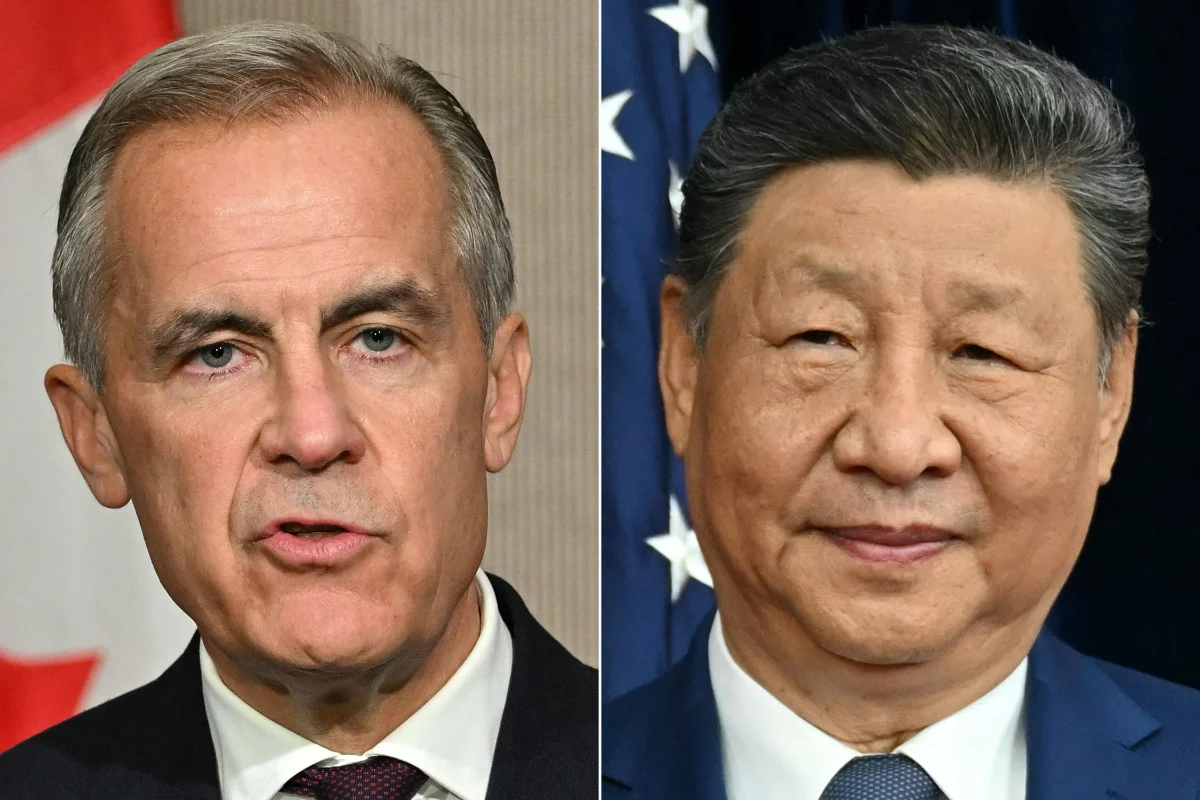
Canadian PM Mark Carney begins a state visit to China to rebuild ties and discuss trade, energy and security after years of diplomatic tensions
OTTAWA: Prime Minister Mark Carney will begin a state visit to China on Tuesday, the first by a Canadian leader in eight years, aiming to rebuild ties and discuss trade.
Chinese President Xi Jinping extended the invitation last October during a meeting at the APEC summit, which Carney described as a “turning point” in the strained bilateral relationship.
The January 13-17 trip seeks to strengthen cooperation in trade, energy, agriculture and international security, according to a Carney spokeswoman.
“It’s a huge step forward,” said Gordon Houlden, a former Canadian diplomat and director of the University of Alberta’s China Institute.
Houlden noted that solving political issues could positively affect trade problems affecting Canadian exports.
The last Canadian leader to visit was Justin Trudeau in December 2017.
Relations deteriorated in 2018 after the arrest of a Huawei executive in Vancouver and China’s retaliatory detention of two Canadians on espionage charges.
China has also been accused of interfering in recent Canadian elections.
Carney will meet Chinese Premier Li Qiang and business leaders to attract new investors and secure strategic partnerships.
He will also seek to develop new markets to reduce Canada’s economic dependence on the United States amid protectionism from President Donald Trump.
China is Canada’s second-largest trade partner, with bilateral trade reaching CAD 118.7 billion (USD 85.3 billion) in 2024.
“This visit is important because China is obviously an inescapable superpower,” said Guy Saint-Jacques, Canada’s ambassador to China from 2012 to 2016.
He said deals on Chinese energy supplies and electric vehicles were possible outcomes from the talks.
But “the elephant in the room,” he mentioned, is the thorny issue of tariffs.
Since mid-2024, Ottawa and Beijing have clashed, with Canada imposing tariffs on electric vehicles and Chinese steel, and Beijing retaliating with levies on agricultural products like canola.
“Whatever agreements Canada has with China will be scrutinized in Washington,” said Vina Nadjibulla of the Asia Pacific Foundation of Canada.
She added that deals might impact three-way talks with Washington and Mexico on a free trade agreement, set for renegotiation this year.
Carney’s challenge is to advance economic objectives without sacrificing national and economic security priorities, Nadjibulla said.
After Beijing, Carney will travel to Qatar for a bilateral visit before attending the World Economic Forum in Davos, Switzerland.



