




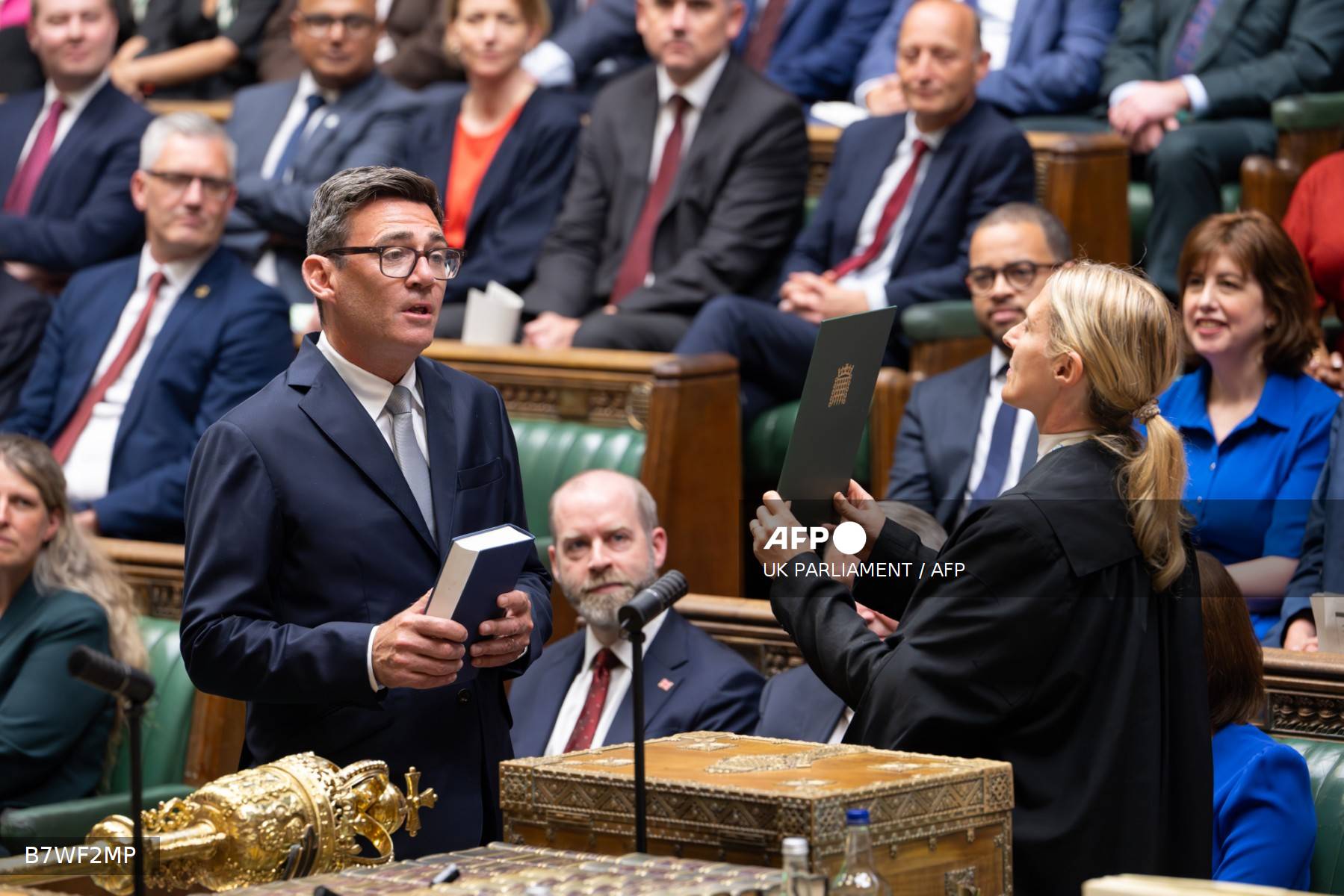
Andy Burnham faces calls to ensure women get half of top cabinet jobs as he prepares to become UK Prime Minister.
LONDON: As Andy Burnham prepares to become the UK’s next prime minister he faces calls to tackle Labour’s alleged “boys’ club” by ensuring women get half of the top jobs in his first cabinet.
The Labour Party — despite having more equality mechanisms in place than the main opposition Conservatives — has yet to elect its first female leader.
By contrast, Tory party leader Kemi Badenoch is the fourth woman to lead her party after former prime ministers Margaret Thatcher, Theresa May and Liz Truss.
Women in the Labour Party reportedly feel a “boys’ club” is blocking their progress.
Labour stalwart Harriet Harman earlier this year urged outgoing premier Keir Starmer to appoint a woman as his de facto deputy to “transform the political culture in government” around women.
“We need less lads, lads, lads, and more diversity,” Labour lawmaker Polly Billington told LBC radio earlier this month.
Billington hinted at the anger behind the scenes when questioned about speculation Burnham could parachute former Labour foreign minister David Miliband back into frontline politics.
“I don’t really need to be organising or advocating for a reunion of the Demon Eyes football club,” she said, referring to a 1998 football team made up of a generation of Tony Blair-era political advisers and future ministers.
Burnham and Miliband, who has left UK politics and been based in New York since 2013, are former Demon Eyes teammates.
Other former team members include James Purnell, a former pensions minister who Burnham is reportedly considering as his chief of staff, and Ed Balls, another former minister who has left politics, who is also tipped for a possible return.
Deputy party leader Lucy Powell told The Guardian daily she had experienced “unpleasant” briefings in Downing Street against senior female cabinet ministers.
She said she viewed them as evidence of a “boys’ club” in the upper echelons of government.
‘Imbued with power’
Women have made big strides in representation over the past 30 years: until 1997, women lawmakers of all parties never made up more than 10 percent of all MPs.
There are currently 266 women MPs in the 650-seat parliament. Labour has 186 women MPs, meaning 46 percent of Labour’s lawmakers are female.
A similar percentage of women currently hold cabinet posts, according to a report by parliament including finance minister Rachel Reeves, foreign secretary Yvette Cooper and interior minister Shabana Mahmood.
But there remains a sense that women are excluded from real power.
The Women’s Parliamentary Labour Party group has written to Burnham with a string of demands including a 50:50 gender balance in both the cabinet and the prime minister’s Number 10 Downing Street office, according to media reports.
“We are asking you to demonstrate this change from day one and address the toxicity and misogyny within our own party and government,” they wrote, according to the BBC which saw a draft.
The message from a meeting with Burnham was that it wasn’t “just about having women in the room”, former minister Jess Phillips told LBC television.
“Giving someone a job … and then just ignoring them when they speak will not work,” she said.
“They have to be imbued with power. Decisions have to be made with women in the room, and those women have to be able to feel that they can speak against the pervading power if that power is a man,” she added.
Burnham has yet to comment on the demands.
‘Watershed’
Joni Lovenduski, of Birkbeck College, University of London, an expert on gender and politics, told AFP it was puzzling that Labour had still not elected a female leader.
Despite Labour endorsing all-women shortlists as an affirmative action to select candidates since 1993 — unlike the Conservatives — this had somehow failed to materialise.
She believed it was the result of the party “prioritising class” over gender.
Lovenduski said the problems also extended to No. 10 which had historically been “laddish and misogynistic”, irrespective of party.
Sarah Childs, an expert on women’s political representation, of the University of Edinburgh, said she was hopeful Burnham’s government could be a “watershed”.
It was “a moment for potential change because you have got an incoming prime minister who is himself critical of some of the ways of working at Westminster”, she said.



