




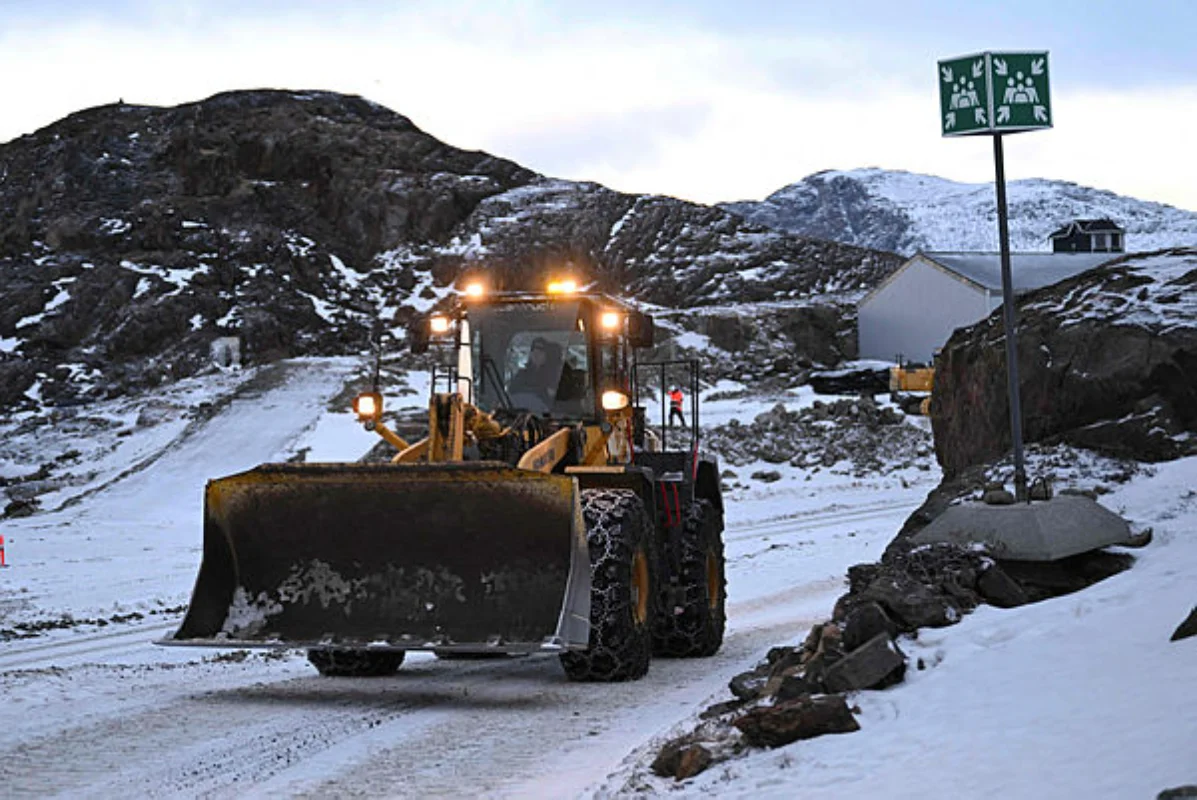
Greenland’s rare earth and mineral potential attracts global investors, but harsh conditions and limited infrastructure slow mining progress
LONDON: Greenland’s natural resources, including potential vast rare earths deposits vital to the AI boom, have attracted attention since US President Donald Trump showed interest in the Danish self-governing territory.
Harsh conditions and weak infrastructure make mining a difficult task, however.
Only two mines are operational.
Lumina Sustainable Materials runs an anorthosite mine (a type of rock used in building and industrial materials) backed by Canadian-Swiss investors, and Canada-listed Amaroq operates a gold mine.
As climate change melts sea ice and opens up new shipping routes around Greenland, commercial interest is rising.
Data from Greenland’s Mineral Resources Authority shows 138 active mining licences (as of February 13), held by 63 companies and individuals.
An AFP review of this official data outlines the current state of Greenland’s mining industry.
Limited mining
Only nine of the active permits are exploitation licences authorising production and mining.
To obtain these 30-year licences, companies must first explore a designated area and demonstrate that sufficient resources exist for commercial exploitation.
The two firms operating Greenland’s existing mines hold such permits, along with several other companies.
US mining company Critical Metals Corp holds the only active permit to exploit rare earths for a deposit in Kalaalit Nunaat, which is still years from becoming operational.
British firm GreenRoc Mining Plc obtained a licence in December 2025 and plans to exploit a graphite deposit that is expected to produce around 80,000 tonnes of graphite concentrate per year, a company spokesperson told AFP.
Commercial production is expected to begin in 2029.
Other companies with recently issued exploitation permits include an anorthosite mining project backed by investors from Denmark and Luxembourg, and a molybdenum project backed by the European Union and run by Canadian company Greenland Resources.
The remaining exploitation permits are held by companies with projects on hold or seeking to divest.
“The path from exploration to exploitation is inherently long and complex, often taking many years” a Greenland Mineral Resources Authority spokesperson told AFP.
Projects can be discontinued “due to lack of viable resources, economic feasibility, environmental assessments or social considerations”, the spokesperson added.
Over 70 types of minerals explored
Nearly two-thirds of licences are exploration permits.
Other types of licences include permits for sand extractions, small-scale exploration or scientific research.
They grant companies exclusive access to specified areas where they can look for “all mineral resources except hydrocarbons and radioactive elements, unless otherwise stipulated”, according to the application procedure detailed online.
These active licences show the supposed breadth of Greenland’s mineral assets.
Over 70 different types of minerals and resources are explored and mined, according to an AFP analysis.
Gold is mentioned in 49 permits, copper in 36 and nickel in 24.
Rare earth elements are mentioned in 17 licences, with more permits referencing specific rare earths such as cerium or terbium.
Three oil exploration licences are also owned by British firm White Flame Energy and are active until late 2028.
Greenland contains over 31 billion barrels of oil equivalent of oil and natural gas, according to estimates by the US Geological Survey.
All mining activities take place along Greenland’s coasts, where conditions are milder, particularly in the southeastern regions of Sermersooq and Kujalleq.
About 80 percent of Greenland is covered by ice, which can be up to three kilometres (two miles) thick in parts of the island’s interior.
Surveying and mining under such a thick ice sheet is impossible, according to experts, leaving large areas of the territory unexplored.



