




Caring for the environment in Malaysia begins not with policies alone, but with empathy, example and shared human responsibility
IN Malaysia, conversations about the environment are everywhere – from school murals to government masterplans.
We talk about climate change, biodiversity, clean energy and zero waste. Yet, despite this growing awareness, our rivers remain polluted and forests continue to fall. Why? Because we forget that caring for the environment isn’t just a scientific issue; it is also a human one.
We are taught to treat environmentalism as a technical puzzle: install solar panels, reduce emissions and carbon footprints. But the planet is not just a system to be fixed; it is a relationship to be mended. And relationships don’t thrive on data alone; they require empathy, care and meaning.
I have seen community projects struggle because they lack emotional connection. Without a sense of belonging or shared purpose, even the best-funded initiatives can fall flat.
Environmentalism loses its power when it becomes transactional. However, it can regain that power if it becomes personal. We usually don’t protect what we don’t feel connected to.
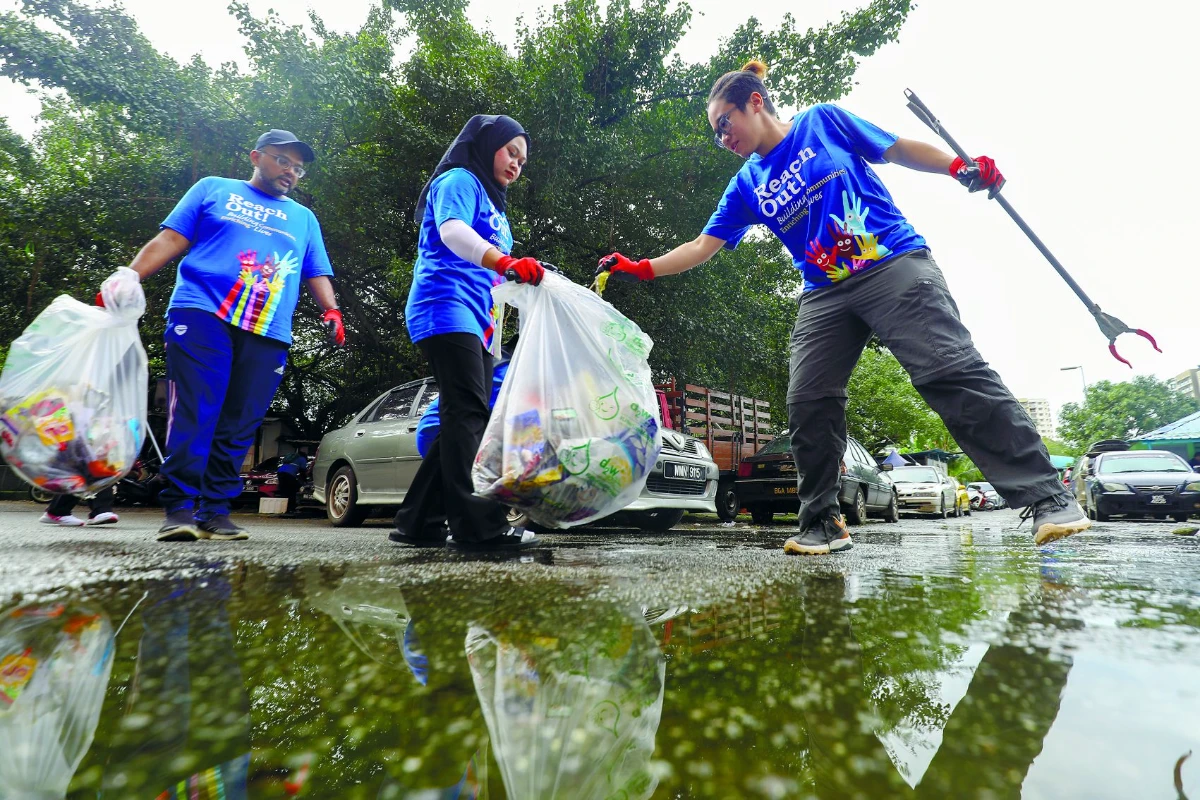
Today, environmental activists across Malaysia are cleaning rivers, picking up trash and restoring forests. But their work should never be misunderstood as simply correcting what others have done wrong. These acts are not punishments; they are invitations – they are living examples of hope.
In Malay culture, we call this suri teladan – to lead by example. When someone collects a plastic bottle from the riverbank, they are not just removing trash; they are reminding us what dignity and care look like. They are performing a small, visible act of devotion to Mother Earth, in hopes that others will feel moved to do the same.
Goodness can be contagious. When we witness someone doing good, it awakens something inside us and we feel inspired to join in. That is how transformation spreads – not by force but through example.
Many people hesitate to speak out about environmental issues because they fear being seen as hypocrites. “How can I talk about zero waste if I still use plastic?” “How can I ask others to plant trees if I haven’t yet planted one?” But the truth is: it is okay to call others to do good even if you are still trying to do it yourself.
Every change begins with an intention. Every good habit starts with a conversation, a reminder and a nudge. Sometimes, saying it out loud can be a start to becoming the person who eventually does.
When we speak from the heart – not to lecture but to spark thought – we are helping to build the foundation for action in others and in ourselves.
In many ways, Malaysians are still pampered by a system that protects us from inconvenience. For example, we are not required to strictly segregate domestic waste. We are not faced with the reality that our unseparated garbage could be left in front of our homes indefinitely.
Environmental action should not begin only when we are pushed to the edge. It should begin with awareness and a willingness to shift – even before crisis forces us to. Comfort should not be an excuse for complacency.
The good news is we can change – we have seen it before. There was a time when people in Malaysia casually used parking spots designated for persons with disabilities but after constant exposure through television commercial breaks, social media reminders and signage campaigns, something clicked. Today, most people respect those parking spaces without question. It is not just about enforcement; it is about a collective shift in values.
We have learned to do the right thing even when no one is watching. This is proof that when values are communicated consistently and compassionately, people respond.
Although I work in an office setting, I once took the opportunity to join a cleanup activity at selected beaches in Pahang and Terengganu. It was part of a research programme focused on identifying plastic waste in coastal environments. Our centre’s director was one of the co-investigators and joined us in the activity. At first, I joined out of curiosity – I wanted to experience something new in life but the experience shifted my perspective completely.
As we picked up trash along the beach, I saw and felt how much waste ends up where it shouldn’t – not only waste manufactured locally but also foreign-labelled waste.
I remembered what I had learned: Plastic takes around 450 years to decompose. Suddenly, this wasn’t just a fact; it was real, tangible and heavy in my hands. It struck me that this wasn’t just a programme; it was a reflection of what we owe the environment. It isn’t the responsibility of cleaning staff alone but of all of us.
A similar experience occurred during a river cleanup along the Selangor River, which I joined as part of a mobility programme with Australian students.
As we collected waste along the riverbank, we realised that more than half of it was recyclable. It made me wonder whether we truly understand that these materials could have been sorted and repurposed, leaving far less waste behind.
More importantly, none of this waste should have ended up in the river. This is not a problem that requires complex policy; it could be avoided if we simply remembered that rivers are not dumping grounds.
It led me to reflect further: Why do Malaysians admire good practices abroad but rarely bring them home? We see how people in other countries clear their tables in restaurants, manage waste responsibly and show basic courtesy in shared spaces. Why can’t we do the same here? Cleaning may be someone’s job but wouldn’t it be kinder if we made it easier for them?
To illustrate this, something unexpected happened during the beach cleanup: the van driver who had been with us throughout the trip quietly began collecting trash as well. He had seen us at work and listened to our conversations, and in that moment seemed to understand that what we were doing wasn’t just about picking up rubbish but about protecting something we all share. He joined us – not because we asked but because he recognised the need.
It reminded me that change doesn’t always have to start with bold campaigns or grand speeches. Sometimes, it can happen when someone sees a meaningful act and quietly decides this is worth doing.
That is why we must speak up for the environment at work, at home, with friends and strangers. This is how movements grow – not only through action but also through reflection, storytelling and example. And this is how we can build a greener, kinder Malaysia together.
Dr Azizi Abu Bakar is a research officer at Universiti Malaya Sustainable Development Centre. Comments: [email protected]



