




Table of Contents
How childhood toy finds new life in schools, competitive play
FOR many Malaysians, Beyblade is a childhood memory tied to after-school battles, anime marathons and spinning tops crashing into one another on bedroom floors.
Today, the hobby is experiencing a different kind of momentum. What was once dismissed as a toy is increasingly being treated as a competitive activity, with organised tournaments, coaching programmes and even school clubs appearing across the country.
The movement recently gained national attention after Beyblade was introduced into schools as a co-curricular activity, while its organisers continue pushing for broader recognition within Malaysia’s sporting landscape.
At the centre of that effort is Malaysia Beyblade Top Club (KGBM), a community-driven organisation that has spent the last few years building a structured competitive scene around the spinning-top game.
Spinning into schools
According to the club’s secretary Mohd Shahril Ramli, the goal has always been larger than organising tournaments.
“I saw Beyblade’s potential as a sport because of the benefits it can provide. There are elements of science, engineering, mathematics and physics in it. When students play Beyblade, they begin discussing things such as weight distribution, centre of gravity and speed. It naturally encourages curiosity,” Shahril told theSun.
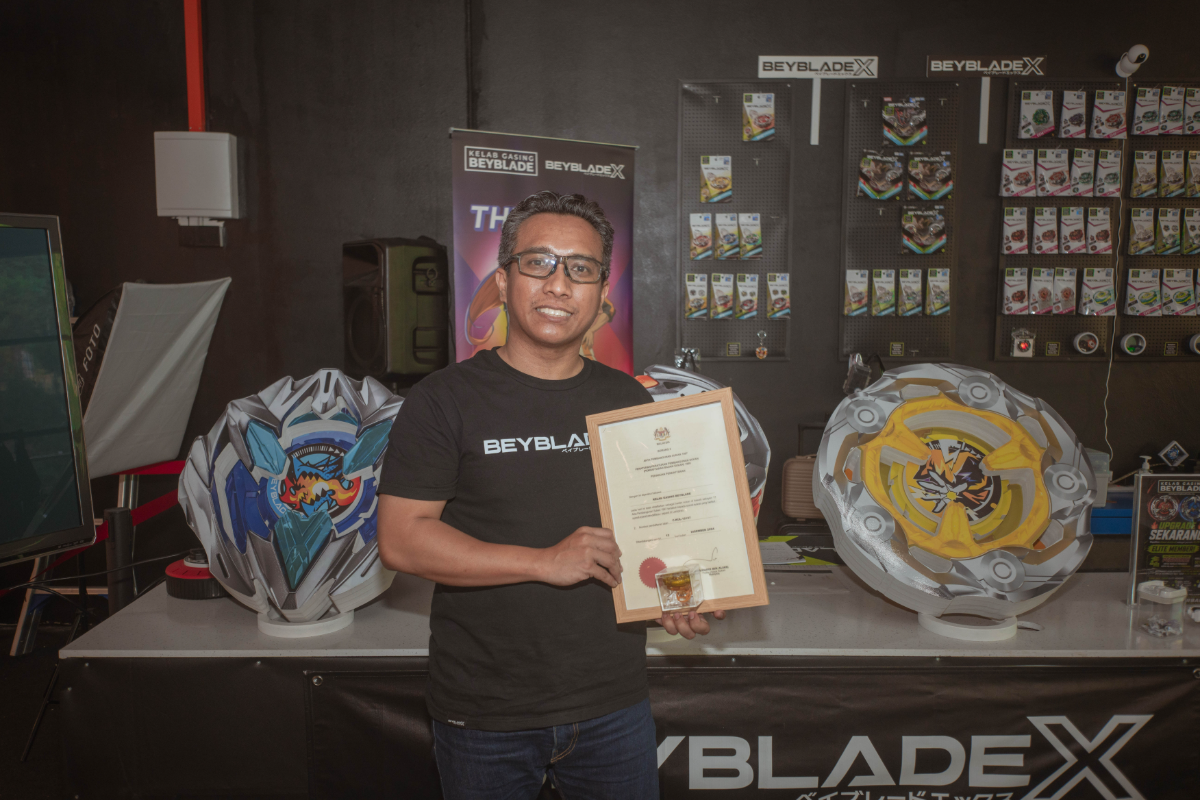
Shahril said the club wanted to move Beyblade beyond being viewed purely as a commercial toy and create opportunities for students to participate in a structured activity that combines competition, critical thinking and social interaction.
The organisation has worked with schools across Malaysia, training teachers and volunteers while introducing structured competitions and club activities. Organisers said more than 1,000 schools have registered for the programme, with participation continuing to grow.
Beyond childhood toy
The growth has been substantial. What was once a niche hobby dominated by dedicated enthusiasts has expanded into a nationwide community with clubs, trainers and tournaments taking place across multiple states.
For longtime players, the difference is striking.
“When I started, the community was much smaller. Now it is huge,” said Intan Azura Al Zahra Abdullah, one of the country’s top competitors and chief commander of local Beyblade team, Team RevoX.
She believes official recognition and school involvement have helped change public perception.
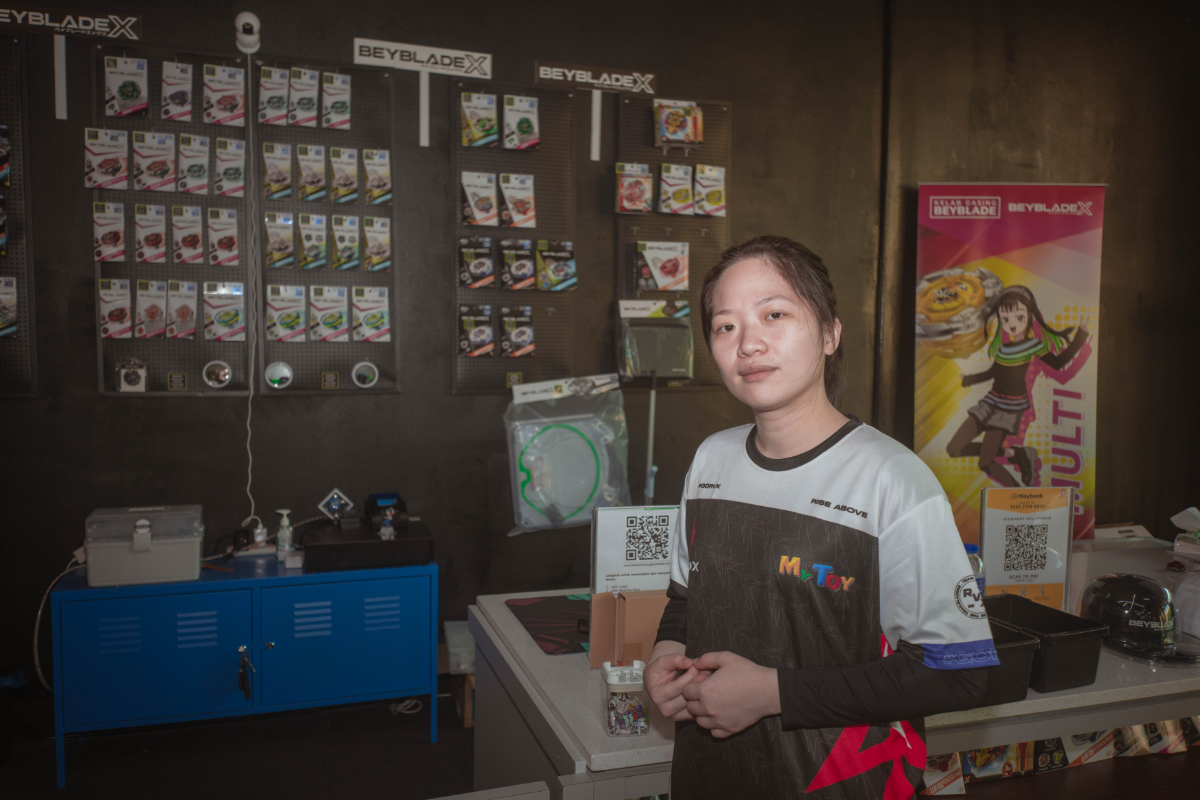
“People used to see Beyblade as just a toy for children. But when you actually play competitively, you realise it is very technical and tactical. Before a match even begins, you have to understand your equipment, study your opponent and decide on your strategy,” she added.
Built on skill and strategy
Unlike the simple spinning tops many parents remember, modern Beyblade competitions involve a surprising amount of analysis.
Players can customise their Beyblades using different officially produced components, each affecting weight, balance, attack power, stamina and defensive capabilities. Competitive players spend hours testing combinations and studying how different setups perform against one another. For Beytrainer Putrajaya and Team RevoX founder Firdaus Jusdean, the game’s complexity is one of its biggest attractions.
“On paper, people say it is like rock-paper-scissors. Attack beats stamina, stamina beats defence and defence beats attack. But once you start playing competitively, skill becomes the deciding factor.
“You need to understand your Beyblade, your opponent’s setup and how to adjust your launch technique. Even the angle of your launch can completely change the outcome.”
Firdaus said many dedicated players now analyse statistics, calculate win rates and experiment with new combinations whenever new products are released.
“Every new release changes the game. Players have to re-evaluate their strategies all over again. That constant evolution keeps people interested,” Firdaus added.
New generation of players
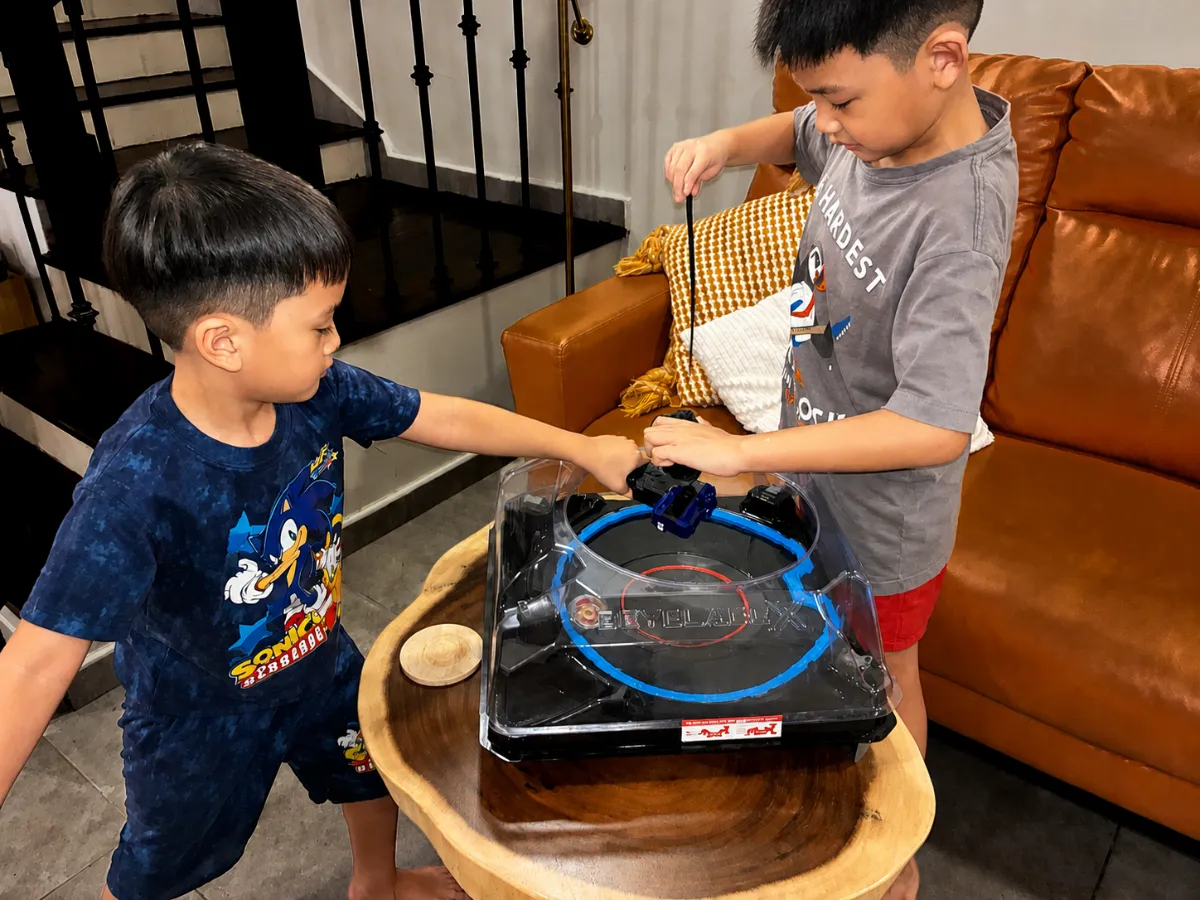
The latest generation, known as Beyblade X, has helped fuel another surge in popularity. Featuring a stadium system that allows Beyblades to accelerate along rails before colliding, matches are faster, more aggressive and often decided within seconds.
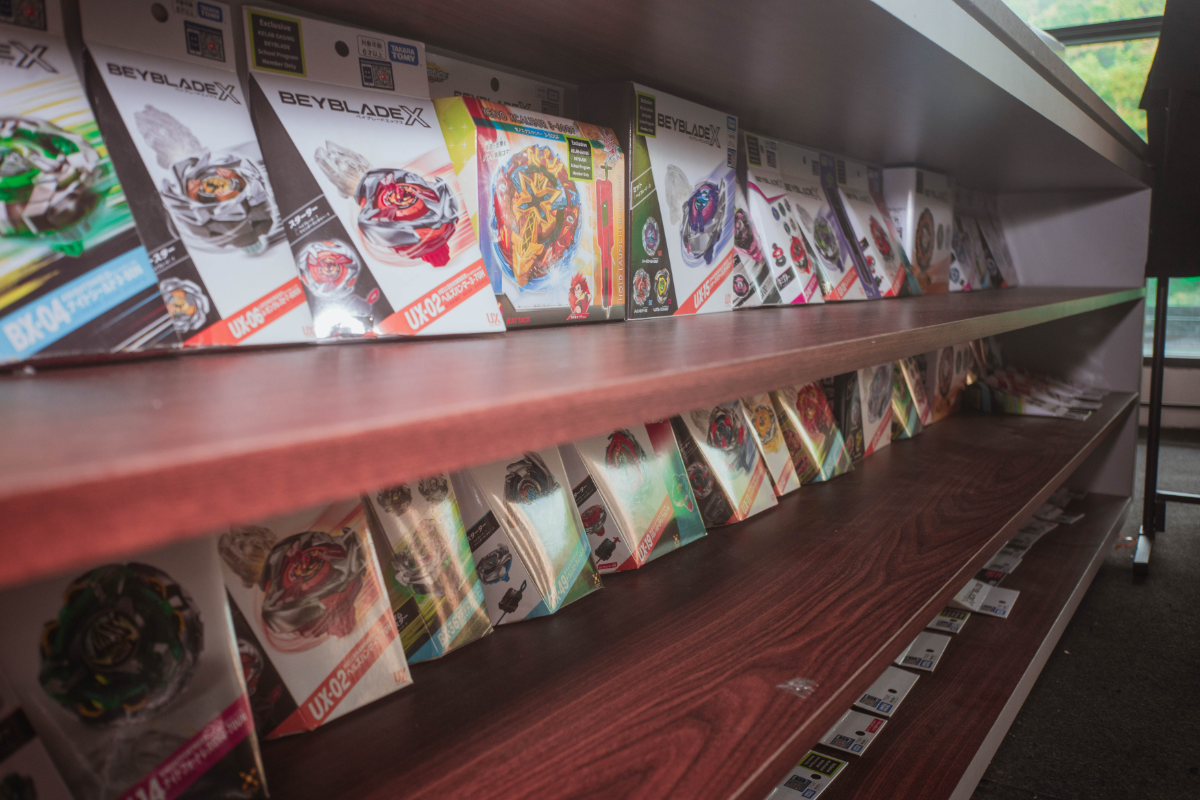
The format has proven especially appealing to younger players who are discovering the hobby for the first time. At the same time, organisers see Beyblade as a way to encourage children to step away from screens and engage with others face-to-face.
“We wanted to redirect some of that attention towards something physical where students can socialise, compete and develop themselves,” said Shahril.
Malaysia’s competitive scene is no longer dominated solely by adults who grew up with earlier generations of Beyblade. School competitions are introducing younger players to organised tournaments, creating a pathway from classroom clubs to national events.
Parents and teachers join in
The school programme has also introduced many children to organised competition for the first time. Some schools have established dedicated Beyblade spaces, while teachers have begun using clubs as an incentive for students to improve academically and participate in co-curricular activities. The impact extends beyond students.
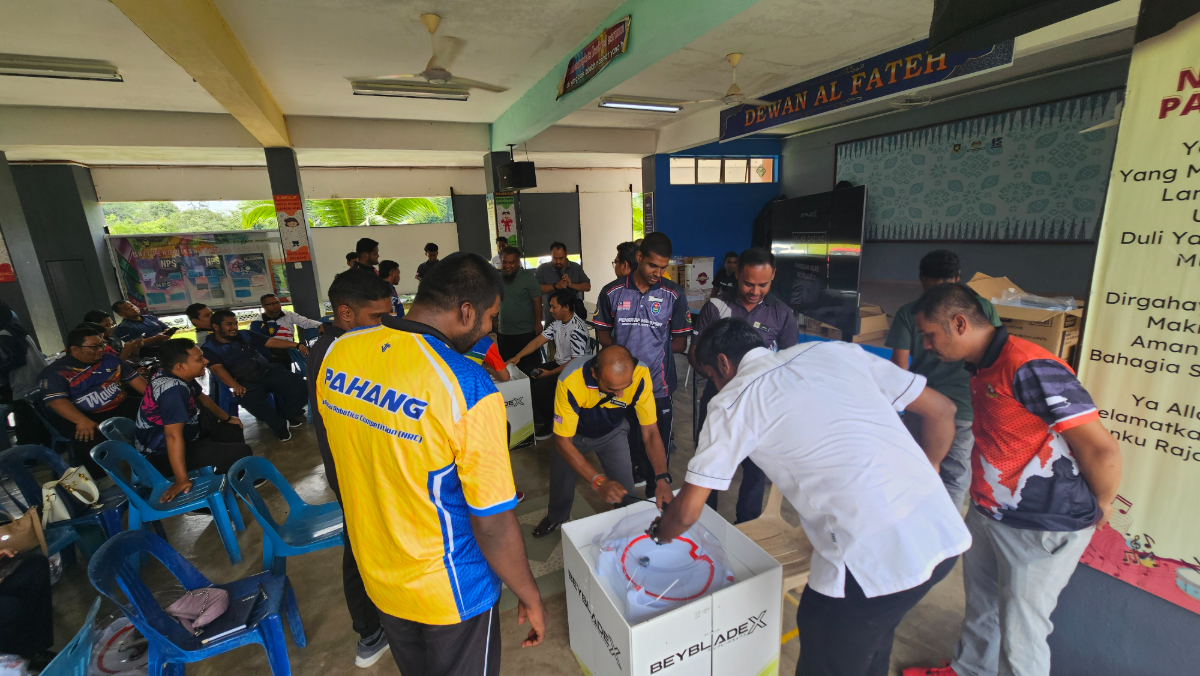
Parents increasingly attend tournaments alongside their children, while some even compete in open divisions themselves.
“It creates bonding between teachers, students and parents. Parents bring their children to compete, then they compete in the next category themselves. Teachers join in too. It becomes a community activity,” Shahril added.
Organisers say some schools have converted unused spaces into Beyblade training areas, while teachers regularly supervise club sessions and tournaments.
Community beyond competition
That sense of community remains one of the defining characteristics of Malaysia’s Beyblade scene.
Despite the existence of multiple teams and competitive rivalries, organisers describe the local community as unusually collaborative. Players frequently share information, discuss strategies and help newcomers learn the game’s mechanics.
Many veterans also volunteer as trainers, helping schools and local clubs run workshops and tournaments. For Intan, that welcoming environment is part of what makes the hobby special.
“The support today is completely different from before. Players are being recognised for their skills and achievements. People are starting to understand that this is something that requires effort, practice and knowledge,” she said.
Changing old perceptions
Challenges remain, particularly in changing perceptions among those who continue to view Beyblade as little more than a children’s toy.
For organisers, convincing the public that Beyblade belongs alongside recognised competitive activities remains one of the biggest hurdles. But attitudes appear to be shifting. One sign comes from conversations they increasingly hear outside tournaments.
“The biggest difference today is that we no longer have to explain it ourselves. People already know Beyblade is recognised as a sport and they are sharing that information with others,” said Shahril.
Malaysia’s Beyblade future
The club’s long-term ambition extends beyond school programmes and local tournaments. Organisers hope Malaysia can develop a sustainable pipeline of competitive players capable of challenging at international events.
They also believe the country’s early adoption of Beyblade as a recognised sporting activity gives it a unique opportunity to establish itself as a leader in the global scene.
For a community that spent years trying to be taken seriously, the progress is already significant.
And with more schools joining, larger tournaments being organised and a new generation of players entering the scene, Malaysia’s Beyblade culture appears to be spinning faster than ever.
READ MORE:
Pokémon celebrates 30 years with Malaysian fans
Gunpla: A creative hobby built to last
Diecast toy cars bring joy to Malaysian collectors
Manga galore: Meet the man with Malaysia’s largest collection
Hippotherapy: Autism therapy on horseback



