




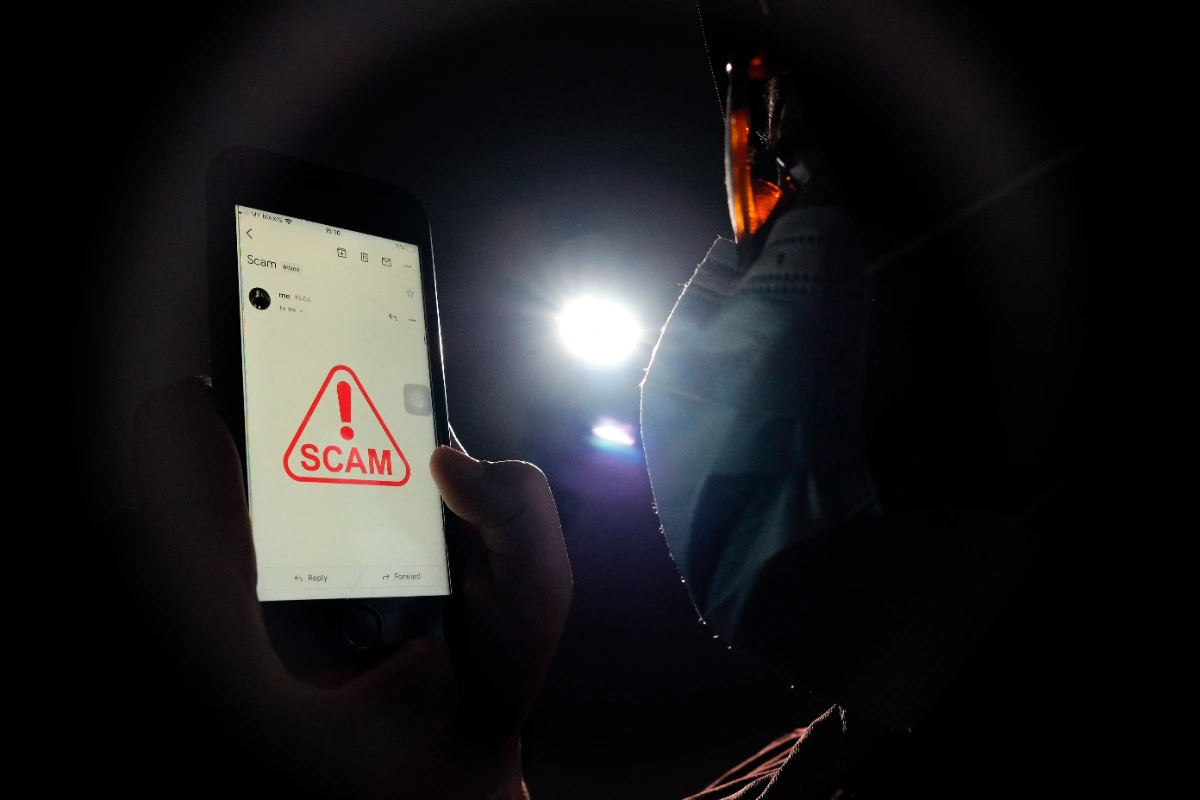
MCMC blocked 2.5 billion scam calls and terminated 190,429 lines in a crackdown on digital fraud between 2022 and 2026.
PETALING JAYA: Malaysia has blocked 2.5 billion suspected scam calls, 3.04 billion unsolicited SMS messages and terminated 190,429 phone lines linked to fraudulent activities as part of ongoing efforts to combat digital scams, Communications Minister Datuk Seri Fahmi Fadzil said.
The actions were carried out by the Malaysian Communications and Multimedia Commission (MCMC) in collaboration with telecommunications service providers between Jan 1, 2022, and June 30, 2026, targeting scam operations involving phone calls, SMS messages, fake accounts, impersonation and AI-enabled fraud.
“The public can report scam-related numbers, including those used to impersonate government agencies, banks and enforcement authorities, through MCMC’s Consumer Redress Portal (CRP), complaint email or WhatsApp service for immediate action,” he said in a written parliamentary reply.
He was responding to Datuk Seri S. Vell Paari Samy Vellu (MIC), who asked whether the government would establish a faster and more integrated mechanism with telecommunications companies to enable scam-related phone numbers to be verified, traced, blocked or terminated more swiftly.
Fahmi said enforcement against scam activities remains under the jurisdiction of the Royal Malaysia Police (PDRM) under the Penal Code.
However, MCMC continues to support investigations by coordinating requests to remove scam-related content from social media platforms, blocking fraudulent websites and providing technical assistance, including digital forensic analysis.
He added that MCMC also takes action under the Communications and Multimedia Act 1998 (Act 588) and the Online Safety Act 2025 (Act 866), including against harmful online content and material related to financial fraud.
In a separate parliamentary reply, Fahmi said the government is also strengthening measures against AI-driven scams, including love scams, deepfakes and identity impersonation, which are increasingly being exploited by criminals.
He was responding to Datuk Rosni Sohar (UMNO), who asked about measures to address AI-enabled scams targeting vulnerable groups, particularly women and senior citizens, as well as action taken against social media platforms to improve the detection and removal of fraudulent accounts.
“Between Jan 1, 2022, and June 30, 2026, MCMC submitted 275,787 requests to online service providers to remove scam-related content, including fake accounts and impersonation cases.
“Of these, 262,293 pieces of content, or 95%, were removed following assessments based on complaints, platform guidelines and local laws,” he said.
Fahmi said the government has further strengthened online safety through the Risk Mitigation Code (RMC) under the Online Safety Act 2025, which came into effect on June 1, 2026.
The code requires licensed application and content service providers to implement risk mitigation measures, including identifying and labelling AI-generated or manipulated content such as deepfakes, altered images and synthetic voices.
MCMC is also conducting proactive monitoring of digital platforms to detect criminal content, threats to public safety and the spread of false information involving AI-generated material.
“Strategic cooperation with social media platform providers and enforcement agencies has been strengthened to ensure faster, more effective and coordinated action,” Fahmi said.
He added that since Sept 1, 2024, telecommunications service providers have been required to block prohibited SMS messages containing hyperlinks, requests for personal information and callback numbers, as scammers frequently use such methods while impersonating government agencies, statutory bodies and private companies.
From Jan 1 to July 7, 2026, MCMC received and processed 158 complaints related to scam calls, including cases involving the impersonation of government officials.
Fahmi also highlighted MCMC’s Internet Safety Campaign, which has reached 10,303 schools and higher education institutions and delivered 2,143 awareness programmes involving communities, including women and senior citizens.
The campaign has reached an estimated 2.19 million participants nationwide since its launch in January 2025.
He urged the public to report suspected scam numbers, accounts or digital content immediately to service providers and the relevant authorities.
Victims who have transferred money or suffered financial losses should immediately contact the National Scam Response Centre (NSRC) via 997 to enable swift action to block fund transfers and assist investigations.



