




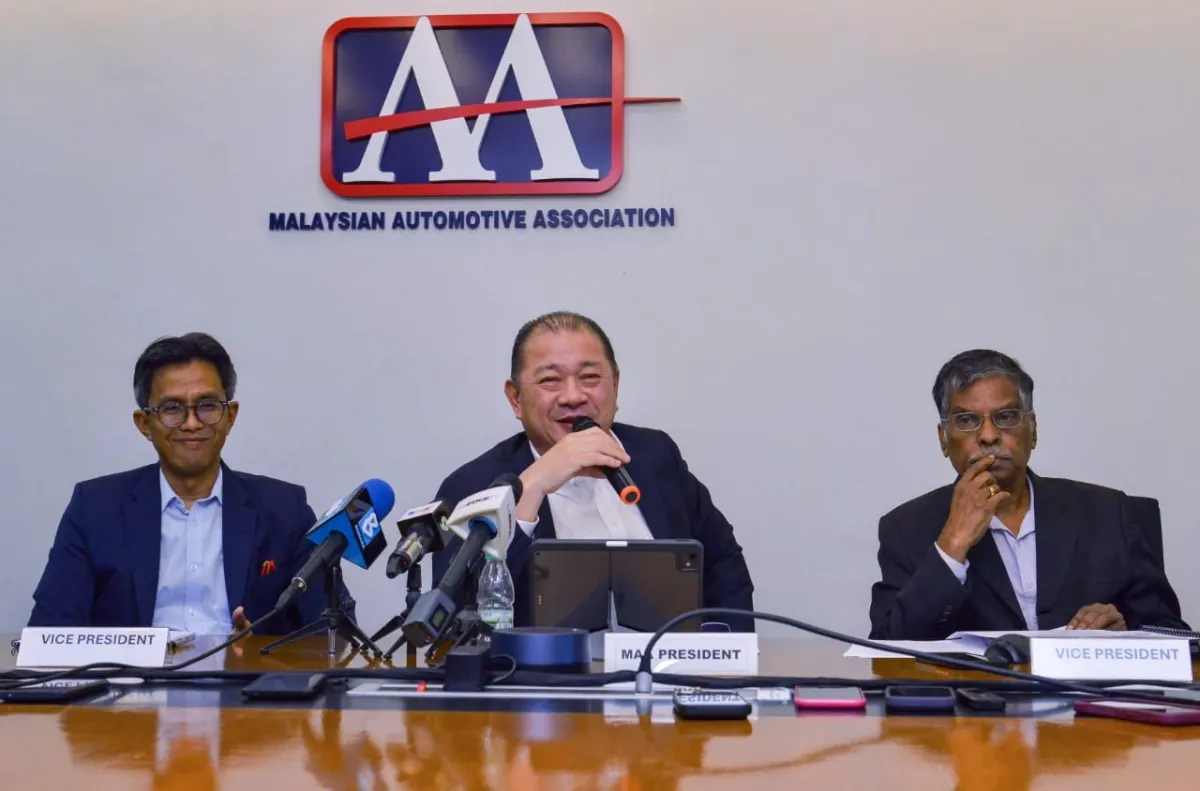
ARA DAMANSARA: The Malaysian Automotive Association (MAA) has raised its 2026 total industry volume (TIV) forecast to 800,000 units from 790,000 units, following stronger first-half industry performance, sustained consumer confidence, growing demand for sport utility vehicles (SUV) and electrified vehicles (xEVs) and supportive financing conditions and new model launches which will underpin demand in the second half.
The upward revision follows a stronger first half, with new vehicle sales rising 3% year-on-year to 385,353 units, while total industry production increased 1.2% to 356,946 units. Passenger vehicle sales climbed 4%, offsetting an 11% decline in commercial vehicle sales, particularly pick-up trucks.
MAA president Mohd Shamsor Mohd Zain said the revised forecast was underpinned by the industry’s momentum in the first six months of the year, particularly the continued strength of national marques.
“As far as our 800,000 forecast is concerned, it’s actually building into the first-half momentum that we have,” he said, adding that there is also the strong momentum from the national brands, which already now has 67% of the market share.
“So with that continuous momentum, we feel that 800,000 is a safe number to forecast for 2026,” he said when disclosing the MAA’s mid-year industry review today.
Despite the upward revision, the forecast remains below last year’s record 820,752 units. Passenger vehicle sales are now projected at 744,000 units, up from the earlier estimate of 730,000 units, while commercial vehicle sales are expected to ease to 56,000 units from the previous forecast of 60,000 units.
MAA also raised its forecast for xEV sales to 120,000 units from 100,000 units, representing 15% of the revised TIV forecast, with battery electric vehicles and hybrid electric vehicles expected to contribute equally at around 60,000 units each.
Shamsor said the stronger first-half performance was driven by robust SUV demand, accelerating xEV adoption, supportive government policies and resilient consumer spending.
He added the postponement of the implementation of PU(A) 402 and the New Customised Incentive Mechanism, initially scheduled to take effect at the end of June and later extended until Dec 31, 2026, had also provided manufacturers and distributors with greater policy certainty, allowing business operations and sales activities to continue without immediate disruption.
National marques continued to strengthen their dominance during the first half, with their combined market share rising to 67% from 63% a year earlier, while non-national brands lost market share. He noted that Perodua now commands about 41% of the market while Proton accounts for about 26%.
Looking ahead, Shamsor said MAA remained optimistic that the domestic automotive market would maintain its momentum despite expectations of slower global economic growth.
“Consumer confidence still remains a key determinant for the second-half TIV performance, continued by employment growth and stable household incomes.”
He said financing conditions remained supportive following Bank Negara Malaysia’s decision to maintain the Overnight Policy Rate at 2.75%, while new SUV and xEV launches, together with year-end promotional campaigns featuring rebates, financing packages and trade-in programmes, are expected to further stimulate demand.
However, he cautioned that the industry remained mindful of external risks.
“The industry remains cautious of external risks. As you all know, we have geopolitical developments, exchange rate volatility as well as evolving global trade conditions which could influence market performance.”
Despite the geopolitical uncertainties, Shamsor said MAA members have so far been able to manage supply chain disruptions.
He added that there was currently no indication that member companies were experiencing higher costs arising from the disruptions.
Commercial vehicles remained the weakest segment in the first half, with sales falling 11% year-on-year to 23,718 units, largely due to a 19% decline in pick-up truck sales following the withdrawal of diesel subsidies for privately registered diesel vehicles.
Nevertheless, Shamsor said the association was beginning to see encouraging signs following the implementation of the Budi Madani diesel subsidy programme, although it was still too early for the improvement to be reflected in industry sales figures.
“We are seeing some slight improvement here. With the new announcement of the Budi Madani diesel subsidy, we won’t be able to see the numbers yet, but we are seeing positive signs.”



