




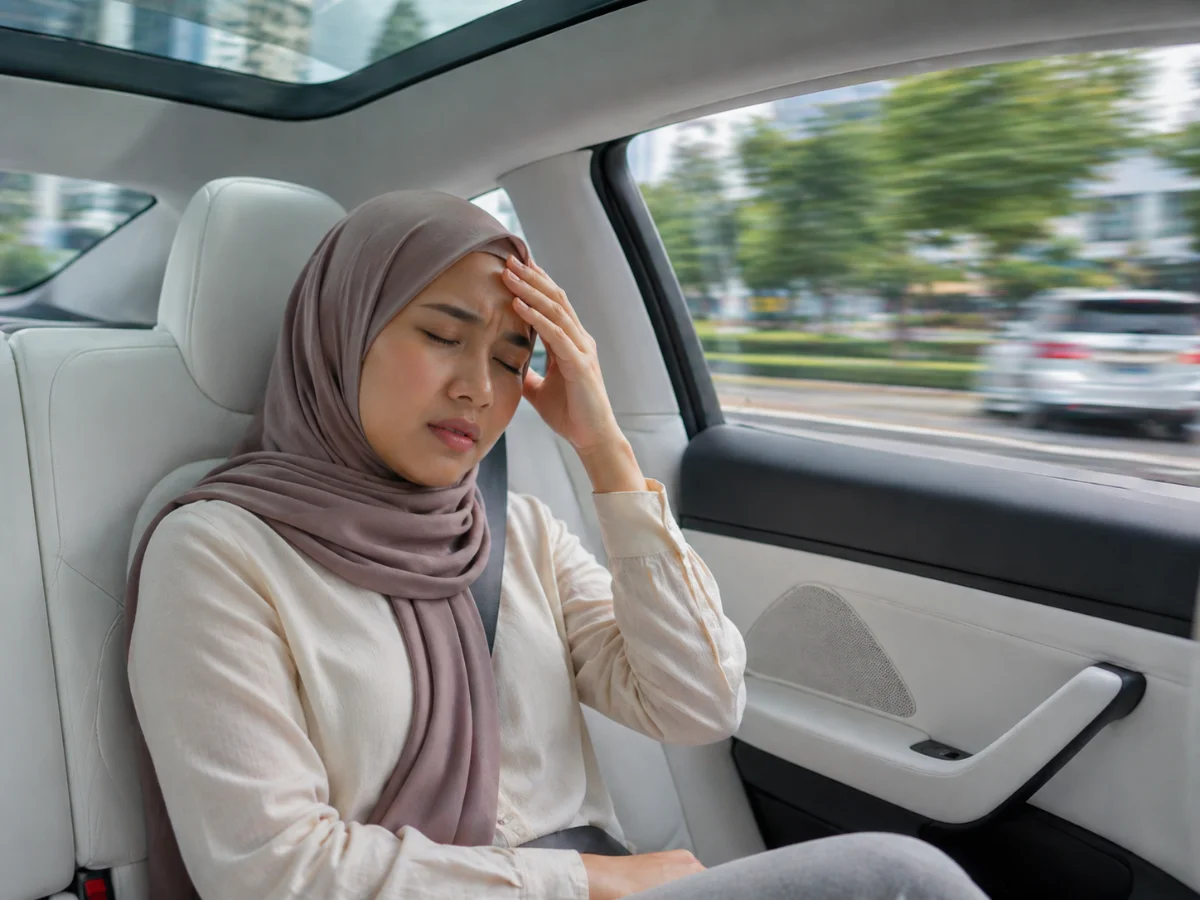
Social media claims link EV rides to nausea, with users citing torque, silence and braking as possible causes, while others dispute the experience
ELECTRIC vehicles (EVs) are frequently lauded for their smooth and quiet performance.
However, a growing number of users on X are now claiming that these very qualities may be contributing to feelings of nausea and physical discomfort.
As EV adoption accelerates across Malaysia, online posts alleging higher rates of motion sickness have begun to circulate widely.
While the evidence remains largely anecdotal, the discussion highlights a burgeoning perception that the EV passenger experience differs significantly from that of traditional internal combustion engine (ICE) vehicles.
One widely shared post by user @wilsonyimby framed the issue as a phenomenon many may have experienced without fully understanding the cause.
“Today I learned that people get more carsick in EVs,” he wrote, adding that passengers who feel nauseated in vehicles such as Teslas or BYDs are not imagining the sensation.
Referencing a 2024 study, he claimed that motion sickness symptoms in EVs could be 10% to 30% more intense, particularly for those in the rear seats.
He identified three primary technical factors behind this:
- Lack of Auditory Cues: The brain traditionally uses engine “revving” as a signal for acceleration. The near-silence of an EV removes this sensory cue, potentially causing a disconnect between what the eyes see and what the inner ear feels.
- Instant Torque: Unlike petrol engines, which build speed gradually, electric motors deliver power instantaneously. This can make acceleration feel abrupt and jarring.
- Regenerative Braking: Cited as the “main culprit”, this feature causes the car to decelerate the moment the driver lifts their foot off the accelerator. This creates a repetitive “push-pull” motion that is a known trigger for motion sickness.
The responses to these claims have been deeply divided. User @HilmiHimself corroborated the sentiment, stating that he often suffers “a terrible headache even after a short trip” when using EV taxis in South Korea. Similarly, @sharigeografi claimed that the regenerative braking in the new Proton e.MAS 5 feels “draggy”, lacking the free-gliding sensation of a conventional petrol car.
However, many long-term EV users remain unconvinced. User @ffauzie, who has driven a Tesla for over four years, reported that his family, including regular passengers on long-haul trips between Singapore, Penang and Genting, has never experienced nausea. Others, like @therealAshxxx, revealed that while they haven’t felt ill during city commutes in Jakarta, the effect might only become apparent during more strenuous, long-distance travel.
While the debate remains unsettled, manufacturers are increasingly aware of these comfort concerns.
Many newer EV models now offer adjustable regenerative braking, allowing drivers to mimic the coasting feel of a petrol car, and simulated engine sounds to provide passengers with the auditory feedback their brains expect.



