




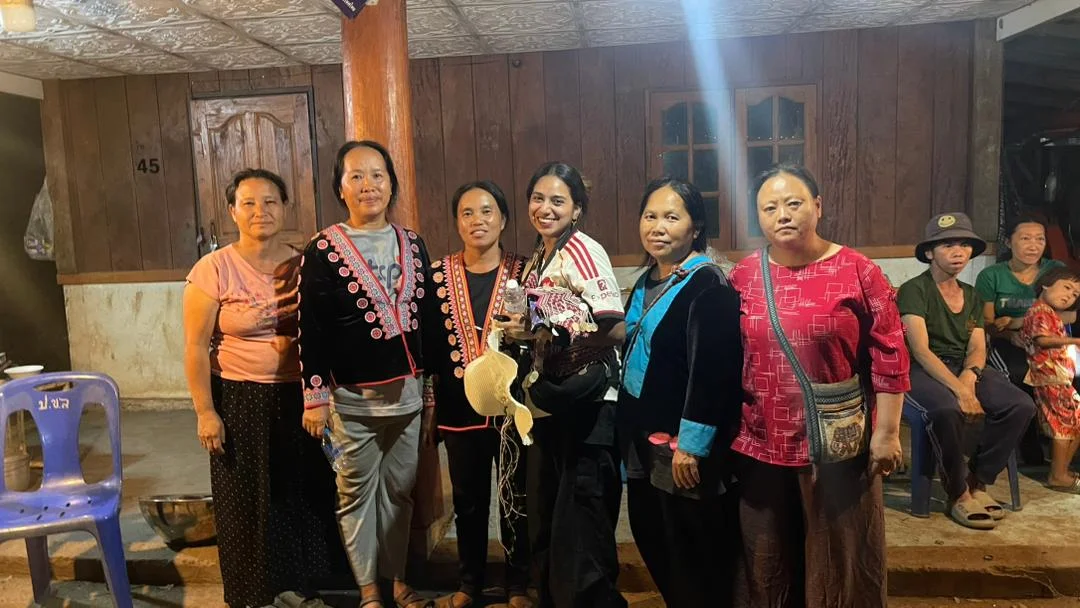
At Huay Nam Rin, a small village in northern Thailand, night once shaped the way residents lived as the entire community relied on kerosene lamps for children to read and housewives to cook … until a brilliant shift happened.
AS THE sun slips behind the mountains of Huay Nam Rin in Chiang Mai, northern Thailand, the air cools and the village softens. Children drift back from dusty paths where they spent the day barefoot and laughing. Chickens settle into the earth. Dogs curl beneath stilted wooden homes. Thin ribbons of smoke rise from evening fires. For years, this was the hour when life began to fold in on itself. Inside dim wooden houses, families gathered close, sometimes ten to a room, sleeping side by side on hard floors. There are no fans to ease the heat, no switches to flick. Only the unsteady glow of kerosene lamps, their light too faint to fill a room and too dangerous to ignore. “The biggest challenge here has always been living without electricity,” said village head Kriangkrai Suya.
“Cooking, studying, safety… everything was harder. We could only rely on what we could do with our hands and our eyes in the dark.” Darkness here was not just the absence of light. It was a limit. Children bent over schoolbooks they could barely see. Meals prepared carefully, every movement measured against the risk of fire. Beyond the doorway, the night pressed in… thick, unlit and absolute. And yet, the village endured. There were evenings when the darkness did not matter as much. People gathered anyway, grilling meat over open flames, sharing stories that travelled easily through the night. In a place without electricity, connection became its own kind of light.
The long way in
Getting to Huay Nam Rin requires dedicated intention. The village lies about 45km from Chiang Mai city, but distance here is not measured in kilometres alone.
The final stretch narrows and breaks into a rough, uneven climb, turning what hours. This is how isolation takes shape, not as a single barrier, but a series of small distances that add up. Such conditions have kept electricity out for decades. Clean water, healthcare and other basic services have arrived unevenly and sporadically. Families learned to live within limits. They grew what they could. Vegetables came from the land. Meat came from outside, when it could be afforded and carried in. Without refrigeration, food could not be kept for long. Ice melted within a day. Meals were planned with restraint. “The village below us has electricity. But up here, life is much harder,” Kriangkrai said. The difference is measured not just in convenience, but in possibility.
The arrival
In April 2026, something shifted. It did not arrive with fanfare. No grid lines were strung across the mountains, and no large infrastructure carved its way in. Instead, it came in parts – solar panels, battery units, cables carried and assembled piece by piece. GoRental Global had chosen Huay Nam Rin as part of its Energy Resilience Initiative, installing a modular, off-grid system designed to do what the national grid had not yet done – reach the last mile. “For families here, reliable electricity changes more than just the light in a room,” said founder and managing director Colin Peh. “It affects how children study, how families live and whether a community feels it has a future. “If we already have the technology, the question is where else it should go. It shouldn’t stop at commercial events, it should reach communities that need it most.” The system comprises 60 solar panels and 31 portable battery units, delivering 40 kilowatts of distributed renewable capacity – enough to power lighting, phone charging and essential household needs. The numbers are precise. The change they describe is less so.
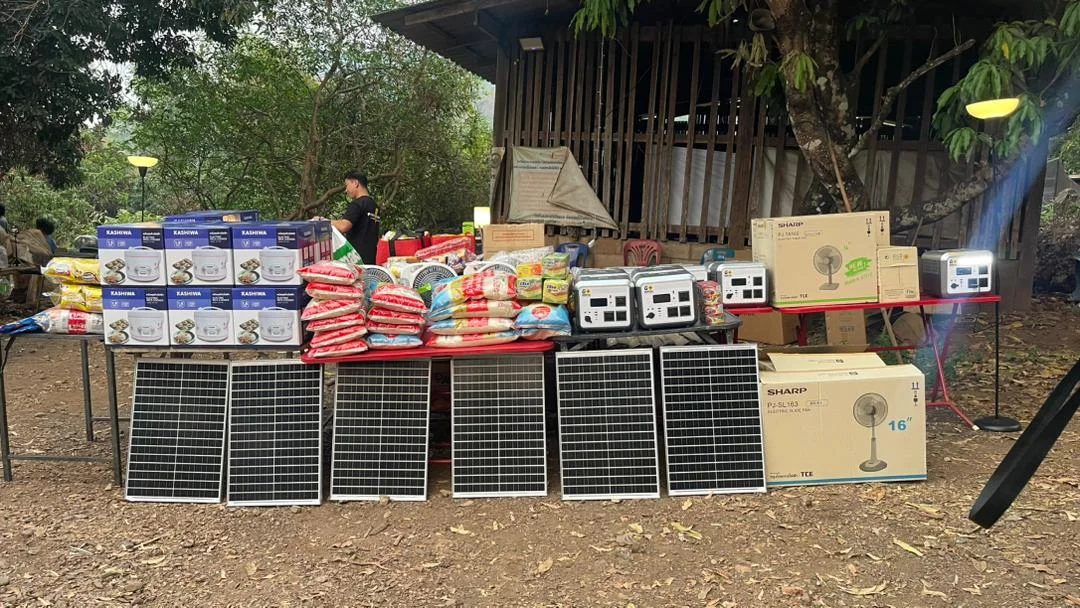
But Huay Nam Rin is not an isolated experiment. It is part of a broader push by the Singapore-based clean energy provider to scale decentralised energy solutions across Southeast Asia, including Malaysia. GoRental has already established a presence in Malaysia and is preparing to deepen its footprint, with plans to launch a Malaysia Experience Store in Johor in June. The company is also working with local foundations and NGOs to deploy similar modular solar and battery systems in off-grid communities, including among Orang Asli settlements in Peninsular Malaysia. For Peh, the expansion reflects a wider ambition. “We see this as a starting point. The goal is to build something that can be repeated, improved, and scaled over time, so the impact is not limited to a single project,” he said.
The first night
There is always a first night. The moment when darkness arrives as it always has, steady and predictable. Only this time, it is interrupted. A bulb flickers, then steadies. A room that has never held light like this before reveals itself differently. Walls sharpen. Faces become clearer. Corners lose their shadows. For the first time, night does not mean stopping. Children sit with their books and do not have to squint. A mother cooks without watching the flame as closely as before. A phone charges quietly in the corner, connecting the household to a world that had always felt distant. Electricity does not announce itself loudly. It settles in… and then it stays.
What light changes
The effects are immediate, but they unfold over time. Food lasts longer. A fan makes sleep easier. A single light extends the day by hours once lost. But some changes are harder to measure. Photographer Edwin Koo, who spent several days documenting life in the village, noticed them in small, quiet moments. “One of the women I photographed was over 90 years old. Every morning, she would play an MP4 recording in her native language. To her, it felt like a radio. It gave her a sense of home,” he said. “Without that sound, the village wouldn’t feel complete.” Koo sat with her often, communicating through gestures and smiles. “She loved having her picture taken. That small sound kept her connected to her culture. “Imagine what electricity would do for the next generation, they could remain here instead of leaving.” In villages like this, leaving is often the only way forward. Light, in its quiet way, could favourably sway such decisions.
Beyond the village
Over the next 10 years, the system in Huay Nam Rin is expected to generate 127,020 kilowatt-hours of electricity, offset more than 360 tonnes of carbon emissions, and save the community hundreds of thousands of dollars compared with using diesel for generators. These figures matter. They make the case legible to governments, companies and donors. But the deeper shift is already visible across the region.
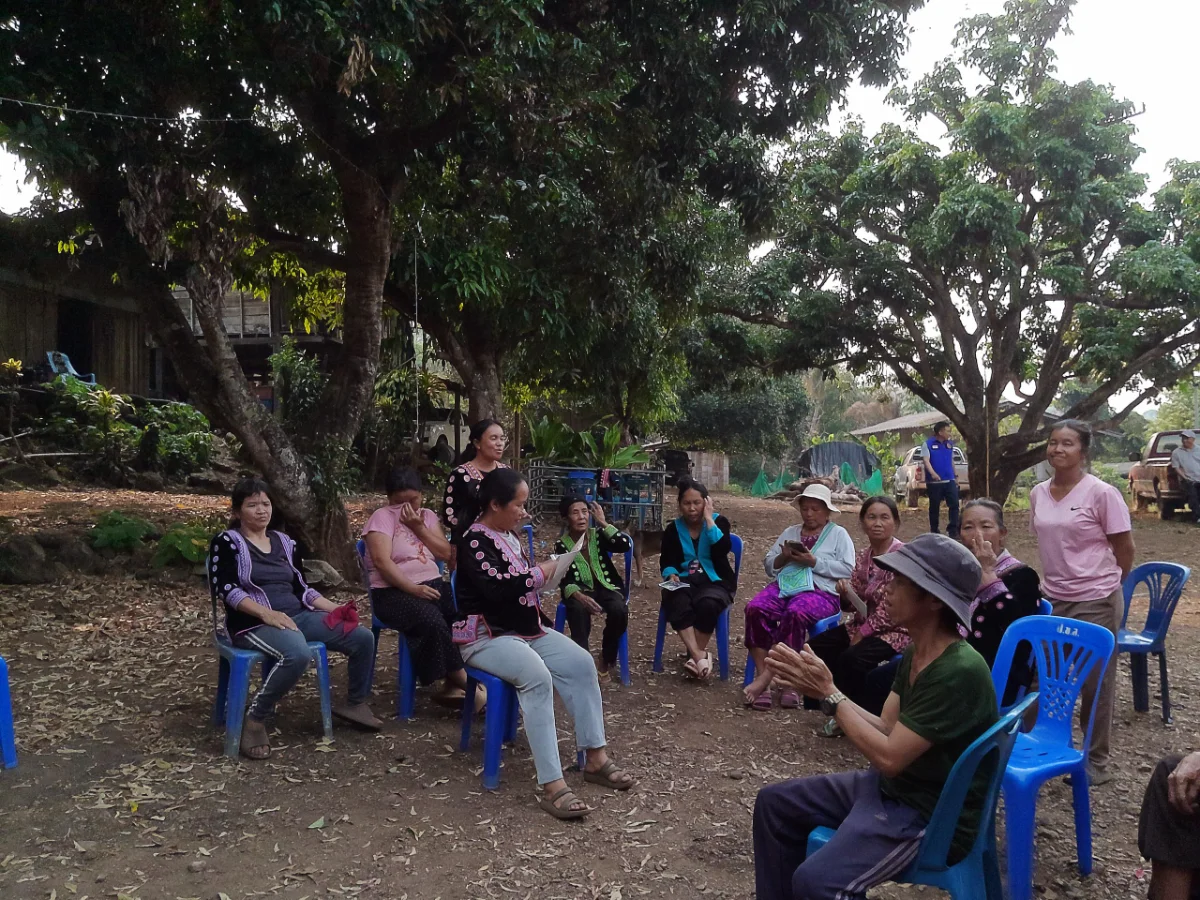
As Southeast Asia faces rising electricity demand and increasing exposure to fuel price volatility, decentralised microgrid systems are gaining traction as practical, scalable solutions, particularly in hard-to-reach communities where extending the national grid remains costly and slow. Huay Nam Rin now serves as a working model of what that transition could look like. For countries like Malaysia, where rural and interior communities still navigate uneven access to reliable electricity supply, the questions raised here are not abstract. They are immediate and increasingly urgent.
What remains
Huay Nam Rin is not transformed in every way. The road is still difficult. Clean water systems are still needed. Healthcare remains distant. Government support is limited. “The electricity is a start. It doesn’t solve everything. But now, we can build a future,” Kriangkrai said. That is what light does, not solve, but illuminate the way forward. As night falls again, the village no longer disappears into itself. Light spills softly from doorways. Children read. Families cook and talk without rushing. Somewhere, an elderly woman presses “play”, and a familiar voice fills the room. Nothing about the mountains has changed. The distance remains. The road is still long. But something fundamental has shifted. For the first time in decades, darkness is no longer in charge.



