



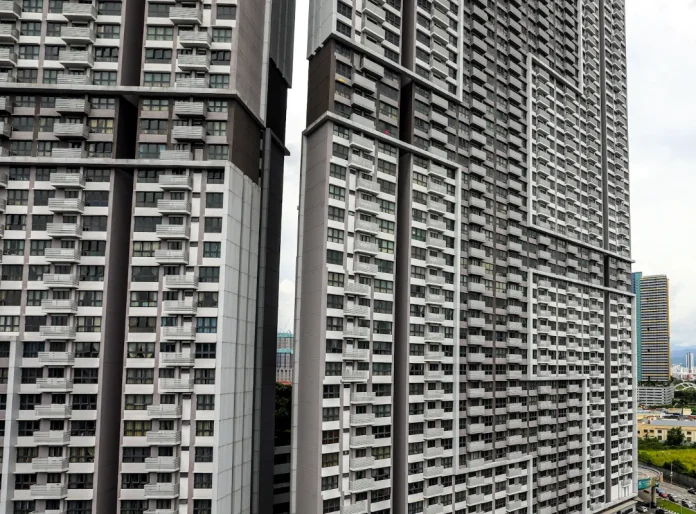
PETALING JAYA: Fire safety in Malaysia’s older high-rise buildings is facing an unseen crisis.
While new towers meet strict codes, older flats face rising risks from neglected maintenance and unsafe renovations.
Universiti Teknologi Malaysia property economics and finance expert Assoc Prof Dr Muhammad Najib Razali said the dangers begin as buildings age.
“Fire-safety engineering recognises that buildings are living systems in which defences weaken without lifecycle maintenance.
“Many older flats, especially the low and medium-cost schemes built before the widespread enforcement of the Uniform Building By-Laws 1984 (UBBL) now show signs of systemic deterioration.
“Malfunctioning alarms, corroded hydrants, compromised compartment walls, outdated electrical systems and more. These aren’t design flaws – they’re deep maintenance failures.”
Muhammad Najib said renovations often worsen the risk.
“Unsafe renovation practices frequently slip through regulatory cracks. Unit owners often modify interiors in ways that undermine compartmentation – a key principle that slows fire and smoke spread.
“Removing fire-rated doors, creating wall openings, enclosing balconies, sealing ventilation paths or installing fixed grilles – they all compromise safety.
“External works are also hazardous. Repainting and waterproofing projects sometimes use combustible scaffolding nets or insulation without verified fire performance.
“Because neither UBBL nor the Fire Services Act provides detailed oversight for temporary works, these hazards often fall outside formal supervision.
“This mirrors what happened in Hong Kong, where substandard scaffolding and insulation intensified a fire despite documentation.”
Malaysia currently lacks mandatory on-site verification or independent testing for such works.
“Retrofits are rarely enforced unless major renovations occur and most apartments aren’t covered by annual fire certificate requirements. Oversight of temporary works is minimal, inspection frequency is inconsistent and residents are often unaware of the risks.”
Muhammad Najib said future-proofing Malaysia’s high-rises requires shifting from one-off construction compliance to continuous risk management.
He highlighted lessons from abroad: “Singapore has carried out large-scale upgrades for older Housing and Development Board (HDB) estates, strengthening fire doors, risers and common-area systems. South Korea mandates sprinklers and enhanced smoke-control in older towers, while Japan requires approvals for any changes affecting escape routes or structural fire resistance.”



